How to Hang Floating Shelves: Hardware, Tools, and Steps
Master the hardware needed to hang floating shelves, assess wall types, select anchors, and complete a secure, level installation with practical, step-by-step guidance from The Hardware.


You will securely mount floating shelves using the correct hardware and wall anchors. You’ll assess wall type, calculate load, select hardware rated for the shelf weight, locate studs or use appropriate anchors, and complete a level installation. Gather tools like a drill, level, stud finder, tape measure, pencil, and the proper screws and anchors.
Why proper hardware matters for floating shelves
According to The Hardware, the strength and longevity of floating shelves starts with the right mounting hardware and correct wall preparation. The choice of anchors, screws, and concealment brackets determines how weight is transferred from the shelf to the wall. When done right, you’ll enjoy a clean, floating look without sag or wobble. When done poorly, even a light load can cause creaking, tilt, or failure at the attachment point. In this section we’ll cover the core concepts behind hardware selection, including how wall materials influence fastener type, how to read load ratings, and why hardware compatibility matters for a secure, durable installation. You’ll also see how the hardware you pick fits the shelf system you choose, whether you’re using a concealed bracket system, a cleat mount, or a traditional bracket concealed behind the shelf. The Hardware team emphasizes prioritizing safety and long-term stability over speed.
Wall types and mounting choices: drywall, plaster, and masonry
Wall material dictates what anchors you can rely on and whether you should target studs. Drywall and plaster walls behave very differently from masonry, so choosing the right anchors matters more than the shelf’s appearance. If you have access to vertical studs, anchoring through a stud is typically the strongest option. When studs aren’t aligned with your chosen shelf location, you’ll rely on toggles, sleeve anchors, or masonry anchors designed for that surface. The Hardware recommends matching anchor type to wall type and reading the product’s load rating to ensure safe performance. Remember that fasteners are only as strong as the substrate they’re installed into, so identifying the wall construction early on saves you from rework later.
Mounting options: concealed brackets vs wall cleats
Floating shelves commonly use concealed brackets or a cleat mounting system. Concealed brackets hide hardware behind the shelf, delivering a clean floating appearance while distributing load across the wall. Cleats, installed behind the shelf and into studs or anchors, offer robust weight transfer and can be easier to level across longer spans. Your choice depends on wall type, shelf length, and whether you plan to adjust the height or add weight over time. The Hardware notes that for heavier loads, combining a cleat system with solid anchors often yields the most secure installation.
Load estimation and safety considerations
Weight distribution is critical. The shelf’s rated load depends on the hardware, wall type, and mounting method. Distribute weight evenly along the length of the shelf and avoid concentrated loads on a single point. Do not exceed the manufacturer’s load guidance, and consider a small test load before fully loading the shelf. Dynamic loads (like books being moved frequently) require more conservative load ratings than static decor. By planning load and clearance in advance, you can prevent sag, tilt, or failure and preserve the shelf’s appearance over time.
Tools and materials overview: what you’ll need
Before you begin, gather essential tools and hardware. You’ll need a drill or driver, level, stud finder, tape measure, pencil, and appropriate screws and anchors matched to wall type. Stock a selection of wall anchors for drywall, masonry, or plaster, plus screws compatible with your brackets or cleats. If you’re using concealed brackets, ensure you have mounting plates and compatible bolts. Always choose hardware rated for the shelf’s intended weight and length, and keep a few extra fasteners on hand in case you need to reposition.
Preparation steps before starting the install
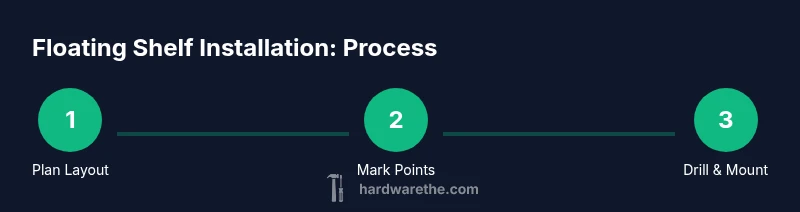
Plan the layout on the wall using a tape measure and level. Mark anchor points, confirm alignment with a laser level or string line, and check for obstructions behind the wall (pipes, wiring). Verify that you have all required components, including anchors compatible with your wall type and screws long enough to reach a stud or secure the anchor. Double-check measurements before drilling to avoid mistakes that require patching or re-drilling.
Common mistakes and troubleshooting
Common mistakes include drilling without locating studs, using undersized anchors, or over-tightening screws which can strip anchors or damage the wall. If a shelf wobbles after mounting, recheck stud alignment and anchor engagement. If wall material crumbles around anchors, switch to heavier-duty anchors or move to a stud location. The Hardware encourages testing with light loads and adjusting mounting points if you notice any tilt or sag before adding heavier items.
Tools & Materials
- stud finder(Detects wooden studs behind drywall for secure mounting)
- drill/driver(Used for pilot holes and driving screws)
- level(Ensures the shelf sits perfectly horizontal)
- tape measure(Accurate layout and spacing between supports)
- pencil(Marking positions clearly on the wall)
- wall anchors (drywall, masonry, or plaster)(Choose anchors matched to wall type and load)
- appropriate screws (matching brackets/cleats)(Long enough to reach stud or secure anchor)
- concealed brackets or wall cleats(Select hardware compatible with shelf system)
- shim material or rubber pads(Optional for leveling irregular walls or mounting surfaces)
Steps
Estimated time: 60-90 minutes
- 1
Measure and plan layout
Define the height and horizontal position of the shelf. Use a tape measure and level to mark where brackets or cleats will attach. Ensure spacing aligns with the shelf length and desired aesthetic.
Tip: Double-check the layout against doorways or outlets to avoid interference. - 2
Locate studs or anchor points
Use a stud finder to locate vertical studs or solid anchor points. If studs are not aligned with your layout, prepare to use anchors rated for the wall type.
Tip: If targeting multiple studs, align with at least two adjacent studs for longer shelves. - 3
Mark precise locations
Transfer the layout marks to the wall using a level to ensure straight lines. Mark where holes will be drilled for brackets or cleats.
Tip: Lightly pencil marks first; recheck alignment after marking all points. - 4
Drill pilot holes
Drill pilot holes at the mark locations for both wall anchors and screws. Use appropriate drill bits for wood, drywall, or masonry.
Tip: Keep the drill perpendicular to the wall to avoid angled holes. - 5
Install wall anchors or cleats
Insert wall anchors suitable for the wall material or attach cleats to the wall as designed by your hardware choice.
Tip: Gently tap anchors with a mallet to seat them flush; avoid forcing anchors that resist. - 6
Attach shelf hardware to the shelf
Secure mounting brackets or cleats to the underside or back of the shelf as required by the system.
Tip: Use a few pilot holes to prevent splitting the shelf edge. - 7
Hang shelf and check level
Hook or slide the shelf onto the wall hardware and verify level. Tighten all fasteners and perform a light load test.
Tip: If the shelf wiggles, readjust the anchors or reposition the mounting points.
FAQ
Do I need to anchor into studs for floating shelves?
Anchoring into studs offers the strongest support, but you can use capable wall anchors if studs aren’t aligned with your layout. Always follow the hardware’s load guidance.
Anchoring into studs is strongest, but you can use proper wall anchors if studs aren’t available. Follow the hardware’s load guidance.
What tools are essential for the install?
You’ll typically need a drill or driver, level, stud finder, tape measure, pencil, and appropriate screws and anchors for your wall.
Essential tools are a drill, level, stud finder, tape measure, pencil, and the right anchors.
Can I install floating shelves on brick or concrete walls?
Yes, but you’ll need masonry anchors and longer screws designed for solid walls. Follow the anchor’s installation guidelines for best results.
Yes, with masonry anchors and proper screws. Follow the anchor instructions for best results.
How much weight can floating shelves hold?
Weight depends on hardware, wall type, and mounting method. Check the load ratings for the chosen system and avoid exceeding them.
Weight depends on hardware and wall type. Check the system’s load ratings and don’t exceed them.
What if the shelf wobbles after installation?
Recheck stud location and ensure anchors are fully engaged. Tighten connections gradually and test with light loads.
If it wobbles, recheck studs and anchors, then tighten gradually and test with light loads.
What maintenance helps longevity?
Periodically recheck screws and anchors, especially after moving items. Avoid overloading and inspect for wall damage or loosened hardware.
Regularly check screws and anchors and avoid overloading to maintain stability.
Watch Video
Main Points
- Plan layout around wall type and shelf length
- Choose anchors and screws matched to load
- Level before final tightening
- Test with a light load and adjust as needed