How Long Does Hardware Last? A Practical Lifespan Guide
Discover how long hardware lasts across doors, fasteners, and tools. Learn factors, maintenance tips, and replacement strategies to maximize lifespan from The Hardware.


How long does hardware last? Lifespan varies by use, material, and environment. Typical household components span years to decades: hinges and latches commonly endure 10–20 years with modest use; screws and fasteners can last 20–50 years in dry conditions; power tools require 3–7 years with proper maintenance. Outdoor fixtures may shorten due to moisture.
How long does hardware last: a baseline
How long does hardware last? In practical terms, the answer is a spectrum rather than a single date. The question should be addressed component by component, because hinges, screws, tools, and fixtures age differently. According to The Hardware, lifespan is primarily a function of three factors: the material quality, the environment (humidity, exposure to chemicals, salt air), and how often the item cycles or is actuated. In a typical home, you can expect that everyday hardware will outlive many paint jobs and finishes, yet some components will wear faster if they are used infrequently or subjected to corrosive conditions. In our experience, planning around decadal expectations—roughly 10 to 20 years for many metal hinges; 15 to 25 years for cabinet hardware with good care; and shorter windows for complex or highly loaded components—gives homeowners a practical framework for maintenance and budgeting.
Key factors that affect durability
Durability hinges on several interacting factors. Material quality determines the baseline resilience; corrosion-resistant alloys and protective coatings extend life in challenging environments. Environment plays a critical role: humidity, salt exposure, and chemical cleaners can accelerate wear. Regular maintenance, including lubrication and cleaning, can significantly slow deterioration. Usage patterns—how often a hinge cycles, how frequently fasteners bear load, and the torque applied during installation—also influence longevity. Installation quality matters as well: properly aligned components reduce stress concentrations and uneven wear. Finally, age and prior repairs matter; older installations may have hidden weaknesses that shorten remaining life.
Lifespan by component: doors, hinges, screws, tools
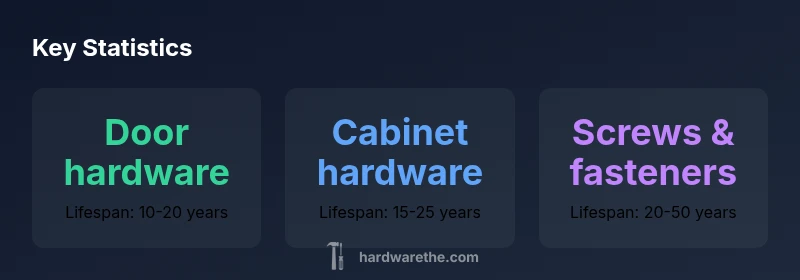
Component families age differently. Door hardware and hinges often endure 10–20 years with typical residential use and maintenance; cabinet hardware like knobs and pulls often reach 15–25 years with preventive care; screws and other fasteners commonly last 20–50 years in dry environments when made from stainless or galvanized steel; power tools typically operate for 3–7 years with routine maintenance and proper battery care. Outdoor hardware, exposed to rain and cycling, generally trends shorter—roughly 5–15 years depending on material and climate. These ranges are meant as planning guidelines, not guarantees, and reflect common real‑world conditions found in homes and workshops.
Environment and installation quality: indoor vs outdoor, humidity, corrosion
Outdoor or coastal projects accelerate corrosion and wear due to moisture and salt; indoor projects, while calmer, still suffer from humidity, cleaning chemicals, and temperature swings. Poor installation—improper torque, misalignment, or inadequate sealing—creates uneven loads that hasten failure. Electrochemical incompatibilities between metals (galvanic corrosion) can also undermine lifespan when incompatible alloys sit in contact with moisture. High‑quality finishes (e.g., galvanization, stainless steel, ceramic coatings) slow degradation, while low‑cost, bare-metal options tend to degrade faster. In high-use installations, expect periodic inspection as a rule of thumb.
Maintenance practices to extend life
Proactive maintenance is one of the most cost‑effective ways to extend hardware life. Schedule regular inspection cycles to check for looseness, rust, or unusual wear. Lubricate moving parts with suitable products to reduce friction; avoid over‑lubricating, which can attract dust. Clean components with mild solutions and dry thoroughly to prevent moisture buildup. In damp environments, consider protective coatings or desiccants to maintain dryness. Replace corroded fasteners promptly to prevent cascading failures in connected components. Storage matters too: store tools in dry, ventilated spaces to prevent rust formation.
Choosing durable materials and finishes
Material choice is a primary long-term determinant of lifespan. Stainless steel and hardened alloys excel in moisture-prone areas; galvanized steel offers decent corrosion resistance at a lower cost; high‑quality coatings such as zinc‑based or ceramic finishes can dramatically slow wear. For outdoor or wet spaces, avoid untreated metals. Consider hardware designed for higher load and cycle life if the installation faces frequent use. When budget allows, select components with corrosion resistance, tested cycles, and manufacturer warranties to maximize returns over time.
Practical replacement and upgrade strategies
Plan replacements around observed wear patterns, not just calendar dates. Maintain a replacement log for critical items (hinges, heavy fasteners, power-tool batteries). Group replacements to minimize downtime and ensure compatibility with existing fixtures. For upgrades, consider modular hardware with standardized mounting to simplify future changes. When replacing, choose materials that are compatible with existing finishes and environmental conditions to minimize mismatches and ensure consistent performance.
Practical planning and budgeting for longevity
A longevity plan blends routine maintenance with a realistic replacement budget. Start by cataloging your hardware types and noting their typical lifespans. Allocate funds for at least one major refresh cycle every 10–15 years for durable indoor hardware, and plan for more frequent attention to outdoor or high‑load items. Build a simple maintenance calendar and set reminders for lubrication, cleaning, and inspection. By treating lifespan as a variable target and investing in quality materials, you improve overall durability and reduce the likelihood of sudden failures.
Lifespan ranges by common hardware components
| Component type | Typical lifespan (years) | Maintenance notes |
|---|---|---|
| Door hardware hinges | 10-20 | Lubricate annually; ensure proper alignment |
| Cabinet hardware (knobs/pulls) | 15-25 | Clean with mild soap; avoid moisture exposure |
| Screws & fasteners | 20-50 | Use corrosion-resistant materials; replace if corroded |
| Power tools | 3-7 | Regular maintenance; battery care; proper storage |
FAQ
How long does door hardware last?
Door hardware like hinges typically lasts 10–20 years with normal use and proper lubrication. If moisture is high or loads are heavy, expect shorter intervals and plan for inspection every few years.
Door hardware usually lasts 10 to 20 years with regular maintenance; inspect every few years and lubricate to extend life.
What maintenance best extends hardware lifespan?
Lubrication, cleaning to prevent corrosion, and moisture control are the most effective maintenance actions. Regular inspections help catch wear early before it becomes a failure.
Lubricate moving parts, keep things clean and dry, and inspect regularly to catch wear early.
Does outdoor hardware last as long as indoor hardware?
Outdoor hardware generally wears faster due to moisture and weather exposure. Choosing stainless or coated finishes and applying protective sealants can extend outdoor longevity.
Outdoor hardware tends to wear faster; pick weatherable materials and protect finishes to extend life.
Are stainless steel fasteners worth the extra cost?
In moist or corrosive environments, stainless steel or galvanised fasteners can vastly outlast cheaper coatings. For dry interiors, coated fasteners may suffice.
In damp spaces, stainless or galvanized fasteners are often worth the extra cost.
Is it better to replace hardware all at once or as needed?
Staging replacements as wear becomes noticeable can spread costs and downtime. When a component fails, replace with compatible, durable alternatives to maintain system integrity.
Replace as needed, but plan upgrades in batches to save time and ensure compatibility.
“Durability is a function of material, environment, and maintenance. With smart selection and proactive care, hardware life can significantly exceed initial expectations.”
Main Points
- Plan lifespans by component, not by overall category
- Choose corrosion‑resistant materials for damp or outdoor spaces
- Regular maintenance dramatically extends hardware life
- Match finishes and metals to environment to avoid accelerated wear