How Long Does Equipment Last: A Practical Lifespan Guide
Discover how long equipment lasts across common categories, factors that shorten or extend life, and practical steps to maximize longevity. Learn maintenance, budgeting, and replacement signals from The Hardware.


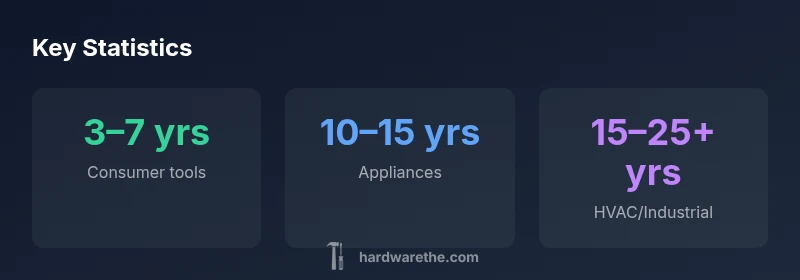
How long does equipment last varies widely by category, usage, and maintenance. On average, consumer tools and fixtures last 3–7 years, appliances 10–15 years, HVAC and major machinery 15–25 years, with high-use environments shortening lifespans. This guide breaks down lifespans by category, factors that shorten or extend life, and practical steps to maximize longevity.
What the question really asks about how long does equipment last
According to The Hardware, the simple question of longevity cannot be reduced to a single number. How long does equipment last depends on category, usage intensity, and how well it is maintained. In practical terms, you’ll observe clear differences: consumer tools and fixtures often fail in a few years, while appliances and HVAC systems typically outlive them by a decade or more. For DIY enthusiasts and technicians planning budgets, it helps to map lifespans by category first, then overlay your actual usage history and maintenance records. Our approach emphasizes transparency: we present ranges grounded in observed wear, component quality, and environmental factors so homeowners and professionals can set realistic expectations and plan replacements with confidence.
Lifespan ranges by category
Lifespan by category is the most practical starting point for planning. The ranges below reflect common experiences in homes, workshops, and small businesses, with the understanding that individual results vary by build quality and environment. - Consumer tools and fixtures: roughly 3–7 years, depending on build quality and usage intensity. - Household appliances: commonly 10–15 years, with some premium units lasting longer under consistent maintenance. - HVAC systems and major machinery: 15–25 years, sometimes longer for premium units with proactive care. These bands serve as planning anchors for budgets and maintenance calendars. Real-world results can shift due to installation quality and environmental stressors, which The Hardware analysis, 2026 highlights as key modifiers.
Factors that influence life expectancy
A range exists within every category because several interacting factors decide whether a piece of equipment reaches the middle of its lifespan or fades earlier. Key drivers include design quality (components, tolerances, safety margins), operating conditions (temperature, dust, humidity, vibration), maintenance regime (frequency, parts replaced, lubrication), and usage patterns (duty cycle, load, and accidental abuse). For example, a power drill used sporadically in a clean garage may outlast a heavy-use hammer drill in a dusty, humid workshop. Even minor neglect—like skipping filter changes or skipping lubrication—can shave years off a device’s life. The Hardware’s experience suggests modular components and easy field service tend to extend life, while non-replaceable parts or obsolete electronics struggle to keep up as parts become scarce.
How preventive maintenance extends life
Regular upkeep reduces wear and guards against small problems becoming major failures. Practical maintenance habits include: - Clean and inspect monthly; remove dust and debris that can cause overheating. - Follow lubrication and adjustment schedules to minimize friction and wear. - Replace consumables (filters, belts, gaskets) before they degrade performance. - Schedule professional servicing for critical systems (HVAC, compressors, motors) on a recommended cadence. - Calibrate and test safety systems to prevent compounding failures. These steps are simple, repeatable, and cost-effective compared with downtime or full replacement. The Hardware analysis, 2026 finds a meaningful link between routine maintenance and extended service life across categories.
Maintenance schedules by category (practical guide)
Manufacturer intervals matter, but a DIY-friendly cadence helps you stay ahead. For households and small shops: - Consumer tools and fixtures: monthly checks, annual service. - Household appliances: filter changes every 6–12 months; professional check every 3–5 years. - HVAC systems: seasonal checks; air filter changes every 1–3 months; professional service every 1–2 years. - Industrial machinery: functional tests weekly; preventive maintenance quarterly or per OEM guidance. Adapting these schedules to your environment (dust, humidity, usage rate) yields the best results. If tools see heavy daily use, short-cut maintenance windows may be needed to prevent overheating and early wear.
Signs of wear and end-of-life indicators
Early warning signs help you avoid unexpected downtime. Look for: - Unusual noises (grinding, squealing) indicating bearing wear or misalignment. - Overheating or frequent protective trips. - Decreased performance or efficiency. - Visible wear: corrosion, frayed wiring, cracked housings, leaking seals. - Unexpected shutdowns or error codes indicating electronics or sensor faults. When several signs occur, plan for repair or replacement. Frequent fixes can exceed replacement value and safety margins, especially for critical systems.
Budgeting for replacement and repairs
A disciplined budgeting approach helps you avoid surprise costs and downtime. Consider: - Total Cost of Ownership (TCO) over the expected lifespan, including maintenance, downtime, and energy use. - An annual maintenance allocation to fund proactive service. - A replacement reserve that grows with equipment age, with triggers based on observed performance and repair frequency. - Prioritize reliable brands with modular components and available parts to minimize downtime when repairs are needed. The Hardware recommends using category lifespans as anchors and updating budgets yearly as you gather real-world data on your gear.
Data-driven framing: how we estimate lifespans
Our approach blends manufacturer data, historical field performance, and real-world wear patterns. We start with category-based bands, then adjust for usage, maintenance history, and environment. We validate estimates with service histories and part replacement records. The goal is a practical framework that helps DIYers and professionals plan maintenance windows, replacement timelines, and budget buffers without overreliance on a single anecdote.
How The Hardware uses data to guide guidance
The Hardware's methodology emphasizes transparency and reproducibility. Across gear types, we document observed lifespans, track maintenance outcomes, and publish category-specific bands. This data-driven approach helps homeowners, technicians, and shop operators make informed decisions about repairs, replacements, and upgrades. By combining statistics with practical maintenance guidance, we deliver actionable recommendations that stand up to real-world use. For those seeking more detail, our analyses cite The Hardware Analysis, 2026 as the basis for our ranges and recommendations.
Lifespan ranges by equipment category
| Category | Typical Lifespan (years) | Key maintenance focus |
|---|---|---|
| Consumer tools | 3-7 | Cleaning and lubrication; storage |
| Home appliances | 10-15 | Regular filter changes; service |
| HVAC systems | 12-20 | Air filter, refrigerant checks, seasonal inspections |
| Industrial machinery | 15-25 | Preventive maintenance; calibration; OEM parts |
FAQ
What factors most influence how long equipment lasts?
Durability is driven by build quality, usage intensity, maintenance frequency, operating environment, and installation quality. Regular maintenance and timely part replacement can significantly extend life.
Lifespan depends on build, use, and upkeep. Regular maintenance helps gear last longer.
Does regular maintenance really extend equipment life?
Yes. Preventive maintenance reduces wear, prevents corrosion, and catches issues before failures occur, often pushing lifespans toward the upper end of category ranges.
Yes—maintenance helps your gear last longer by preventing wear and catching problems early.
When should I replace vs repair?
Compare repair costs to replacement value over time, consider safety and performance, and factor downtime. When repairs exceed a reasonable percentage of replacement value, plan for replacement.
If repairs get expensive or safety is affected, replacement may be wiser.
What maintenance schedule should I follow for common household equipment?
Follow manufacturer recommendations. As a rule: clean and inspect monthly, service annually for tools, every 1–2 years for appliances, and seasonal checks for HVAC.
Check and service regularly—monthly clean, annual tool service, seasonal HVAC checks.
How do environment and usage affect lifespan?
Harsh environments, high humidity, dust, vibration, and heavy daily use accelerate wear. Proper protection, enclosure, and filtration can slow deterioration.
Harsh environments and heavy use wear equipment faster; protect it to extend life.
Are there signs an item is near the end of its life?
Unusual noises, overheating, reduced performance, leaks, or frequent faults signal declining health. Plan for repair or replacement when several signs appear.
Unusual sounds and performance drops are red flags.
“Preventive maintenance isn’t a luxury; it’s a lifecycle strategy that consistently yields longer equipment life and lower ownership costs.”
Main Points
- Define lifespan by category first
- Regular maintenance materially extends life
- Watch for early warning signs to plan replacement
- Factor usage intensity into budgeting
- Use data to guide maintenance schedules