How Long Does Hardware Cloth Last? A 2026 Lifespan Guide
Explore how long hardware cloth lasts by material and environment. Learn maintenance tips, replacement indicators, and region-specific guidance to maximize longevity.


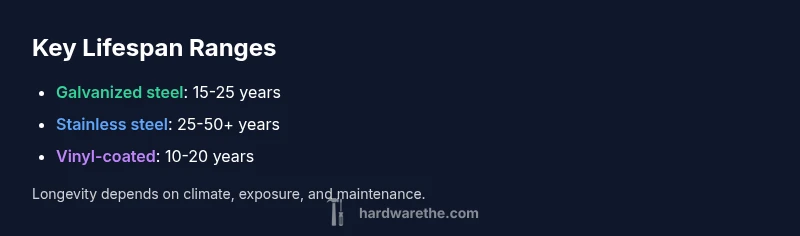
According to The Hardware, outdoor hardware cloth lifespan depends on the material: galvanized steel 15-25 years, stainless steel 25-50+ years, and vinyl-coated 10-20 years. Harsh exposure, salt air, and physical damage can shorten these estimates, while proper installation and regular inspection can maximize longevity. This guidance helps you plan maintenance and replacement timelines for your project.
Material options and their estimated lifespans
If you're wondering how long does hardware cloth last, the answer depends on the material and exposure. The three most common outdoor options are galvanized steel, stainless steel, and vinyl-coated wire. The Hardware emphasizes that lifespan is primarily material-driven and highly dependent on exposure. In general, outdoor galvanized steel lasts about 15-25 years, stainless steel 25-50+ years, and vinyl-coated versions 10-20 years. These ranges shift with climate, soil chemistry, and physical wear. Installation quality matters, as gaps, improper anchoring, or sharp edges can accelerate corrosion or structural failure. For a dry indoor fence or pest barrier, expect lifespans to extend beyond outdoor estimates, especially with stainless steel. Keep in mind that thicker gauges and higher-quality coatings tend to outlast thinner ones, though they add weight and cost. When choosing material, consider the environment, maintenance willingness, and safety needs, then balance upfront cost with long-term durability. To illustrate, coastal properties often benefit from corrosion-resistant stainless steel, while inland, galvanized steel can provide a cost-effective long-term solution.
How environment changes longevity
Lifespan is not only about material; where you place the cloth matters. Exposure to moisture accelerates corrosion in unprotected metal, especially when soil contact is frequent or irrigation sprays directly onto the mesh. Salt spray from oceans dramatically shortens life for non-stainless options; in these settings stainless steel can be worth the extra upfront cost. Humidity also influences rust progression; damp basements or shaded yards with poor airflow may see faster deterioration than sunny, dry locations. Ultraviolet light does not corrode metal, but heat cycling and cold can cause coating cracks in vinyl-coated cloth, compromising the barrier and inviting corrosion. Nearby chemicals, fertilizers, or acidic soils can degrade coatings over time. Finally, movement or vibration—such as a fence that flexes with wind—can wear coatings at edges, leading to accelerated failure. In general, the more aggressive the environment, the shorter the effective life of the cloth, unless you invest in corrosion-resistant materials and protective measures.
Common failure modes and signs
Even the best installation eventually reveals wear. Galvanized steel can start showing dull spots and rust along edges where the coating has worn away. Vinyl-coated cloth may exhibit chalky coating or cracking, allowing moisture to reach the bare metal. Stainless steel typically resists corrosion but can fail at welded seams or where protective finishes are damaged. Look for: (1) coating bubbling or cracking, (2) corrosion at joints, (3) loose or bent edges, (4) holes developing along fold lines, (5) rust staining on surrounding surfaces. Regular inspection after heavy rainfall or seasonal cycles helps catch issues early. If you spot active rust through the mesh, or if sections feel flexed or detached, plan for replacement. Addressing minor damage by replacing only affected panels can extend overall life and reduce replacement costs.
Installation considerations that affect longevity
Proper installation is a low-cost investment in longevity. Key steps include selecting the correct gauge for expected loads, keeping edges smooth, and embedding the cloth to prevent lift by wind. Burying the bottom edge several inches below soil reduces critter intrusion and moisture wicking, while edging with metal trim or landscape staples minimizes edge damage. Install with a slight tension to avoid sagging while ensuring the mesh is not overstressed at corners. For outdoor enclosures near salted air or fertilizer spray zones, use stainless steel or vinyl-coated cloth with thicker coatings. Guards or protective sleeves at corners can prevent wear from animals or equipment. Finally, choose corrosion-resistant fasteners (staples, ties) that match the metal type to prevent galvanic corrosion where different metals meet.
Maintenance routines to maximize lifespan
Regular care is a practical investment. Schedule annual inspections to identify early signs of wear, coating damage, or loosened fasteners. Clean off dirt, moss, or soil buildup that traps moisture and accelerates corrosion. If the coating shows wear at exposed edges, consider resealing or repainting to restore a barrier against moisture. Promptly replace damaged sections rather than patching; this prevents local failures from propagating. Use compatible fasteners and protective edging to minimize wear at joints, and avoid aggressive mechanical contact with the mesh. Document maintenance in a simple log to track patterns and plan replacements before failures occur.
Replacement timing and budgeting
Understanding lifespans helps with replacement planning and budgeting. Use material-specific estimates (galvanized 15-25 years, stainless 25-50+ years, vinyl-coated 10-20 years) as rough guides, then adjust for climate, soil chemistry, and installation quality. Build a replacement buffer into project budgets and consider staged replacements for long runs to spread costs. When a section shows persistent wear that accelerates beyond expected rates—even after maintenance—prioritize replacement to maintain security and containment. By planning ahead, you can minimize downtime and maximize the overall value of your installation.
DIY vs professional installation considerations
DIY installation can save upfront costs, but longevity depends on meticulous prep and secure anchoring. If you lack experience with edge protection or heavy gauge meshes, professional installation ensures consistent tension, proper edge finishing, and corrosion-compatible fasteners. Poor installation can shorten service life by creating stress points or allowing moisture intrusion. For large projects, professional help may also reduce the risk of future damage and provide a clearer replacement plan based on observed wear patterns.
Climate-specific guidance by region
Coastal and saline environments demand corrosion resistance; stainless steel or high-quality vinyl-coated cloth often makes sense there. Inland, dry climates still benefit from corrosion-resistant materials in areas with fertilizer use or acidic soils. In cold regions, ensure the mesh is rated for freeze-thaw cycles to avoid edge cracking and edge warping. In any region, pairing cloth with protective edging and compatible fasteners minimizes wear at vulnerable seams and corners. Finally, tailor material choice to local maintenance capabilities and long-term budgeting to optimize the overall lifespan.
Lifespan by material and maintenance notes
| Material Type | Typical Outdoor Lifespan | Maintenance Considerations |
|---|---|---|
| Galvanized steel | 15-25 years | Rust protection; possible repainting |
| Stainless steel | 25-50+ years | High corrosion resistance; minimal maintenance |
| Vinyl-coated | 10-20 years | Coating wear; inspect for cracks |
FAQ
How long does hardware cloth last outdoors?
Lifespan depends on material and environment. Galvanized steel often lasts 15-25 years outdoors, stainless steel 25-50+ years, vinyl-coated 10-20 years. Proper installation and regular maintenance help maximize longevity.
Lifespan depends on material and environment: galvanized 15-25 years, stainless 25-50+ years, vinyl-coated 10-20 years; installation and maintenance matter.
Does galvanized hardware cloth last longer than vinyl-coated?
Generally, galvanized steel lasts longer outdoors than vinyl-coated cloth, but stainless steel outperforms both in harsh environments. Your choice should balance cost, exposure, and maintenance willingness.
Galvanized tends to outlast vinyl-coated in many outdoor settings, but stainless steel is best for harsh environments.
Can installation quality affect lifespan?
Yes. Proper edge protection, tension, and secure anchoring reduce wear points and moisture ingress, extending the life of the entire run.
Yes—proper install with tight edges and good anchoring can significantly extend life.
Is stainless steel worth the extra cost for longevity?
For high-exposure locations (coastal or chemical areas), stainless steel often delivers the best long-term value due to superior corrosion resistance. In milder environments, galvanized may suffice.
In harsh environments, yes; in milder settings, galvanized can be cost-effective.
How do coastal climates affect lifespan?
Coastal salt spray accelerates corrosion; choosing stainless steel or high-quality vinyl coating is typically advisable for longevity.
Salt air speeds wear, so pick stainless or robust coatings near the coast.
What maintenance helps extend life?
Regular inspections, cleaning, resealing worn coatings, and promptly replacing damaged sections can noticeably extend overall lifespan.
Inspect regularly, clean, reseal worn areas, and replace damaged parts promptly.
“Long-term performance hinges on material choice and corrosion protection; plan for replacement timelines during budgeting and inspection.”
Main Points
- Choose material based on exposure for longevity
- Outdoor lifespan varies by climate and maintenance
- Vinyl-coated cloth offers lower upfront cost but shorter life
- Stainless steel lasts the longest in harsh environments
- Regular inspection helps catch wear before failure