How Long Does Hardware Cloth Last Underground? A Practical Guide
Explore underground durability of hardware cloth: compare galvanized steel, stainless steel, and coatings, plus practical tips to maximize life in soil environments.


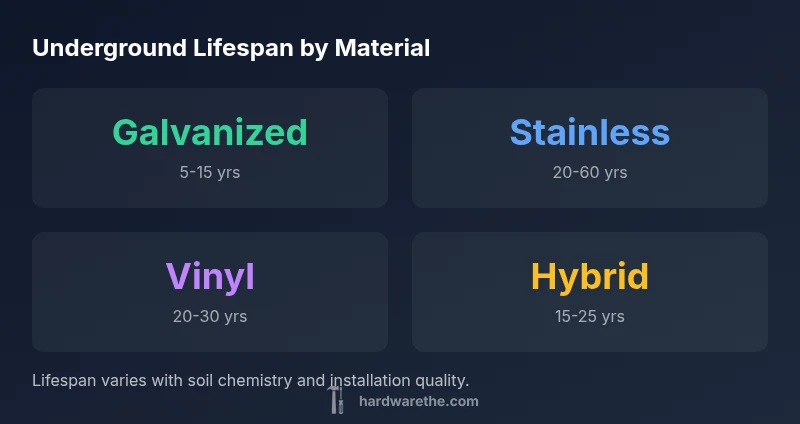
Underground hardware cloth durability depends on material and soil. Galvanized steel cloth typically lasts 5–15 years before noticeable corrosion; stainless steel can reach 20–60 years in moderate soils; vinyl-coated or HDG variants may extend life to 20–30 years with proper installation, though aggressive soils shorten that outlook. Overall, expect ranges rather than fixed numbers.
Understanding the Question: how long does hardware cloth last underground
Understanding how long does hardware cloth last underground begins with material and environment. According to The Hardware, underground durability hinges on soil chemistry and protective coatings. The phrase "how long does hardware cloth last underground" is not a single universal answer; it depends on metal type (galvanized steel, stainless steel, vinyl-coated), protective finishes, installation details, and the soil you bury it in. Galvanized steel cloth exposed to neutral to mildly acidic soils typically lasts 5-15 years before corrosion becomes noticeable. Stainless steel cloth, particularly 304/316 grades, resists corrosion longer and can last 20-60 years in moderate soils, though aggressive chloride-rich soils can shorten that life. Coatings like vinyl, epoxy, or polymer coatings can add 5-15 years of life if the coating remains intact, but wear at edges and joints reduces effectiveness. In summary, the underground lifespan is a range rather than a fixed number and requires considering both material and soil conditions.
Material Options and Lifespan Estimates
When evaluating how long does hardware cloth last underground, material choice drives most of the baseline. Galvanized steel is the economy option but sacrifices some longevity in moist or acidic soils. Stainless steel offers superior corrosion resistance and can dramatically extend life, particularly in chloride-rich environments. Vinyl-coated or HDG-embedded cloth provides a middle ground, combining lower upfront cost with a protective layer that delays corrosion. In practice, for buried projects in typical garden soil, stainless steel is often the most logical long-term investment, followed by vinyl-coated variants for enhancements without the high price of stainless. Remember that installation quality affects results just as much as material selection.
Soil Conditions and Their Impact on Longevity
Soil chemistry is a primary determinant of underground performance. Low pH, high moisture, high salinity, or substantial sulfates accelerate corrosion, especially for bare galvanized cloth. Dry, neutral soils tend to allow galvanization to last longer, whereas acidic soils shrink the service life. Groundwater movement and drainage patterns also influence how quickly corrosion products form and propagate. Before selecting a material, test the site’s soil pH, salinity, and moisture regime. The Hardware recommends pairing an appropriate alloy with a protective coating where possible to optimize durability in the intended soil environment.
Installation Practices to Extend Lifespan
Proper burial practices can significantly extend the life of buried hardware cloth. Use a clean, protected trench that avoids sharp rock edges and excessive soil abrasion on the fabric. Edge protection (e.g., sleeves or ferrules) reduces wear at corners and prevents tearing. Ensure the cloth is fully buried with adequate drainage around the perimeter to minimize standing water. If concrete exposure is unavoidable near the cloth, install a barrier or sleeve to isolate the metal from aggressive moisture. For long-term performance, consider a slightly deeper burial than minimum depth to keep the cloth away from fluctuating moisture zones.
Maintenance and Inspection Strategy
Regular inspection is a practical way to anticipate failures before they manifest as holes or structural compromise. Check for rust on galvanized sections, pitting on stainless edges, and coating wear on vinyl-coated cloth. Inspect connections and joints; corrosion often initiates at seams. If you notice significant corrosion, flaking, or edge wear, plan a replacement strategy or consider upgrading to a more corrosion-resistant material. A proactive maintenance cycle helps you avoid unexpected failures in buried installations and keeps projects safe and reliable.
Practical Quick Start Guide for Choosing Material
If you’re retrofitting or planning a new buried installation, start by testing the soil. In mild soils, galvanized cloth may be acceptable for short-term projects, but stainless steel offers the best long-term durability. For moderate to harsh soils, vinyl-coated cloth delivers improved life without the full cost of stainless, while premium options like 316 stainless provide maximum resistance in chloride-rich environments. Always account for budget, maintenance capacity, and expected load or exposure when selecting a material.
Lifespan by material under underground conditions
| Material | Underground Lifespan (years) | Best Use Conditions | Notes |
|---|---|---|---|
| Galvanized steel | 5-15 | Neutral to mildly acidic soils | Budget option; corrosion susceptible in moisture-rich soils |
| Stainless steel (304/316) | 20-60 | Moderate to harsh soils | Best long-term durability; higher upfront cost |
| Vinyl-coated steel | 20-30 | Dry to moderate moisture | Protects core metal but coating wear reduces life |
| Hybrid/aluminized options | 15-25 | Varied soils | Improved protection with specific coatings |
FAQ
What factors most affect underground lifespan of hardware cloth?
Soil pH, moisture, temperature, and chloride content largely drive corrosion rates. Galvanized cloth fares worse in acidic or wet soils, while stainless steel resists many conditions but higher chloride levels can still pose challenges. Coatings help, but only if intact.
Soil chemistry and protective coatings are the main drivers of underground life; the right material plus good installation makes a big difference.
Is galvanized hardware cloth a good budget option for buried use?
Galvanized cloth can be a budget-friendly choice for mild soils or short-term projects. For long-term durability in variable soils, consider stainless steel or protective coatings to extend life. Factor in total cost of replacement over time.
Galvanized cloth is affordable now, but you may pay more later if corrosion happens sooner in your soil.
How does burial depth affect life expectancy?
Deeper burial can reduce moisture fluctuations and exposure to surface conditions, slowing corrosion. However, depth alone cannot overcome aggressive soils or poor coatings. Combine appropriate depth with a corrosion-resistant material for best results.
Digging deeper helps, but material choice and coatings still matter most.
Can coatings reliably extend underground life?
Coatings like vinyl or epoxy extend life by reducing direct metal exposure. Their effectiveness depends on application quality and edge protection. Worn coatings expose metal and can accelerate failure, so monitor and recoat as needed.
Coatings help a lot when applied well and maintained, but wear at edges can shorten life.
What maintenance steps help maximize life?
Schedule periodic inspections for corrosion signs, wear at seams, and coating integrity. Clean any dirt or moisture pockets around the edges and address small issues before they grow. Plan proactive replacements based on material and soil expectations.
Check for rust, keep edges clean, and recoat when needed.
What are signs that replacement is needed?
Significant rust through galvanized sections, extensive pitting on stainless, or extensive coating wear indicate approaching failure. If multiple holes or tears appear, replacement is warranted to maintain structural integrity.
Look for rust, holes, or coating wear that compromises the barrier.
“Underground durability hinges more on soil chemistry and protective coatings than the base metal alone. Selecting the right material and ensuring proper installation can significantly extend service life.”
Main Points
- Choose material based on soil conditions for longest life.
- Galvanized cloth is affordable but shorter-lived in acidic or wet soils.
- Stainless steel offers superior longevity but requires higher initial investment.
- Coatings can extend life if installed and maintained correctly.
- Regular inspections help catch early signs of wear and prolong service life.