What to Soak Cabinet Hardware In: A DIY Guide
Learn safe soaking solutions for cabinet hardware to remove grime, tarnish, and rust. This step-by-step guide covers prep, finishes, safety, and maintenance for DIY homeowners and cabinet restorers.


Goal: safely restore cabinet hardware by soaking in gentle cleaning solutions, rinsing, and drying before reinstallation. Start with warm water and mild dish soap; for mineral deposits or tarnish, add white vinegar. If finishes show discoloration or chipping, test a small area first. According to The Hardware, gentle soaks protect finishes and extend hardware life.
Understanding what to soak cabinet hardware in
Soaking is a targeted cleaning step for metal cabinet hardware like knobs, pulls, and hinges. It helps loosen grime, mineral deposits, and tarnish without scrubbing excessively. Before you start, remove hardware from doors and drawers, then group parts by material and finish. The Hardware recommends a gentle first pass because aggressive chemicals or long soaks can degrade plating, lacquer, or coatings. Never soak wooden components, rubber gaskets, or painted finishes; these can swell or blister, and the grain may trap remaining grime. By clarifying what qualifies for soaking, you protect the hardware’s finish and extend its life while delivering shine and smooth operation on reinstallation. This approach aligns with best practices from professional restorers and DIY guides alike, emphasizing patience, surface-safe chemistry, and thorough drying to prevent rust.
Common soaking solutions and their purposes
There are several safe soaking options you can choose from, depending on the grime you face and the metal involved. A simple warm water plus mild dish soap solution is sufficient for everyday kitchen grime and fingerprints. For mineral buildup or dulling from hard water, a 1:1 mix of white vinegar and water can help dissolve salts without aggressive scrubbing. Baking soda paste (made with a small amount of water) is useful for tarnish on brass or copper; apply gently with a soft cloth and rinse well. Avoid aggressive cleaners on delicate finishes; never mix bleach with ammonia, and do not rely on strong solvents that may strip plating. If you own antique or heavily plated hardware, test a solution on a hidden area first. For stubborn stains, a brief jump to hydrogen peroxide (3%) can lift marks, but rinse thoroughly and dry immediately. Ultrasonic cleaners are a useful option for ornate pieces, but only if the hardware materials are compatible with ultrasonic cleaning and not coated with fragile finishes.
Safety and materials compatibility: what to avoid
Safety first: wear gloves, work in a well-ventilated area, and use heat-protective surfaces if you heat solutions. Do not soak wood, brass alloys that are painted, or hardware with glued components, as prolonged exposure can loosen adhesive bonds or swell wood. Some finishes are more vulnerable to acids; test a small area before a full soak, and limit soak time for delicate plating. Keep different metal types separate to avoid cross-contamination of cleaners that might react with one another and cause discoloration. If you spill cleaners on nearby cabinetry, wipe immediately to prevent unintended staining. Finally, never leave soaking hardware unattended, especially when using vinegar or peroxide, which can begin to corrode metal if left too long.
Preparing hardware for soaking: removal, labeling, and drying
Begin by removing knobs, pulls, and hinges from doors and drawers. Place each part into a labeled container or bag so you can reassemble correctly. Wipe off loose grime with a damp cloth before the soak to reduce the amount of dissolved debris that could settle in moving parts. Use non-metal bowls or jars to avoid reaction with metal; keep screws in a separate labeled bag or magnetic tray. After soaking, rinse parts with clean water, and dry immediately with a soft cloth to prevent water spots and rust. Lay small components flat on a towel to air-dry, then reassemble only after everything is fully dry. Label any pieces that looked similar to avoid reassembly errors.
Soaking finishes: nickel and chrome
Nickel and chrome finishes are common on modern cabinet hardware. They respond well to mild soapy water and brief vinegar soaks, but prolonged exposure can dull the bright mirror-like finish or cause pitting in poorly plated areas. For cleaning, submerge for 5–10 minutes at most, gently agitate, then scrub with a soft-bristle brush if needed. Rinse thoroughly and dry immediately. If you notice fine scratches or a rainbow tint after soaking, switch to a gentler approach or a dedicated metal cleaner suitable for nickel or chrome, and test in a hidden spot first. Always avoid mixing ammonia-based cleaners with chlorine bleaches, which can create hazardous fumes.
Soaking brass and copper hardware
Brass and copper can tarnish beautifully, but aggressive acids can strip patina and weaken plating. A baking soda paste applied sparingly can brighten brass, followed by a thorough rinse. For copper, a mild vinegar solution can brighten without removing the natural protective patina if used briefly. Soak time should be brief; up to 10 minutes is often enough for grime, then brush and rinse. Dry completely and, if desired, reapply a light coat of clear lacquer or wax to slow tarnish. If brass parts are lacquered or coated, avoid aggressive chemical changes that could damage the coating. Always test on a small area first and consider restoring the original finish instead of oversoaking.
Handling rusted iron or steel parts
Rust adds character, but excessive rust can impair function. Soak iron or steel hardware in a mild acid like white vinegar for several hours or overnight to loosen corrosion, then scrub gently with a nylon brush and rinse. Dry thoroughly to prevent flash rust. For stubborn rust, a citric acid solution can help, but avoid long exposures that could pit the metal. If the rust is deep or the finish is compromised, consider replacement rather than salvage. After cleaning, apply a light oil to moving parts to slow future rust formation.
Post-soak cleaning: scrubbing, rinsing, drying
After soaking, scrub with a soft brush to remove loosened grime; rinse all pieces under clean water and dry with towels, then air-dry to ensure no moisture remains in crevices. Inspect gaskets and washers; replace any that show wear. Use a microfiber cloth to buff surfaces gently to restore shine. For hinged parts, apply a tiny drop of lubricant to moving joints after they are completely dry. Store away until reassembly.
Ultrasonic cleaning and mechanical aids
If you own an ultrasonic cleaner, a brief 2–5 minute cycle can loosen embedded grime from intricate shapes. Avoid using the ultrasonic for fragile finishes or hollow areas where the coating may separate. Mechanical tools such as a wooden toothpick or soft-bristled brush can dislodge grime in corners where soak water cannot reach. Always proceed gently to avoid scratching or removing plating.
Reassembly and finishing tips
Reattach hardware to doors and drawers once pieces are completely dry. Reattach screws to avoid cross-threading; run a test to ensure smooth operation. If you notice stiffness or wobble, tighten or replace worn screws, and re-check alignment. For a final protective layer, wipe a small amount of mineral oil or silicone-based lubricant on pivot points (not on painted surfaces) to reduce future corrosion risk and keep hardware moving freely.
Maintenance and prevention tips
To keep hardware looking good longer, wipe surfaces regularly with a soft, damp cloth; avoid abrasive cleaners; check for rust spots annually and treat promptly. When possible, keep cleaning solutions separate by metal type; store a dedicated kit for cabinet hardware cleaning. The Hardware recommends documenting your cleaning schedule to simplify future refreshes.
Authoritative sources
- https://www.epa.gov/
- https://www.osha.gov/
- https://www.cdc.gov/
Tools & Materials
- Warm water(Not hot; around 100F (38C) or lower)
- Mild dish soap(Non-abrasive, gentle on finishes)
- White vinegar(Use 1:1 with water for mineral deposits; limit soak time)
- Baking soda(For brass/copper tarnish; make a paste with water)
- Hydrogen peroxide (3%)(For stubborn stains; rinse and dry immediately)
- Soft-bristle brush(Nylon is ideal; avoid metal brushes)
- Soft cloths(Lint-free for drying and buffing)
- Non-metal containers(Glass or ceramic bowls preferred)
- Gloves(Protect skin; ensure good ventilation for cleaners)
- Drying rack or towels(Air-dry completely; prevent rust)
- Lubricant for moving parts(Minral oil or silicone spray; apply sparingly)
Steps
Estimated time: 40-75 minutes
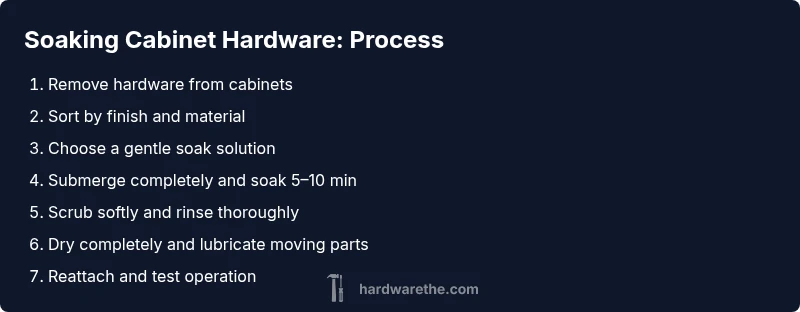
- 1
Remove hardware from cabinets
Carefully unscrew knobs, pulls, and hinges from doors and drawers. Place each piece in labeled containers so you can reassemble accurately. This prevents lost parts and ensures you know which screw goes where.
Tip: Label by cabinet or group by finish to avoid cross-mixing parts. - 2
Sort and label parts by finish/material
Group similar finishes (nickel, chrome, brass, copper) and keep wood components separate. Sorting minimizes cross-reaction between cleaners and helps you tailor each soak.
Tip: Use colored labels or bags to keep groups distinct. - 3
Pre-clean loose grime
Wipe away visible dirt with a damp cloth to reduce the amount of debris that dissolves in your soak. Quick pre-cleaning makes the soak more effective and prevents grit from gumming up moving parts.
Tip: Don’t scrub aggressively; you may scratch delicate finishes. - 4
Prepare soaking solution and container
Fill a non-metal bowl or jar with your chosen solution (soap, or soap plus vinegar). Ensure the container is large enough to submerge all parts completely and is free of corrosion-prone metals.
Tip: Label the solution if you plan multiple batches. - 5
Submerge hardware completely
Place hardware in the solution so every surface will contact the cleaner. Use a gentle tilt or light agitation to expose crevices, avoiding harsh scrubbing.
Tip: Keep small parts from sticking together by spacing them apart. - 6
Soak for recommended time
Most grime clears in 5–10 minutes for normal finishes; delicate coatings require shorter times. Do not exceed 15 minutes for nickel/chrome to avoid dulling or pitting.
Tip: Set a timer to avoid over-soaking. - 7
Scrub gently and inspect
After soaking, scrub with a soft brush to lift remaining grime from corners and crevices. Inspect for any discoloration, dull areas, or coating wear that may require a gentler approach.
Tip: Use a Q-tip for tight spots. - 8
Rinse thoroughly and dry
Rinse each piece under clean water to remove cleaner residues. Dry immediately with a soft cloth and then air-dry fully on a rack to prevent water spots and rust.
Tip: Pat dry, don’t rub vigorously to preserve finish. - 9
Lubricate moving parts
If hinges or pivots feel stiff, apply a thin film of mineral oil or a silicone-based lubricant after all pieces are completely dry. Wipe away any excess to prevent dust attraction.
Tip: Only a tiny dab is needed. - 10
Reassemble and test
Reattach hardware to doors and drawers, aligning screws with existing holes. Test operation; tighten screws if needed and ensure smooth rotation and movement.
Tip: Do a final check for level alignment before using the cabinet.
FAQ
Can I soak wood cabinet hardware or hardware with painted finishes?
No. Wood components, painted finishes, and glued parts can swell, peel, or loosen during soaking. Separate metal hardware from wood and avoid submerging anything not designed to be soaked. Use damp cloth and spot-clean for non-metal parts.
Avoid soaking wood or painted hardware; use damp cloth or spot-clean instead.
How long should I soak different metals?
Most metal hardware only needs 5–10 minutes for typical grime. Delicate finishes should be limited to 5 minutes or less. For rust or stubborn tarnish, a brief soak may help, but always test first and rinse thoroughly.
Five to ten minutes is usually enough for grime; test first for delicate finishes.
Is vinegar safe for all metals?
Vinegar is effective for mineral deposits but can corrode certain finishes with prolonged exposure. Use dilute solutions, limit soak time, and rinse well after soaking. Always test on a hidden area first.
Vinegar helps with mineral deposits but avoid long exposures on delicate finishes.
What if hardware is heavily rusted?
If rust is severe, soak in vinegar overnight to loosen corrosion and then scrub. If pitting occurs or the finish is compromised, consider replacement rather than trying to salvage It.
For heavy rust, try an overnight vinegar soak and assess; replacement may be best if pitting occurs.
Should I use bleach or ammonia cleaners?
Avoid bleach on most metal finishes and don’t mix ammonia with chlorine bleach. They can react harshly with metals and coatings. Stick to mild soaps, vinegar, and specialized metal cleaners.
Bleach and ammonia can damage finishes; use milder cleaners instead.
Can I use an ultrasonic cleaner for cabinet hardware?
Yes, if your hardware is compatible with ultrasonic cleaning and lacks fragile coatings. Ultrasonic cleaning helps reach intricate shapes, but test first and avoid excessive cycles that could loosen plating.
Ultrasonic cleaners can work for certain pieces—test first.
Watch Video
Main Points
- Remove hardware before soaking
- Use mild solutions first and test finishes
- Dry completely after cleaning
- Reassemble and inspect for smooth operation
- Maintain a routine to prevent future grime