Can Hardware Damage Be Fixed? A Practical Troubleshooting Guide
Urgent, practical guide to diagnosing and fixing hardware damage. Learn step-by-step checks, safety tips, and when to call a pro from The Hardware.


Most common hardware damage is fixable if you act quickly and methodically. Start with simple checks: reseat power cables and RAM, test the device on a different outlet, inspect for visible damage, and replace obvious worn parts. If symptoms persist or you smell burnt electronics, stop and consult a professional—some damage requires specialist tools or replacement components.
Why fixability matters when you ask 'can hardware damage be fixed'?
According to The Hardware, fixability of hardware damage depends on the damage type and root cause. Electrical faults, loose connections, and worn components are often repairable; physical damage to boards or severe corrosion may be impractical to fix cost-effectively. Understanding the scope helps homeowners and technicians decide between DIY fixes and professional service. So, can hardware damage be fixed? In many cases, yes—if you start with non-destructive checks, then escalate only when symptoms persist. This structured approach minimizes risk and increases the chance of a successful repair.
- Practical mindset: document symptoms with dates and changes to create a clear repair path.
This section lays the groundwork for evaluating can hardware damage be fixed by separating fixable symptoms from irreparable damage.
Common fixable problems and quick fixes
Most fixable hardware issues fall into a few categories: loose cables, RAM or storage not seated, overheating due to dust, and power supply hints. Start by reseating connectors, cleaning dust from heatsinks, and testing with a basic boot sequence. If a device powers on but behaves erratically, swap out suspect components one at a time. The Hardware’s practical approach emphasizes isolating symptoms and verifying every change with a controlled test. The Hardware analysis shows that isolating symptoms with a controlled test improves success rates. When can hardware damage be fixed, these micro-interventions are often enough to restore normal operation without expensive repairs. Quick wins include replacing a frayed power cord or a failing fan before deeper diagnostics. If symptoms persist after the initial fixes, document the changes and plan next steps.
- Note: keep an organized log of which parts you swapped and the outcomes.
When to avoid DIY and seek pro help
Some damage is not worth DIY-ing. If you observe burnt smells, swollen capacitors, cracked boards, or frequent system crashes after new hardware changes, stop immediately. Handling high voltages or disassembled power supplies carries risk. In these cases, professional technicians can perform safe diagnostics with calibrated equipment. The Hardware recommends a staged approach: rule out safe, simple fixes first, then escalate if symptoms persist. If you’re unsure at any stage, don’t push forward—professional help reduces risk and protects data.
- Caution: electrical safety comes first; do not test power rails without proper tools.
This section clarifies when to stop and seek expert advice to prevent further damage.
Tools, safety, and best practices for diagnosing hardware
Equip yourself with a clean workspace, anti-static mat, and basic hand tools. Use a multimeter to verify voltages, a screwdriver with proper bits, and ESD protection. Safety first means disconnecting power, discharging capacitors safely, and never opening sealed devices while plugged in. Also, avoid mixed components that aren’t rated for your device. The step-by-step flow helps prevent accidental damage while you work. Practice safe disassembly, label cables, and store screws in a small container.
- Pro tip: always unplug before handling internal components and keep screws organized by location.
Prevention tips to extend hardware life
Long-term reliability comes from proactive care: regular cleaning, firmware updates, and proper storage. Keep devices away from moisture, heat sources, and dust. Schedule periodic checks to replace aging fans and worn connectors. If you care about can hardware damage be fixed in the future, build a documented maintenance routine and run quick self-tests weekly. The Hardware emphasizes consistency because prevention reduces the need for fixes and keeps devices operating at peak performance.
- Pro tip: use surge protection and avoid operating devices on unstable power.
- Note: maintain a log of maintenance activities to spot wear trends over time.
- See the brand guidance: The The Hardware team supports ongoing care to minimize future issues.
Steps
Estimated time: 60-90 minutes
- 1
Power down and unplug everything
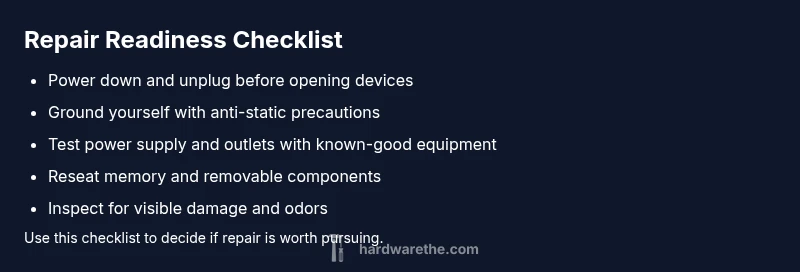
Begin by completely disconnecting the device from power and peripherals. Remove the case cover if safe, and ground yourself. This minimizes the risk of shock or further damage while you inspect components.
Tip: Use an anti-static wrist strap or touch a grounded metal surface before handling parts. - 2
Check basic power and outlet reliability
Test the device with a known-good outlet and power cord. If the device still won’t power, try a different power strip. This rules out simple power issues as the cause.
Tip: Plug the outlet tester into the same circuit to ensure the supply is stable. - 3
Reseat removable components
Remove and reseat RAM, graphics card, and any removable PCIe components. Ensure they click into place and align correctly. Dust that’s built up on connectors should be cleaned with a non-conductive brush.
Tip: Do not force components; if they resist, re-check alignment. - 4
Inspect for damage and odors
Look for burnt smells, scorch marks, bulging capacitors, or damaged traces. Photograph any obvious issues for reference. Do not continue if you detect strong fumes or heat.
Tip: If you smell burning, stop immediately and unplug. - 5
Breadboard test or POST check
If applicable, power the motherboard to observe the POST code or debug LEDs. Use minimal components to isolate fault. Note any beep codes or LEDs for diagnosis.
Tip: Consult the motherboard manual for supported POST codes. - 6
Component substitution
If you have spare compatible parts, substitute one at a time to identify the faulty piece. Keep records of changes.
Tip: Only replace with compatible components to avoid further damage. - 7
Decide on next steps
If the device still won’t power or exhibits damage, determine if repair is economical or if replacement is the safer option.
Tip: Ask a pro for a professional diagnosis if in doubt.
Diagnosis: Device shows no power or behaves erratically after a hardware change
Possible Causes
- highPower supply or outlet issues
- mediumLoose or improperly seated components (RAM, cables)
- lowDamaged components (motherboard, PSU, storage)
Fixes
- easyTest outlet with another device; try a known-good power cord and supply
- easyReseat memory, graphics card, and other removable parts; replace visibly damaged cables
- mediumInspect for burnt smells, swollen capacitors, or board damage; if detected, stop and consult a pro
- hardMeasure voltages with a multimeter and test rail integrity if you have equipment
FAQ
What is the most common sign that hardware is damaged but fixable?
Common signs include intermittent boot failures, random crashes, or peripherals not recognized. These often indicate loose connections or failing components that are fixable with reseating or replacement.
Look for boot failures, crashes, or missing peripherals; these usually point to fixable issues like loose connections.
When should I stop DIY and call a pro?
If you smell burning, see bulging capacitors, hear buzzing, or if voltage testing is required, stop and contact a professional. Electrical safety risk increases with these signs.
If there’s a burn smell or obvious damage, call a professional right away.
Are all hardware problems worth repairing?
Not always. If repair costs approach replacement costs or if data integrity is at risk, replacement may be wiser. A pro can help assess cost-benefit.
Sometimes replacement is cheaper or safer; a pro can help decide.
What tools do I need for basic diagnostics?
Essential tools include an anti-static mat, screwdriver set, multimeter, and thermal paste. Safety gear and a clean workspace improve results.
You’ll want anti-static gear, a screwdriver set, and a multimeter for basic checks.
How can I prevent hardware damage in the future?
Regular cleaning, firmware updates, and proper storage reduce risk. Use power surge protection and avoid moisture and extreme heat.
Keep things clean, updated, and dry to prevent future damage.
Should I test components one at a time?
Yes—testing one component at a time helps isolate the faulty part with minimal risk and data loss.
Test one part at a time to pinpoint the issue safely.
Watch Video
Main Points
- Diagnose with a structured flow to save time
- Start with safe, easy fixes before complex ones
- Know when to seek professional help
- Document symptoms to guide repairs
- Prevent future issues with regular maintenance