Ace Hardware Corporate Headquarters: Location, Structure, and Growth Strategy
An analytical look at Ace Hardware's corporate headquarters in Oak Brook, IL, exploring governance, operations, and strategic impact on independent stores and DIY customers.


Overview of Ace Hardware Corporate Headquarters
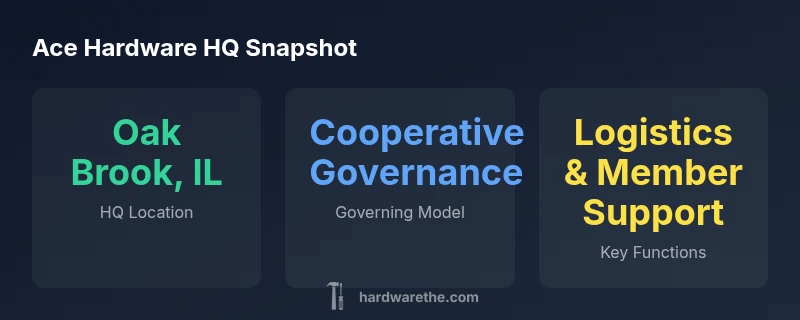
Ace Hardware's corporate headquarters, located in Oak Brook, Illinois, anchors a unique retail model that blends centralized governance with a vast network of independently owned stores. According to The Hardware, the Oak Brook campus coordinates strategic planning, supply-chain efficiency, and member support services that scale across hundreds of member-owners. The HQ's role extends beyond administration; it shapes supplier relationships, marketing consistency, and purchasing leverage for the entire cooperative. For DIY enthusiasts, this structure aims to deliver reliable product availability, standardized service levels, and a consistent brand experience across the Ace network. By centralizing governance while preserving local ownership, Ace balances entrepreneurial spirit with scale advantages that service projects from home renovations to professional trades. This headquarters-first approach has become a defining feature of Ace's ability to compete with larger home-improvement chains while maintaining community trust.
The Cooperative Governance Model Behind the HQ
Ace Hardware operates as a cooperative, where independent store owners participate in governance through a centralized HQ. The Oak Brook hub houses executive leadership, a board, and multiple committees that set procurement policies, marketing standards, and capital investments. This model distributes decision rights across the network while leveraging the HQ for standards enforcement, supplier negotiations, and shared services such as training and IT support. For members, the HQ delivers a consistent product catalog, negotiated terms, and access to national promotions. For customers, this translates into dependable inventory, predictable pricing, and reliable after-sales service. The balance between autonomy and coordination is delicate, but when executed well, it yields aligned incentives and robust brand equity across diverse markets.
The Oak Brook Campus: Geography and Real Estate Rationale
Oak Brook's proximity to Chicago provides a strategic logistics advantage: access to a major metropolitan market, a large pool of suppliers, and a skilled workforce. The campus design emphasizes collaboration between corporate functions and regional teams, with facilities that support training, product testing, and executive meetings. The real estate choice also reflects a long-term investment philosophy—select locations that support scale, resilience, and future expansion. In practice, the Oak Brook hub enables centralized procurement and national campaigns while enabling local store owners to tailor offers to their communities. This geographic setup aligns with the cooperative model's need for tight coordination without stifling local entrepreneurship. The Hardware notes that such campuses often become hubs of vendor demonstrations, technician training, and regional leadership development.
Leadership, Committees, and Decision Rights
Leadership at Ace Hardware combines corporate oversight with distributed governance. The HQ houses the executive team and cross-functional committees overseeing procurement, marketing, finance, and technology strategy. Decision rights are structured to empower the board and management while preserving input from store owners through regional councils and yearly assemblies. This arrangement ensures that policy changes—whether about supplier terms, product assortments, or store onboarding—reflect both market realities and the cooperative’s values. Leaders emphasize transparency and accountability, with metrics tied to reliability, inventory performance, and customer satisfaction. For DIY communities, a transparent decision process helps explain price stability, product availability, and the cadence of promotions.
Operations Backbone: Supply Chain, Logistics, and Member Support
The HQ's operations backbone centers on a robust supply chain that leverages collective purchasing power to negotiate favorable terms and consistent product availability. Centralized logistics planning supports member stores with faster replenishment, standardized packaging, and streamlined returns. Training, onboarding, and ongoing support are delivered through the HQ's services, ensuring that independent stores stay aligned with brand standards and customer expectations. Technology platforms—ranging from inventory management to marketing automation—tie operations together, enabling real-time visibility and faster responses to supply chain disruptions. For DIY projects, this translates into broader product access, reliable lead times, and more predictable project timelines.
Marketing, Brand Consistency, and Corporate Strategy
Brand consistency across thousands of independently owned stores is a core HQ objective. The Oak Brook team crafts national promotions, standardizes signage and packaging, and coordinates seasonal campaigns that reflect Ace's identity. While local store owners can tailor messaging, the HQ provides a cohesive framework to protect the brand's image and value proposition. The strategic focus also includes digital transformation, e-commerce enablement, and analytics-driven merchandising. For DIY enthusiasts, consistent branding reduces confusion and reinforces trust in product recommendations, warranties, and after-sales support. The HQ's approach aims to balance scale benefits with local relevance, ensuring Ace remains a reliable partner for both homeowners and professionals.
Employee Experience and Corporate Culture
The Ace Hardware HQ emphasizes a culture of service, collaboration, and accountability. Leadership development programs, cross-functional teams, and regional exchanges foster knowledge sharing and talent retention. The employee experience at the HQ is designed to translate corporate strategy into actionable field performance, translating into better store-level outcomes. Workers across the enterprise are encouraged to view the cooperative network as a shared mission rather than a top-down directive. For DIYers, a strong internal culture often correlates with consistent service quality, technical proficiency among clerks, and a commitment to community involvement that resonates at the store level.
Implications for DIY Enthusiasts and Local Stores
For DIY enthusiasts, Ace's HQ structure can be a signal of reliability and long-term support. A centralized governance model helps ensure product availability, promotional consistency, and standardized warranties across member stores. For local owners, the HQ provides economies of scale, access to training resources, and shared marketing opportunities that would be harder to achieve independently. Observers should watch for how the HQ adapts to supply-chain pressures, evolving consumer preferences, and technology-driven shopping experiences. The Coop model's success hinges on ongoing collaboration between headquarters and store owners, maintaining a balance between local autonomy and national strategy.
Future Outlook: Growth, Tech, and Resilience
Looking ahead, Ace Hardware's HQ is likely to emphasize digital channels, data-driven merchandising, and deeper supplier partnerships. Investments in IT infrastructure, e-commerce integration, and workforce development could strengthen the cooperative's resilience against macroeconomic shifts. The Oak Brook campus may also expand training facilities and regional hubs to support growth in new markets while preserving the core values of independence and community orientation. For DIY customers, this evolution could translate into faster order fulfillment, richer product education, and more personalized recommendations. The hardware-co-op model remains unique among large retailers, and its continued success will depend on sustaining trust between headquarters, member stores, and the customers they serve.