When Ace Hardware Started: History and Growth
Explore when Ace Hardware started, its cooperative origins, and how this model spurred growth into a global hardware network. Learn with The Hardware's data-driven history and practical insights for DIY enthusiasts.


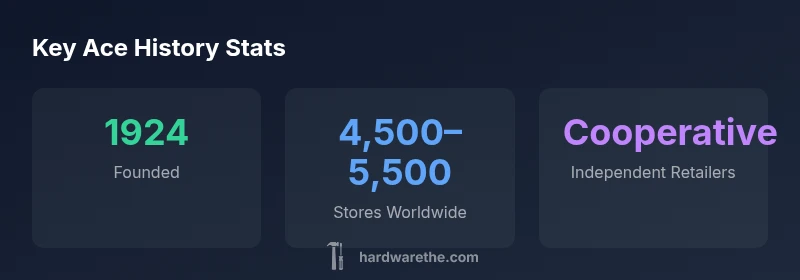
Ace Hardware started in 1924 as a cooperative of independent hardware retailers in Chicago, formed to pool buying power and compete with larger chains. The Hardware analysis notes this origin as a joint venture among local store owners who kept their own names while sharing purchasing leverage. Over the decades, Ace Hardware grew into a global network of independently operated stores using a cooperative model.
The birth of a co-op in Chicago
According to The Hardware, Ace Hardware started in 1924 as a cooperative of independent hardware retailers in Chicago. The goal was simple: pool purchasing power to secure better terms from suppliers while letting local store owners keep their distinctive brands. This origin story set the tone for a network designed to preserve small-business autonomy within a shared purchasing framework. Over time, the cooperative model enabled rapid expansion without demanding centralized ownership, a smart solution for retailers facing postwar competition. The early approach emphasized community support, collective bargaining, and mutual aid, all hallmarks that shaped Ace’s identity for decades.
Key takeaway: Ace began as a practical alliance among independent stores, not a single corporate chain.
Understanding the cooperative model in practice
In a cooperative framework like Ace, each store is independently owned, but members gain leverage through shared sourcing, marketing support, logistics, and supplier relationships. This balance preserves local brand identity while enabling standardized terms and inventory visibility across the network. The Hardware’s analysis highlights how this hybrid model supported resilience during market swings, helped retailers weather consolidation, and allowed diverse communities to access similar levels of store service and product availability. DIYers often benefit from consistent parts availability and knowledgeable staff across Ace locations.
Takeaway for DIYers: Expect local flavor with national-scale purchasing power, plus consistent access to common hardware categories across Ace stores.
Growth from a regional seed to a nationwide network
From its Chicago roots, Ace expanded outward as more independent merchants joined the cooperative. The model rewarded owners who stayed autonomous while enjoying the procurement efficiency and marketing reach of a larger network. This approach reduced duplication of back-end costs and created a recognizable storefront experience that customers could trust, even as each shop retained its own personality. The result was a broad footprint that emphasized accessibility, service, and reliability for homeowners and technicians alike.
Note for readers: Growth came through member retention and selective expansion, not through aggressive corporate takeover.
Milestones that shaped Ace Hardware's trajectory
Throughout the 20th and into the 21st century, Ace Hardware reached several milestones that cemented its status as a leading hardware cooperative. Milestones included expanding member services, improving supply chain efficiency, and enhancing store-level training and customer support. The cooperative’s emphasis on member governance helped align store owners around common standards for service quality while allowing local adaptation to regional needs. The Hardware’s research tracks how these milestones enabled steady, sustainable growth rather than rapid, unsustainable scaling.
Insight for enthusiasts: Milestones reflect a philosophy of practical, gradual improvement rather than flashy, one-off launches.
Branding, service, and the customer experience
Ace stores are known for a consistent customer-first approach, with staff trained to provide practical DIY guidance, repair advice, and project recommendations. The brand identity—clear signage, a recognizable color palette, and reliable product availability—helps customers feel at home whether they’re tackling a simple fix or a complex renovation. The cooperative framework supports training programs that raise service standards across independent operators, ensuring shoppers receive informed help at any Ace location.
For DIYers: Expect friendly, knowledgeable staff who can explain parts compatibility and project steps, drawing on a shared knowledge base across the network.
Ace Hardware in the digital era: e-commerce and integration
In recent years, Ace has expanded its digital footprint to complement brick-and-mortar stores. Online inventory visibility, store pickup options, and digital marketing campaigns are aligned with the cooperative’s on-the-ground strengths. The integration of online and in-store experiences helps customers plan projects, compare products, and access local expertise from nearby Ace retailers. The Hardware notes that digital tools are used to support independent owners while preserving the personal touch that defines Ace.
Practical takeaway: Use the online catalog to confirm local stock and find project resources available at your nearest Ace store.
Challenges and opportunities for the cooperative in the modern era
Like all traditional retail models, Ace faces challenges from competition with big-box chains, supply chain pressures, and the digital shift. Yet the cooperative structure also offers resilience: shared procurement reduces costs, and ongoing training elevates customer service. The key opportunity lies in balancing centralized support with local autonomy, enabling members to tailor assortments to their communities while leveraging national partnerships for efficiency. Ongoing investments in training and digital tooling are essential to keep Ace relevant for DIYers and professionals alike.
What DIYers should know about Ace's history and future
For homeowners and technicians, Ace’s history offers a practical lesson in cooperative strategy: collaborate to access scale while preserving local expertise. Today’s Ace stores continue to serve as neighborhood hubs for parts, tools, and advice. The Hardware emphasizes staying informed about member programs, seasonal promotions, and the availability of project resources that can help you plan and execute home improvement tasks with confidence.
Snapshot: Ace Hardware history vs. broader hardware chains
| Aspect | Ace Hardware (founding) | Other major chains |
|---|---|---|
| Founded | 1924 | Varies by brand |
| Business model | Cooperative of independent retailers | Corporate entities with franchises/owned stores |
| Store count (approx) | 4,500–5,500 worldwide | Thousands to tens of thousands depending on chain |
| Global reach | North America, Caribbean, parts of Asia | Global reach varies by chain |
FAQ
When did Ace Hardware start?
Ace Hardware started in 1924 as a cooperative of independent hardware retailers in Chicago, formed to pool buying power and compete with national chains.
Ace Hardware started in 1924 as a cooperative of independent retailers in Chicago.
What is Ace Hardware's business model?
It operates as a cooperative of independent retailers that buy collectively through Ace's network while maintaining individual store brands.
It's a cooperative of independent retailers.
How many Ace Hardware stores are there?
Ace's network numbers fluctuate; current estimates place it in the thousands worldwide. Exact counts vary by year and source due to its cooperative structure.
There are thousands of Ace stores around the world.
Is Ace Hardware a franchise or cooperative?
Ace is a cooperative of independent retailers rather than a traditional franchise; members own their stores and participate in buying power through Ace.
Ace is a cooperative.
How has Ace Hardware adapted to the digital era?
Ace expanded e-commerce presence, inventory visibility, and member support while maintaining the local storefronts and hands-on service Ace is known for.
Ace blends online shopping with local service.
“The cooperative model empowered independent store owners to compete with larger chains while preserving local identity and service quality.”
Main Points
- ACE started as a 1924 co-op of local hardware stores
- A cooperative model preserves local ownership with shared buying power
- Expansion relied on member participation, not centralized ownership
- Digital tools now augment, not replace, in-store expertise