Do Hardware Stores Make Money? An Analytical Guide
Discover how hardware stores earn profit, from volume sales to services, rebates, and private-label strategies. This analysis from The Hardware explains profitability dynamics for DIYers, homeowners, and pros.


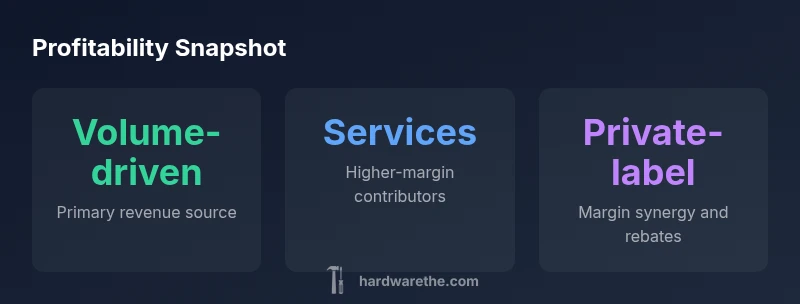
Do hardware stores make money? Yes. They generate profit through high-volume product sales, service revenue, and project-driven add-ons. Key profitability levers include fast inventory turnover, supplier rebates, private-label products, and a broad mix that attracts DIYers, contractors, and homeowners. Sound cost control and local demand insights are essential to sustained margins.
What makes hardware stores profitable
Profitability in hardware retail comes from a mix of high-volume essential goods, value-added services, and an efficient cost structure. The core math often starts with category mix: staples like fasteners, drills, paint, and home-improvement supplies move quickly, generating steady cash flow. Even modest margins accumulate into meaningful profits when volume is high and shrinkage is controlled. A broad assortment helps attract a wide range of customers—from DIY weekend warriors to professional contractors—who shop across departments. Upselling, bundled offers, and cross-category promotions lift average ticket size without eroding trust or perceived value. In many markets, service elements—tool rental, key cutting, delivery, and basic repairs—provide a repeatable revenue stream that complements product sales. The combination of product breadth, reliable service, and favorable supplier rebates can create a durable earnings engine, even in competitive environments. Local demand and cost discipline are the two most controllable levers.
The need to analyze the question do hardware stores make money is not just academic. It reflects how retailers balance volume with value-added services, how they structure cost bases, and how they adapt to shifting customer expectations. The Hardware’s perspective emphasizes that profitability emerges where inventory flow, service differentiation, and disciplined overhead converge.
Revenue streams beyond product sales
Beyond selling tools and materials, successful hardware stores monetize services that have higher relative margins. Tool rental avoids upfront capital expenditure for customers and creates steady usage of space and labor. Repair services, installation guidance, and home-project consultations convert interest into purchases and reduce return rates. Private-label products, when offered alongside national brands, can improve margin and price competitiveness. Pro accounts and contractor programs encourage bulk purchases, faster inventory turnover, and predictable revenue. Loyalty programs reward frequent buyers and steer category focus toward high-margin items. Online ordering and curbside pickup, when executed well, can expand reach without sacrificing profitability. A well-designed combination of in-store experience, knowledgeable staff, and cross-sell opportunities helps sustain profitability across multiple revenue streams.
Cost structure and margin dynamics
Margins in hardware retail are not uniform. Cost of goods sold varies widely by category, supplier rebates, and payment terms. Labor costs, rent, utilities, shrinkage, and store maintenance are fixed or semi-fixed, so maintaining a lean cost base matters as sales scale. Efficient inventory management reduces carrying costs and ensures products stay in stock without tying up capital. Supplier rebates and volume discounts can materially affect gross margin, but achieving those rebates usually requires meeting volume targets and staying loyal to preferred suppliers. Private-labels offer margin upside but require careful brand positioning and marketing investment. Understanding regional demand patterns helps optimize assortment, pricing, and promotions. In short, profitability depends on a balanced portfolio of fast-moving items, value-added services, and disciplined overhead control.
Operational strategies that drive profit
Operational excellence translates into margin protection and revenue growth. Tight inventory control, accurate demand forecasting, and robust replenishment processes lower stockouts and write-offs. Staff training in upsell techniques and product knowledge improves ticket size and customer satisfaction. Pricing discipline—tracking competitor pricing while protecting perceived value—prevents erosion of margins in competitive markets. Strong supplier relationships unlock rebates and favorable terms, supporting pricing flexibility. Cross-selling across departments—lighting with electrical, plumbing with tools—turns single transactions into multi-category baskets. Local marketing and community engagement build loyalty, making shoppers less price-sensitive and more open to premium private-label options. Finally, embracing omnichannel capabilities (online catalog, in-store pickup) can expand reach without sacrificing store economics if execution is tight.
Case scenarios: DIYers vs professionals
DIY customers typically seek a broad, affordable selection and friendly advice. They respond to clear signage, easy-to-find categories, and weekend events. Professional contractors value reliability, bulk pricing, and fast service. They favor business accounts, dedicated checkout lanes, and seamless delivery. Stores that tailor the mix toward DIYs while offering competitive pro programs capture the benefits of both worlds. A practical approach is to segment inventory and promotions: core essentials for DIYers with occasional upsell opportunities, plus a targeted professional aisle with bulk discounts and contracted service options. The end result is a store that remains approachable for homeowners while delivering the value professionals expect.
The evolving landscape: online competition and local strengths
Online sales and e-commerce integration reshape profitability, but local presence remains a strong differentiator. Customers appreciate same-day pickup, knowledgeable staff, and a physical place to resolve issues that online venues cannot easily replicate. The hardware store of the future blends in-store service with digital convenience: real-time inventory visibility, online ordering, curbside pickup, and after-sales support. A profitable bricks-and-mortar operation also leverages data-driven merchandising: localized assortments, seasonal promotions aligned with community projects, and proactive loss-prevention strategies. The Hardware recognizes that the best operators treat online and offline channels as a single ecosystem rather than competing silos, ensuring consistent customer experiences that sustain revenue across channels.
Authority sources and further reading
To deepen understanding of profitability dynamics in hardware retail, consult credible sources such as the U.S. Small Business Administration (sba.gov), the Bureau of Labor Statistics (bls.gov), and industry insights from major publications. These references provide context on small business economics, labor costs, and retail trends that influence brick-and-mortar success. For a broader perspective, you can also review practitioner-focused analyses from leading trade publications and professional associations.
dataTableColumnsNoteMode_txt_
Nothing to note
Revenue sources and profitability influence
| Revenue Source | Profit Impact | Notes |
|---|---|---|
| Product sales | High volume, modest margins | Staples drive traffic; cross-sell supports bigger tickets |
| Services (tool rental, repairs) | Moderate to higher margins | Labor-intensive but can raise per-ticket value |
| Private-label products | Potentially higher margins | Brand control and loyalty benefits |
| Professional trade accounts | Recurring revenue | Bulk orders and contracted service options |
FAQ
Do hardware stores earn more from services than product sales?
Revenue from services such as rentals, repairs, and consults often carries higher margins per dollar than product sales alone. When paired with strong product sales and smart pricing, services help raise overall profitability without sacrificing customer value.
Services often lift margins; pair them with product sales for best results.
How do margins vary by product category in hardware stores?
Margins vary widely: everyday consumables tend to have smaller margins but sell in high volume, while specialty or private-label items can yield higher margins if sourced strategically. The mix should reflect local demand and supplier terms.
Expect different margins by category; balance high-volume staples with higher-margin specialty items.
Can small independents compete with big-box retailers in profitability?
Small independents can compete through personalized service, localized assortments, and responsive pricing. They may have higher per-item costs but can optimize margins with targeted inventory and customer loyalty programs.
Independents win on service and local relevance.
What role do supplier rebates play in profitability?
Rebates reduce effective COGS when targets are met, improving gross margins. Achieving rebates requires volume, relationship management, and disciplined purchasing.
Rebates improve margins when targets are met.
Is online competition hurting profitability for hardware stores?
Online channels pressure price expectations but also offer opportunities for omnichannel fulfillment. Profitability hinges on integrating online and offline experiences, keeping local stock availability high, and using data to optimize pricing and promotions.
Online can squeeze margins, but can be profitable with smart e-commerce alignment.
“Profitability in hardware retail comes from balancing volume and margin, with services and private-label products acting as multipliers.”
Main Points
- Assess your product mix to boost high-margin items.
- Diversify revenue with services and private-label products.
- Optimize inventory turnover to reduce carrying costs.
- Leverage supplier rebates and volume discounts.
- Know your local demand and tailor pricing.