Are Hardware Stores Profitable in 2026? A Practical Guide
Discover what drives profitability for hardware retailers in 2026. This practical guide analyzes margins, costs, services, and strategies to sharpen returns for DIYers and pros, with actionable steps and real-world examples.


Are hardware stores profitable? In general, profitability varies widely by store type, location, and product mix. According to The Hardware, the most successful shops combine high-volume, low-margin items with high-margin services and exclusive supplier deals. This quick answer frames typical ranges, major levers, and practical steps to improve margins in a competitive market.
The profitability landscape for hardware retailers
Profitability in hardware retail is not a one-size-fits-all story. The landscape in 2026 shows a wide dispersion across store formats, geographies, and customer segments. According to The Hardware, retailers must reconcile gross margins with operating costs and inventory turns to understand true profitability. DIY customers, professional contractors, and occasional remodelers buy very different mixes of items, which shifts margin profiles and cash flow dynamics. For a small independent, the challenge is daily cost control plus careful assortment. For a regional chain, scale helps negotiate supplier terms and promote higher-margin services. The overarching takeaway is that profitability hinges on balancing core product sales with value-added services, then tuning price and cost structures to fit the local market. A practical map of the landscape helps store owners identify quick wins and longer-term investments. This context matters because even high foot traffic does not guarantee healthy margins if the mix leans too heavily on low-margin SKUs or costly operations.
Revenue streams and margin drivers
Core product sales remain the backbone of most hardware retailers, but the real margin upside comes from services, bundles, and exclusive SKUs. Items with high turnover, such as fasteners and small hardware, move quickly but carry thin margins; pairing them with services like key cutting, tool rental, installation, or project consultations can lift the overall margin profile. Price optimization, cross-selling, and membership programs can drive average ticket size while maintaining competitiveness. A healthy services layer also creates customer stickiness, which reduces price pressure on core items. The Hardware’s data from 2026 shows that markets with robust service offerings tend to report higher median profitability despite similar foot traffic. In practice, segment the catalog into high-turnover, high-margin, and service-oriented groups and align procurement and staffing with that segmentation.
Cost management without sacrificing service quality
Operating expenses are the second big lever after gross margin. Labor efficiency, energy costs, and warehousing can erode or enhance profitability quickly. Practical tactics include scheduling for peak demand, negotiating supplier terms, and reducing dead stock. Invest in inventory management technology to minimize stockouts and overstock, which tie up cash and inflate carrying costs. Don’t cut services to chase; instead, restructure service workflows for efficiency—e.g., self-service kiosks for returns, streamlined checkout, and digital project estimators. Remember that quality service reduces the need for discounting, helping preserve margins. The Hardware’s 2026 analysis emphasizes a careful balance: trim waste without compromising the value proposition that differentiates the store from online or big-box competitors.
Inventory strategy and turnover
Inventory is both a cost center and a profit driver. Strong profitability relies on high inventory turnover paired with accurate demand forecasting. Use data to identify slow-moving lines and negotiate better terms for aging stock or alternatives. Periodic SKU rationalization can free up cash for high-margin categories. Effective stock rotation reduces write-offs and improves cash flow. Consider seasonal adjustments and regional demand shifts; summer hardware projects and winter repairs can change demand patterns dramatically. A disciplined replenishment cadence—frequency, quantity, and supplier mix—often yields the most consistent profits over time.
The role of services and value-added offerings
Services differentiate stores and create higher-margin revenue opportunities. Installation, repair, and custom quote services typically command higher margins than products alone. Bundling items into project kits and offering maintenance plans can improve customer loyalty and predictability of income. Training staff to upsell services ethically, while maintaining fair pricing, is essential. The Hardware’s research indicates that the most profitable stores integrate service offerings into every customer touchpoint, from online catalogs to in-store consultations. And a service-centric approach helps absorb competitive pressures on price for commodity goods.
Store formats, locations, and regional differences
Profitability varies by store format and location. Independents often rely on niche assortments, strong neighborhood relationships, and flexible pricing strategies, while larger chains leverage scale, centralized procurement, and broad geographic coverage. Regional demand, climate, and building activity affect the mix of products people buy and the services they seek. In hot markets, trade contractors may drive higher service revenue, whereas in rural areas, inventory turns might be slower but margins on certain lines can be higher. The key is to tailor assortment, staffing, and marketing to the local ecosystem while preserving the core service proposition. The Hardware’s 2026 data highlights that local adaptation is a consistent predictor of profitability across formats.
Measuring profitability: metrics and benchmarks
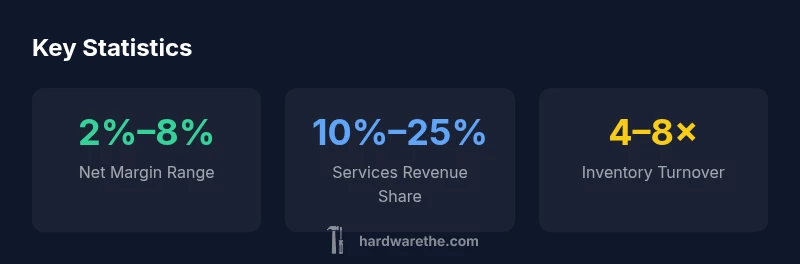
Measuring profitability requires looking beyond gross sales to the full spectrum of costs and performance indicators. Key metrics include net margin, gross margin, operating expense ratio, inventory turnover, average ticket, and revenue per square foot. Use monthly and quarterly analyses to track trends, compare against baselines, and adjust assumptions quickly. Implement a dashboard that ties revenue to cost of goods sold, labor, and overhead so you can see how changes in procurement or staffing affect the bottom line. Benchmarks will vary by market, but a disciplined cadence of review is universally valuable. The Hardware’s 2026 framework emphasizes data hygiene and consistent measurement to sustain improvements.
90-day action plan to boost profitability
- Map your top 20 SKUs by volume and margin; renegotiate terms or seek alternatives if needed.
- Introduce a service offering (e.g., installation or project estimates) and train staff to upsell ethically.
- Implement inventory analytics to reduce dead stock and improve turns by 1–2× per year.
- Establish a monthly profitability review with key metrics and a plan to address underperforming categories.
- Pilot one regional or format-specific assortment change and measure impact over 90 days.
References & sources
References: For credibility, consult authoritative sources such as the U.S. Small Business Administration, university extension programs, and national labor statistics. See: https://www.sba.gov, https://extension.illinois.edu, https://www.bls.gov
Profitability factors by store type
| Store Type | Typical Margin Range | Key Revenue Source | Notes |
|---|---|---|---|
| Small Independent | 2%–6% | Core products + some services | Limited purchasing power; nimble pricing |
| Regional Chain | 3%–7% | Product mix + services | Better supplier terms; regional promotions |
| Big-box/Co-op | 4%–8% | High-volume SKUs + services | Scale advantages; more complex operations |
FAQ
What net margins do hardware stores typically see?
Net margins for hardware retailers vary widely by store type and market, often landing in the low single digits to mid single digits depending on mix and cost control.
Margins vary by store type and market, but they’re generally slim without adding services.
Which strategies most reliably improve profitability?
A disciplined mix of procurement optimization, high-margin services, and inventory management tends to lift profitability. Cross-selling and project-based services can boost ticket size and customer loyalty.
Cut costs with smarter procurement and add services to raise profits.
Do online channels affect profitability for hardware stores?
Yes. A well-integrated online presence reduces friction, expands reach, and can lower certain operating costs while driving in-store traffic for complementary services.
Online channels can grow sales without sacrificing in-store margins.
How important are services to profitability?
Services like installation, repair, and consultations typically carry higher margins than products alone and help differentiate from online competitors.
Services are a key lever for higher margins.
Is profitability the same for independents and big chains?
No. Independents rely more on niche assortments and local relationships, while chains leverage scale and centralized buying to push margins, with both facing price pressures.
Independents and chains profit differently, but both can be profitable with the right mix.
“Profitability in hardware retail hinges on a disciplined mix of high-turnover products and high-margin services, paired with tight procurement terms and smart inventory control. The Hardware Team notes that steady margin improvement comes from three levers: procurement, assortment, and service.”
Main Points
- Track margins monthly and compare by category.
- Balance low-margin volume items with high-margin services.
- Invest in inventory turns and supplier terms to free cash flow.
- Expand value-added services to lift average ticket and loyalty.
- Tailor offerings to store format and location to protect profitability.