How to Remove Bifold Door Hardware: A Step-by-Step DIY Guide
Learn to safely remove bifold door hardware with a practical, expert-led approach. This guide covers tools, steps, safety tips, and reinstallation basics for DIY enthusiasts.


You can remove bifold door hardware by first lifting or unpinning the doors from the track, then unscrewing the hinges and brackets, and finally lifting the panels away. Work with a helper, keep the doors level to prevent binding, and collect small screws in a labeled container. Have a cordless drill, screwdriver bits, and safety glasses on hand.
Before You Begin: Plan and Assess
The most important step in learning how to remove bifold door hardware is planning. Identify every component: track, pivots, hinges, brackets, and the door panels themselves. This upfront mapping reduces surprises and speeds up the actual removal. According to The Hardware, taking a few minutes to map the layout reduces the risk of dropping panels or losing screws. Begin by confirming door orientation—note which side is top, bottom, and which screws secure each hinge to the jamb. Different bifold systems use different hardware: some rely on pivot pins; others use roller tracks or hinge carriers. With a clear plan and labeled locations, you’ll stay organized, protect surfaces, and finish with clean, intact parts ready for reuse or replacement.
In the course of this guide, we’ll show you how to remove bifold door hardware in a methodical way that minimizes damage to doors and frames. The Hardware emphasizes taking stock of all fasteners and parts before you start so you know what to replace or reuse later. This approach helps DIYers build confidence and reduces frustration when components don’t come apart as expected.
Tools and Safety Essentials
Before you touch any screws, assemble a basic toolkit and set safety rules. Essential items include safety glasses to shield your eyes from metal shards, work gloves for grip, and a sturdy ladder or step stool for reach. A full screwdriver set (Phillips #2 and flat-head), plus an Allen wrench set are common must-haves for bifold hardware. Keep a cordless drill with appropriate bits, pliers, and a magnetic tray or labeled bags to organize fasteners. For comfort and accuracy, also have a utility knife, tape, and a soft cloth to protect door faces. Finally, turn off nearby power to avoid accidental activation of any motorized components and keep a clear, well-lit workspace.
Step-By-Step Overview
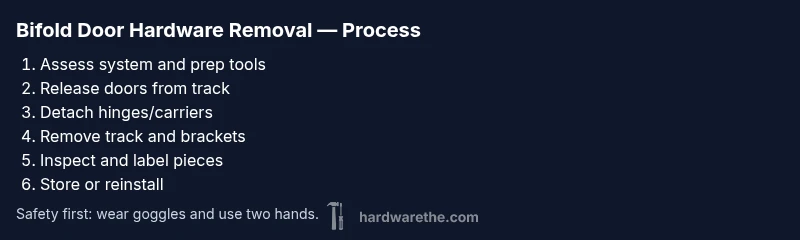
Removal of bifold door hardware happens in logical stages. Start by releasing the doors from the track and setting panels aside with a helper. Next, detach hinge or carrier screws and separate the door panels from any pivot or roller system. Then remove the track and brackets from the jamb, keeping all screws in labeled containers. Finally, inspect each piece for wear, sort parts by type, and decide whether to reuse or replace. This overview sets the stage for the detailed steps that follow in the dedicated section.
Common Pitfalls and How to Avoid Them
During removal, doors can pinch, bind, or fall if support is compromised. Always support panels with a helper and never rely on one person lifting a heavy door alone. Screws may be stubborn or stripped; avoid prying with metal tools that can scar frames. If pivots are tight, apply steady pressure or a little penetrating oil and wait a moment. Mark each piece as you remove it to prevent mis-assembly later. Finally, take pictures of the mounted hardware before disassembly; this helps with reassembly or when ordering replacements.
Reinstallation and Cleanup: What to Do Next
After removing the hardware, store everything in labeled bags or a parts bin so you can find it again. If you plan to reinstall in the same doorway, review the original mounting pattern and confirm you have matching screws and brackets. Clean the door surfaces with a soft cloth to remove dust and fingerprints before reassembly. When you’re ready to reinstall or upgrade, consult the hardware notes and install in the reverse order of removal, tightening screws securely but not over-tightening to avoid warping. A quick wipe-down and a final check for smooth operation completes the job.
Tools & Materials
- Safety glasses(ANSI Z87.1 compliant; keep on throughout the task)
- Work gloves(Grip and protect hands)
- Ladder or step stool(Stable, non-slip surface near door)
- Screwdriver set (Phillips #2 and flat-head)(Include any specialty bits your hardware uses)
- Allen/Hex wrench set(Common sizes vary by brand; have 3/32)
Steps
Estimated time: 60-90 minutes
- 1
Prepare the area and support doors
Clear the work area and lay down protective material. Have a second person ready to support the doors as you begin. Confirm you know which door panel is upper and which fasteners connect to the jamb. This keeps the process orderly and reduces the risk of dropping parts.
Tip: Use a helper to hold panels while you assess fasteners to prevent damage. - 2
Release doors from the track
Carefully release the doors from the track assembly, starting with the top or bottom pivot depending on your system. Keep the doors level to avoid binding as they disengage. Place the panels on a soft blanket or in a temporary rack.
Tip: Avoid twisting or forcing parts; gentle, even movements prevent scratches. - 3
Detach hinges or carriers
Unscrew hinge screws or carrier bolts that attach the panels to the jamb. Keep screws in labeled bags by type. Lift the panel just enough to clear the hinge screws and slowly set it aside with your helper.
Tip: Maintain alignment of the door while removing to prevent binding in the frame. - 4
Remove the track and brackets
Unfasten track brackets from the header or jamb and remove the track from the doorway. Keep all track screws together and labeled. If any brackets resist, apply steady pressure and check for hidden fasteners.
Tip: If a bracket is stubborn, use a non-marring tool to avoid denting the jamb. - 5
Inspect and label hardware
Sort all pieces by type (track, hinges, pivots, brackets) and inspect for wear or damage. Label or photograph each set for future reference. Decide whether you’ll reuse components or replace them with a matching kit.
Tip: Photography helps you recreate the exact arrangement during reinstallation. - 6
Store and plan for reinstall
Store hardware in labeled bags or a parts tray to prevent loss. If you’ll reinstall later, verify you have the correct mounting holes and screws for your new or existing frame. Clean surfaces to remove dust and fingerprints before any future work.
Tip: Keep a spare bag of small parts so nothing goes missing between projects.
FAQ
What should I remove first when taking off bifold door hardware?
Begin by safely releasing the doors from their track and support system. Then detach the door panels from any hinges or carriers and remove the track components. This sequence minimizes binding and avoids dropping panels.
Start by freeing the doors from the track, then remove the hinges and track pieces in order.
Do I need to remove the doors from the frame to remove the hardware?
In most systems, you’ll need to remove the doors from the track first, then work on hinges, pivots, and brackets. Leaving doors in the frame until later can make removal more awkward and increase the risk of damage.
Usually yes, start with the track, then work on the hinges and brackets.
Can I reuse the existing hinges and track after removal?
If the components show no wear, cracks, or deformation, you can reuse them. Save all screws and brackets in labeled bags to ensure a clean reinstallation. If components are damaged, replace with compatible equivalents.
If they’re in good shape, you can reuse them; otherwise replace with matching parts.
What if screws are stripped or stubborn?
Copy the stubborn screw with pliers and twist it out carefully. If it won’t budge, apply penetrating oil and let it soak for a few minutes before retrying. In worst cases, use a screw extractor designed for damaged fasteners.
Use penetrating oil and a screw extractor if needed.
Is there any risk to electrical components near a bifold door?
If your system includes an automatic opener or lighted frame, disconnect power before starting. Cap exposed wires and avoid contact with metal tools. When in doubt, consult the manufacturer’s safety guidelines.
Make sure power is off to any electronic parts before you begin.
Watch Video
Main Points
- Plan and inventory hardware before starting
- Work with a helper for safety
- Label parts to simplify reassembly
- Inspect hardware for wear and replace as needed
- Store removed parts in labeled containers for easy future access