How to Install Hardware for Pocket Doors: A DIY Guide
Step-by-step guide to installing pocket door hardware: select the right kit, mount the track, hang the door, and align for smooth, lasting operation.


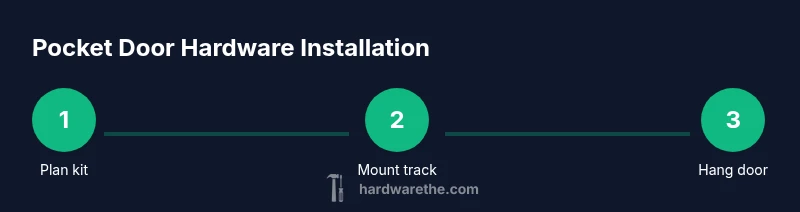
With pocket doors, the right hardware ensures smooth operation and reliable performance. This guide walks you through selecting a compatible kit, confirming the rough opening, mounting the track, attaching the rollers, hanging the door, and final alignment. Following these steps will minimize binding and misalignment while keeping installation safe.
Understanding pocket door hardware components
According to The Hardware team, pocket door hardware includes a top track, rollers or hangers, a header bracket, a floor guide, wall anchors, and mounting screws. Some kits also include soft close features or anti-jump devices. Understanding how these parts fit together helps you plan the installation and avoid missing pieces. Keep the door weight and thickness in mind when assessing compatibility and performance expectations for your project.
Choosing the right hardware kit and sizing
Choose a kit that matches the door width, weight, and thickness. Do not mix track length with a door that is too heavy or too light, as mismatch can cause binding or premature wear. The Hardware team notes that kit selection affects mounting options, stud space, and wall compatibility. When shopping, look for a kit that includes clear instructions, adjustable components, and a mounting template.
Measuring and preparing the rough opening
Begin by confirming the rough opening dimensions and ensuring there is a clean, square space for track mounting. Use a tape measure to verify width and height, and double check that there is a solid header above the opening. Mark stud locations and reference points with a pencil so you can align brackets and anchors accurately during installation.
Wall framing and drywall considerations
If you face drywall for a pocket, you will need to create a dry wall opening large enough for the track and header. Depending on the kit design, you may be able to install a recessed track within a framed pocket or surface mount the track on the wall. The Hardware recommends planning for extra clearance to accommodate rollers and guide fittings, and to avoid bumping the door during operation.
Installing the track and header
Mount the track and header per the kit instructions, using a level to ensure the track is perfectly horizontal. Secure the header bracket to the studs and fasten the track to it. Pre-drill pilot holes to prevent wood splitting, especially in newer studs, and snug the screws without overtightening. The result should be a straight, supported track that will guide the door smoothly.
Hanging the door and adjusting alignment
Attach the rollers to the door as directed, then lift and slide the door onto the track. Check that the door slides smoothly without binding and that it latches closed. Adjust the roller brackets and track height as needed, using shims if necessary. Leave a small clearance at the jamb to avoid rubbing when the door ends its travel.
Final adjustments, stops, and floor guide
Install floor guides to prevent door wobble and misalignment at the closed position. Set the door stops to define the travel range and ensure the door fully clears the opening. Tighten all mounting screws after final alignment. Test repeatedly from multiple angles to verify consistent performance.
Safety, maintenance, and troubleshooting
Wear safety gear, especially eye protection, during drilling and cutting. Double-check all fasteners before use and periodically inspect for loose screws. If the door binds or drags, recheck track alignment and roller seating. Clean debris after installation to maintain smooth operation and extend the life of the hardware.
Tools & Materials
- Measuring tape(at least 25 ft; measure twice)
- Pencil/marker(for marking stud locations)
- Level(to ensure track is perfectly horizontal)
- Cordless drill/driver(with wood and metal bits; pilot holes)
- Screwdriver set(Phillips and flat head)
- Stud finder(locate framing anchors)
- Utility knife(for trimming drywall edges)
- Pocket door hardware kit(includes track, rollers, floor guide, screws)
- Chalk line or laser level(for aligning long tracks)
- Helper (person)(optional but helpful for lifting door)
Steps
Estimated time: 2-4 hours
- 1
Inspect kit components
Open the kit and inventory every part against the instruction list. Verify that weight rating and track length suit your door. Confirm you have wall anchors and mounting screws. Do this before starting to prevent mid project pauses.
Tip: Lay parts out on a flat surface and group by function to speed assembly. - 2
Measure and mark rough opening
Use a tape measure to verify opening width and height, then mark reference lines for track placement. Ensure the opening is square using a carpenter square and level. Transfer marks to both sides of the opening for consistent mounting.
Tip: Mark with a pencil line that is easy to see and erase if needed. - 3
Install header anchors
Locate the header area and anchor points; pre drill holes in studs and install wall anchors per kit instructions. Check that anchors align with where the track brackets will sit. Avoid overtightening to prevent stud damage.
Tip: Use a level to ensure anchors align horizontally before tightening. - 4
Mount the track header
Attach the track to the header brackets; ensure it is level and square. Align with the marks made earlier and loosely fasten until final checks. Confirm there is clearance for the door and rollers.
Tip: Double-check alignment before tightening to avoid rework. - 5
Secure the track to studs
Fasten the track to the header and studs; pre drill holes to avoid splitting. Start at one end and move steadily to the other. Ensure screws sit flush but do not distort the track.
Tip: Tighten progressively to prevent warping. - 6
Attach rollers to the door
Follow kit instructions to attach the rollers to the door; verify screws are snug and brackets seat properly. Align the mounting holes with the door edge for an even hang.
Tip: Use a helper to hold the door steady while attaching rollers. - 7
Hang the door on the track
Lift the door and guide it onto the track; ensure the rollers seat correctly. Check for smooth travel with light guiding, then adjust height or alignment if needed.
Tip: Test the door before securing final anchors. - 8
Install floor guide and finalize
Install the floor guide to prevent wobble and set the door stops to define travel. Tighten all mounting screws after final alignment and test operation from multiple angles.
Tip: Make small incremental adjustments and re-test after each tweak.
FAQ
What parts are included in a typical pocket door hardware kit?
Most kits include track, rollers, header bracket, floor guide, wall anchors, and mounting screws. Always verify with your kit's instruction sheet.
A pocket door kit usually includes the track, rollers, header bracket, floor guide, and screws. Check the instructions for exact contents.
Will this work with an existing door or retrofit?
Yes, many pocket door kits are compatible with existing doors if the door thickness and weight fall within the kit specifications. You may need additional hardware.
Retrofitting is often possible if your door matches the kit's thickness and weight limits.
Do I need to remove drywall to install?
Some installations require access to the wall pocket, which may involve drywall work. Retrofit or surface-mounted kits are alternatives that minimize wall modification.
It depends on the kit; some setups require wall access while others are surface mounted.
How long does installation take for a first timer?
Typical installations take a few hours for beginners, with more time if walls need modification or you encounter alignment issues. Plan for a dedicated project session.
Most first timers finish in a few hours, though it can take longer if walls need work.
What are common mistakes to avoid?
Mis measuring the opening, installing an incorrect track length, over tightening screws, and skipping tests of travel. Always recheck alignment after initial hang.
Common mistakes include mis measuring, wrong track length, and not testing the door travel.
Should I hire a professional for pocket door install?
If you lack carpentry experience or your opening requires significant framing, a professional can ensure precise alignment and safe operation.
If you are unsure about framing or structural work, a pro is a good idea.
Watch Video
Main Points
- Choose the right kit based on door size and weight
- Measure accurately and level the track
- Hang door before final alignment
- Test door operation and adjust stops