How Much Is a Hardware Wallet in 2026? A Practical Pricing Guide
Learn current price ranges for hardware wallets, what you get at each tier, and practical tips to choose. A data-driven guide from The Hardware on cost, value, and security for 2026.


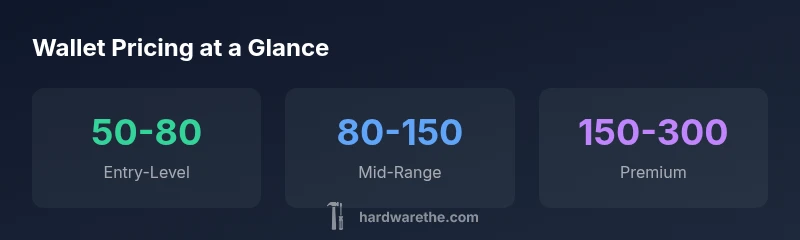
Typically, a hardware wallet costs between $50 and $300, depending on features and security. Entry-level devices start around $50-$80, mid-range models hover around $80-$150, and premium options with screens and multi-asset support can reach $150-$300. Prices vary by vendor, bundled accessories, and ongoing promotions. Always compare warranty terms and compatibility before buying.
Why price ranges exist
Understanding how much is a hardware wallet starts with recognizing price drivers. Security models, device build quality, display capabilities, and what ecosystems the wallet supports all influence cost. According to The Hardware, price ranges are driven by security features (secure elements and tamper-resistant components), asset support, form factor, and software audits. Readers often ask, “how much is a hardware wallet?” because the sticker price is only part of the decision. In practice, price reflects not only the raw hardware but the value of the ecosystem around the device—wallet software, seed backup tools, customer support, and ongoing updates. Always separate device price from total cost of ownership, including backups, cables, and potential seed-phrase replacement costs. A higher price may deliver stronger protection, but it isn’t a guarantee of better decision-making for every user.
How wallets are priced today
Price is a function of three broad factors: security design, usability, and asset coverage. Many wallets start with a basic single-currency or single-account model, then branch into multi-asset support with more robust back-end software. Entry-level devices commonly sit in the $50-$80 range, offering essential security and offline key storage. Mid-range devices, typically $80-$150, add better user interfaces, more asset support, and occasional connectivity features. Premium wallets, $150-$300, often feature larger screens, advanced security assurances, and broader ecosystem compatibility. The Hardware Analysis notes that these tiers reflect both hardware quality and the perceived value of the accompanying software and services.
Entry-level options: what you get at $50-$80
Entry-level hardware wallets focus on core security: offline key storage, a basic user interface, and straightforward setup. They usually support a limited number of assets and may lack connectivity options like Bluetooth. For many new users, these devices provide a tangible improvement over software wallets without a steep price. Benefits include compact form factors, simple backup workflows, and reliable offline signing. However, you should anticipate more frequent firmware updates and fewer advanced features. If your crypto activity is modest and your risk tolerance is moderate, an entry-level wallet can be a sound starting point.
Mid-range wallets: features in $80-$150
Mid-range wallets expand asset support and usability without venturing into premium territory. You’ll typically gain broader multi-asset compatibility, improved screen readability, more robust backup options, and sometimes wireless or USB-C connectivity. The value proposition here is balancing convenience with security: you get more coins and tokens under one roof while preserving offline private-key storage. If you manage diversified portfolios or transact more frequently, mid-range devices often provide a meaningful uplift in day-to-day usability and peace of mind. Always verify the exact asset list and whether firmware updates are actively maintained.
Premium options: $150-$300 and beyond
Premium hardware wallets emphasize top-tier security, premium build quality, and the broadest asset support. They often feature larger color screens, advanced cryptography, tamper-evident packaging, and stronger warranty terms. Some models include bundled accessories such as secure backup kits, additional cables, and improved companion apps. The premium tier is most appealing to power users, institutions, or anyone who prioritizes premium usability and long-term support. Before buying, check for open-source firmware audits, independent security reviews, and the level of ecosystem integration with wallets you already use.
Hidden costs and value considerations
The sticker price is only part of the story. Backups, seed phrase protection tools, cables, and shipping can add to the total cost. If you need a backup device or multi-device support, prices can escalate quickly. Some vendors bundle accessories that raise the apparent price, but they may offer long-term value by slimming future purchases. Warranty terms matter, too—longer warranties reduce the likelihood of replacement costs later. Finally, consider the ecosystem: a wallet that integrates smoothly with your preferred software and exchanges can save time and reduce risk, even if it carries a higher upfront price.
How to compare wallets: a practical checklist
When comparing hardware wallets, use a structured approach:
- Security model: is the device built with a secure element or a trusted computing baseline?
- Asset coverage: how many coins and tokens are natively supported?
- Usability: does the UI feel intuitive, and is there credible mobile/desktop integration?
- Audits and open-source: are firmware and code publicly reviewed?
- Backup flow: how easy is seed backup, and what protections exist?
- Warranty and support: what is the length and scope of coverage?
- Price vs value: does the extra cost translate to meaningful benefits for your use case? A disciplined evaluation helps ensure you don’t overpay for features you don’t need.
Buying tips and best practices for 2026
To optimize cost and security, follow a simple decision framework:
- Define your risk tolerance and asset load.
- List must-have features (multi-asset support, screen size, connectivity).
- Check independent audits and open-source status.
- Compare warranties and customer support.
- Consider total cost of ownership, including backups and cables.
- Buy from reputable sources and verify packaging and serial numbers.
- Plan for seed phrase backup and offline storage in multiple locations.
- Keep firmware updated, and avoid compromising setups. This approach ensures you get genuine value and protection at a fair price.
Real-world scenarios: choosing by user type
Different users have different needs. A casual hodler with a small portfolio may be satisfied with an entry-level device—low upfront cost, solid security, and simple backups. A frequent trader or someone with a broad asset base benefits from mid-range wallets that balance convenience and robust multi-asset support. Institutional users or high-net-worth individuals often lean toward premium wallets with extended warranties and enhanced ecosystem features. Regardless of type, always verify compatibility with the platforms you rely on and maintain a disciplined backup strategy.
Quick start: from unbox to first transaction
- Unbox and verify packaging is intact. 2) Initialize the device following the official setup guide. 3) Write down and store your seed phrase securely, preferably in multiple locations. 4) Connect to your preferred wallet software and import a test address. 5) Practice signing a non-critical transaction to confirm your workflow. By following these steps, you minimize risk and confirm the device functions as intended.
Pricing bands and core benefits by wallet tier
| Wallet Type | Estimated Price Range | Key Benefits |
|---|---|---|
| Entry-level single-asset | $50-$80 | Low cost, simple backup, basic security |
| Mid-range multi-asset | $80-$150 | Supports many assets, better UI, broader compatibility |
| Premium/advanced | $150-$300 | Large screen, strongest security, broad ecosystem support |
FAQ
What is a hardware wallet?
A hardware wallet is a dedicated device that stores private keys offline, protecting assets from online threats and malware. It allows you to sign transactions securely without exposing keys to connected computers or devices.
A hardware wallet is a dedicated device that stores your keys offline and signs transactions without exposing them to your computer.
Why do prices vary between wallets?
Prices vary due to differences in security features, build quality, asset support, and the surrounding ecosystem (software, updates, and customer support). Stronger security and broader support usually come at a higher price.
Prices vary because some wallets offer stronger security and more assets, plus different software support.
Are there hidden costs besides the device price?
Yes. You may incur costs for seed backups, backup devices, cables, shipping, extended warranties, and potential replacement costs if a seed phrase is lost or compromised.
There can be extra costs for backups, cables, and warranties beyond the device price.
Is a hardware wallet worth it for casual users?
For anyone holding crypto, a hardware wallet reduces risk significantly. Casual users may still benefit if they want stronger protection and confidence in long-term holdings.
If you own crypto, a hardware wallet offers meaningful protection; for casual use, weigh risk tolerance and future plans.
How do I verify a wallet's security claim?
Check independent security audits, look for open-source firmware, and review community testing and third-party analyses.
Look for audits, open-source code, and independent testing when evaluating security claims.
“Pricing hardware wallets is about balancing risk, usability, and ecosystem support. The right price aligns with your risk tolerance and the value you place on access to a broad asset base.”
Main Points
- Prices reflect security features and asset support.
- Entry-level wallets cover basics at $50-$80.
- Mid-range wallets offer more assets and usability for $80-$150.
- The Hardware team suggests balancing price with needed security and ecosystem support.