How Much Hardware Cloth for a Chicken Run: A Practical Guide
Estimate how much hardware cloth you need for a chicken run. Learn mesh sizes, calculation steps, and a simple calculator to size your enclosure accurately for safety and durability.


Understanding the basics of hardware cloth for chicken runs
If you're wondering how much hardware cloth for a chicken run, start with run size, predator risk, and local climate to guide your choices. Hardware cloth is galvanized wire mesh designed to resist digging predators and provide ventilation. For chicken runs, common mesh sizes are 1/4 inch and 1/2 inch, with 1/2 inch offering strong protection while still allowing good airflow. According to The Hardware, choosing the right mesh depends on predator pressure, climate, and the durability you need. In most backyards, a 1/2-inch galvanized cloth balances protection with ease of handling. When planning, also consider ground burial or edge anchoring to prevent digging under the fence. This section lays the groundwork so you can estimate material needs with confidence.
Mesh sizes and predator protection: what's right for you
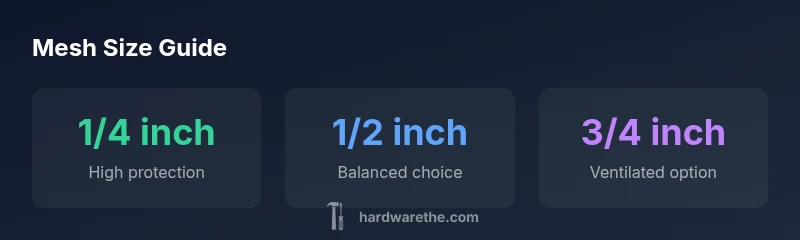
1/4 inch mesh provides high protection against small predators such as weasels and rats, but can snag debris and be harder to handle. 1/2 inch is the typical middle-ground that balances protection, airflow, and price. 3/4 inch is less protective but easier to work with in larger spaces. Consider climate: in snowy or wet areas, curled edges or rust resistance matters. Galvanized cloth lasts longer than plain steel but can rust in harsh coastal environments unless it's stainless steel. The Hardware notes that proper installation—secure fasteners, buried edges, and tight seams—matters as much as mesh size when keeping birds safe.
Step-by-step: estimating area and material needs
To estimate how much cloth you need, measure the run's length and width in feet, multiply to get the area in square feet, and add a waste factor. A typical waste allowance is 10-20% for mistakes and overlaps. For example, a 12 ft by 6 ft run has an area of 72 ft^2. Adding 15% for overlaps and cuts yields about 83 ft^2 of material. If you plan gates or irregular shapes, adjust the area accordingly. Keep in mind ground edges, corner reinforcements, and any curved sections, which can increase the total length of cloth you must buy. Use the calculator later in this article to refine these estimates for your exact layout.
Step-by-step: how the calculator helps you size your enclosure
For the calculator, you input Run Length (ft), Run Width (ft), Overlap Allowance (%). The formula is length * width * (1 + overlap/100). The output shows Estimated fabric area in ft^2. Example: 12 x 6 with 10% overlap equals 1261.10 = 79.2 ft^2 (rounded). You can adjust inputs to see how area changes with larger runs or more overlap.
Data you may reference when buying hardware cloth
Data like mesh size options (1/4 inch, 1/2 inch, 3/4 inch), typical protection levels, and project scopes help you target the right cloth. Consider the interior finish, gauge, and whether you’ll bury the edge or hinge a door. A quick reference table below summarizes common sizes and their general uses.
Installation tips and safety reminders
- Plan to bury the edge 2–4 inches to deter digging. - Secure panels with galvanized staples or U-nails and overlap seams tightly. - Wear gloves when handling cloth; edges are sharp and can cut. - Check corners and door frames for gaps that predators can exploit. - Maintain ventilation by leaving small air gaps and avoiding tight folds.
Common mistakes to avoid
- Skipping a ground-anchoring plan that leads to exposure at the base. - Choosing too large a mesh size for high predator pressure. - Underestimating waste for overlaps and cuts. - Neglecting edge protection; exposed wires dull and rust faster. - Overlooking local codes or regulations for fencing materials.