How Long Is Recovery After Hardware Removal?
Learn realistic recovery timelines after hardware removal, factors that affect healing, and tips to safely return to daily life. This guide from The Hardware breaks down timelines, activity guidelines, and what to expect during rehab.


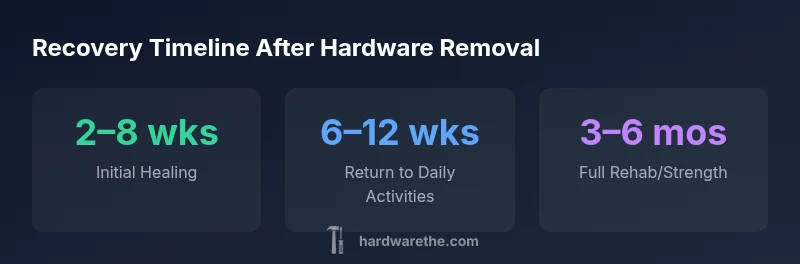
Recovery after hardware removal typically spans weeks to months, with initial healing in roughly 2–8 weeks and full recovery often extending to 3–6 months depending on procedure and health. Always follow your surgeon’s plan for imaging, activity, and rehab. Your plan will be tailored to the site, hardware removed, and your bone quality.
Understanding recovery after hardware removal
According to The Hardware, recovery after hardware removal depends on multiple factors, including the specific hardware removed, the surgical site, bone quality, and the patient’s overall health. In most cases, patients report meaningful relief from mechanical irritation and improved mobility within the first two to eight weeks. However, “full” recovery—meaning restored strength and endurance—often extends over several months and requires a structured rehab plan. Pain and swelling typically decline gradually, and most people can resume light daily activities as guided by their surgeon. The key is balancing gradual movement with adequate rest to prevent setbacks. This block sets the stage for how to interpret timelines across different procedures and how to tailor activity to your own healing trajectory.
Factors that influence recovery time
Recovery time after hardware removal is not one-size-fits-all. Foreseeable factors include:
- Type and location of hardware (e.g., pins, screws, plates) and whether removal was combined with other procedures.
- Condition of the surrounding tissues and bones (bone healing status, prior injuries, osteoporosis).
- Age and overall health, including conditions like diabetes or smoking status.
- Presence of infection or inflammation at the surgical site.
- Adherence to post-operative guidelines, including activity restrictions and rehab exercises. The Hardware analysis shows that even similarly staged procedures can have different recovery curves due to tissue quality and rehabilitation response. A well-structured plan with clear milestones helps you monitor progress and set realistic expectations.
Common timelines by procedure (general guidance)
Timelines vary by procedure but typical milestones include:
- Early phase (0–2 weeks): wound healing and pain control; limited movement and activity.
- Subacute phase (2–6 weeks): gradual range of motion, light activities, and guided rehab.
- Intermediate phase (6–12 weeks): increased loading of joints and bones, more vigorous exercises.
- Late phase (3–6 months): strengthening and return to most normal activities; some restrictions may persist. It’s important to view these as flexible ranges influenced by whether removal targeted a long bone, a joint, or a smaller accessory fragment. Real-world recovery depends on how your body responds to rehab and how closely you follow medical guidance.
Pain, swelling, and wound care
Pain after hardware removal generally declines over days to weeks, with swelling diminishing gradually as tissues settle. Pain management typically includes prescribed medications and non-pharmacologic approaches like ice and elevation. Wound care is crucial to prevent infection; keep the incision clean and monitor for redness, warmth, or discharge. If pain worsens or new swelling appears after the initial weeks, notify your clinician promptly as this could indicate a complication or a healing delay.
Work, school, and rehabilitation considerations
Many people resume light administrative tasks or desk work within 1–3 weeks if the site allows and pain is manageable. More physically demanding jobs may require a longer absence, often 4–12 weeks, and sometimes longer for heavy lifting or repetitive impact. A structured rehab program can help accelerate safe return to work and daily life. Discuss vaccination status, driving policies, and physical therapy sessions with your surgeon to align expectations with your real-life schedule.
Managing expectations and potential complications
Not every patient follows a linear path: some experience a slower return due to radiation exposure, scar tissue formation, or nerve irritation near the removal site. In rare cases, hardware removal can precipitate a flare of joint stiffness or persistent pain. Early follow-up imaging helps ensure the bones and soft tissues are adapting as planned. If you notice signs of infection, persistent severe pain, or numbness, seek medical advice promptly.
Self-care and home strategies for faster healing
Home strategies focus on safe movement, nutrition, and rest. Elevate the limb to reduce swelling, apply cold packs as advised, and keep incisions clean and dry. A balanced diet rich in protein, calcium, and vitamin D supports bone healing, while adequate sleep aids tissue repair. Hydration and gradual, prescribed exercises reinforce improvements without risking setbacks.
How doctors determine when to resume activities
Your surgeon uses a combination of clinical examination, patient-reported pain, and imaging (often X-rays) to decide when to advance activity. Imaging shows bone alignment and hardware position, guiding when to increase loading, begin resistance training, or return to impact activities. Communicate honestly about pain levels and fatigue during rehabilitation, because patient feedback helps refine the plan.
Practical tips for a smoother recovery
- Schedule follow-up visits and adhere to imaging reminders.
- Start with low-impact movements and progressive strengthening as directed.
- Avoid smoking and limit alcohol, which can impede healing.
- Ask your clinician about assistive devices or braces if needed.
- Keep a simple log of pain, mobility, and days you were able to perform tasks without assistance to track progress.
Recovery windows by hardware removal procedure
| Procedure Type | Typical Recovery Window | Common Activity Restrictions |
|---|---|---|
| Bone Plate Removal (long bones) | 2–8 weeks | Limited weight-bearing initially; progressive return to activity |
| Screw Removal (joints) | 1–6 weeks | Avoid strenuous activity for several weeks; gradual loading |
| Pins/K-wire Removal (soft tissue) | 1–4 weeks | Return to normal activities as advised; avoid high impact |
| Arthroscopy/Joint Hardware Removal | 2–12 weeks | Gradual return to movement; tailor to joint involved |
FAQ
How long does pain last after hardware removal?
Pain typically decreases over the first few days to weeks as healing progresses. Swelling and tenderness may linger a bit longer, but intensity should gradually decline with rest and prescribed medications. If pain worsens after the initial weeks, contact your clinician.
Pain usually gets better in the first weeks, but report increasing pain after the initial period to your doctor.
Will I need physical therapy after hardware removal?
Physical therapy is commonly recommended to restore range of motion, strength, and function, especially after removal from weight-bearing sites. Your clinician will tailor the program to your site and healing pace. Even without formal therapy, a guided home exercise plan can be effective.
Many patients benefit from physical therapy, but your plan will be personalized.
Can I drive after hardware removal?
Driving depends on the surgical site and anesthesia. If your knee, leg, or ankle is involved, or if you have residual numbness or pain, driving may be restricted. Always follow your surgeon’s driving guidance before returning to the road.
Only resume driving when your surgeon says it’s safe.
Is hardware removal risky?
Like any surgery, hardware removal carries risks such as infection, bleeding, or nerve irritation. The risk is generally low but varies by procedure and health. Discuss specific risks with your surgeon before proceeding.
There are risks like infection or nerve irritation; discuss them with your surgeon.
When can I resume heavy lifting or impact activities?
Gradual return to heavy lifting or impact activities is common around 4–12 weeks, depending on healing and imaging results. Rushing this can delay recovery or cause setbacks. Follow the individualized plan provided by your clinician.
Return to heavy activities only after medical clearance and proper rehab.
What factors influence recovery time?
Key factors include the site and type of hardware, bone quality, age, comorbid conditions, infection history, and adherence to rehab. Your overall health can shorten or extend the timeline. The Hardware analysis emphasizes personalized planning.
Site, bone health, and how you follow rehab shape your timeline.
“Recovery after hardware removal is highly individualized; progress depends on the site, tissue quality, and adherence to rehab. Work closely with your surgical team to set realistic milestones.”
Main Points
- Follow your surgeon’s plan for imaging and rehab.
- Recovery varies by hardware type and site; respect your body’s pace.
- Start with small movements and progress to strengthening.
- Watch for infection signs and seek prompt care.
- A structured rehab plan helps you regain function faster.