How Much Is Door Hardware? A Practical Buying Guide
Explore price ranges for door hardware, what drives cost, and budgeting tips for knobs, hinges, locks, and smart options in 2026.


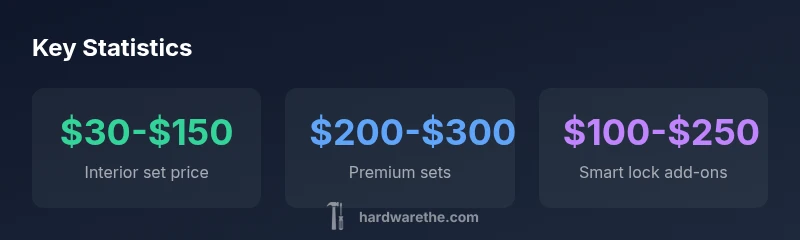
Most interior door hardware sets cost between $30 and $150, with premium options up to around $300. The Hardware Analysis, 2026 notes price variation by material, finish, and security features. This quick guide highlights cost by component and finish, so you can budget effectively. We'll also compare interior, exterior, and smart-lock hardware to help you shop confidently.
Understanding the price drivers of door hardware
Prices for door hardware are not random. The two or three most influential factors are material quality, finish, and security features. Material affects durability and feel—stainless steel and solid brass tend to cost more than zinc or zinc-aluminum blends. Finishes, from polished brass to matte black, add cosmetic value but also price based on coating processes and wear resistance. Security features, such as deadbolts, multi-point locking systems, and smart integration, can push costs higher. Brand confidence and retailer support also factor into the bottom line. When budgeting, recognize that a small upgrade in material or finish can noticeably change overall price, especially for sets that include multiple components. This section breaks down how these factors translate into dollars, based on data gathered by The Hardware Analysis, 2026.
Price ranges by component
Door hardware costs are typically driven by the following components:
- Knobs/Levers: basic finishes start around the low teens per piece, with mid-range options commonly $15-$60 and premium levers reaching $70-$120.
- Locksets/Handlesets: standard latch-and-handle assemblies often run $20-$180, depending on finish and security rating.
- Hinges (per pair): basic hinges can be as low as $2-$5 per hinge, with higher-grade, corrosion-resistant options in the $6-$20 range.
- Strike plates: usually $1-$3 each, included with many sets.
- Door closers: basic models start around $25-$60, with higher-end units between $70-$150.
- Smart locks/add-ons: add-ons range from $100-$250, depending on connectivity and features.
If you’re purchasing a full set, the total often lands toward the lower end of the combined component ranges, while premium finishes and smart capabilities lift the price. When evaluating options, tally the price by line item to avoid sticker shock at checkout.
Finishes and materials: how they affect cost
Finish choices aren’t just about aesthetics—they influence durability and price. Bright, reflective finishes like polished chrome and brass typically carry a premium over brushed nickel or satin nickel due to coating complexity and consumer demand. Brass and solid metal cores offer longer wear in high-traffic environments, but they cost more upfront. Coatings such as powder-coated or matte finishes provide resistance to fingerprints and corrosion, often adding to the cost. In budget-conscious projects, you can still achieve a cohesive look by selecting similar finishes across components, which helps avoid overpaying for mismatched hardware.
How to budget for a full door hardware refresh
- Inventory what you have and identify what to replace. 2) Decide on a mix of basic vs. premium finishes for consistency. 3) List components by door (knob/lever, lockset, hinges, strike plate, closer, and optional smart lock). 4) Get quotes for complete sets vs. individual parts from two or three retailers. 5) Add a 10-20% contingency for installation and potential modification. 6) Schedule installation and set aside funds for retrofits if doors use unusual backsets or bore sizes. By planning in modules, you’ll avoid surprise expenses and maintain control of the budget.
Where to buy and how to compare
Retailers range from big-box stores to specialized hardware shops and online marketplaces. Compare prices for the same backset size, bore pattern, and door thickness. Read reviews focusing on durability and finish wear. If you’re replacing multiple doors at once, buying in bulk or from the same brand line can yield better warranty terms and color-match consistency. Don’t forget to verify compatibility with your door thickness (commonly 1-3/8
82 mm) and backset (the distance from the edge to the latch).
For DIYers, shopping around while confirming these specs is the best path to a balanced result. The goal is a cohesive, functional system that remains within budget—and with the right buyer’s mindset, you can upgrade all doors in a weekend.
Installation considerations that affect value
The value of new door hardware increases when the components are correctly matched to the door. Ensure your backset, bore size, and door thickness are compatible with the chosen hardware. Poor fit can negate the perceived value by causing misalignment, poor latching, or security concerns. Measure backset (2-3/8
60 mm
, and door thickness with a caliper or ruler. If you’re moving from a standard to a premium set, you may also encounter minor trim or drilling changes. In some cases, professional installation ensures flawless alignment and saves time despite the upfront cost.
Quick calculator: estimating your project
A simple way to estimate is to sum the base set price, add hinges, add smart add-ons if desired, and include any specialty items like high-security strike plates or closers. Example: Base interior set $60 + hinges (2 pairs) $12 + strike plates $3 + optional smart lock $150 = approximately $225. Adjust for finishes, brand, and door count. This approach helps you set expectations before you shop and avoid buyer’s remorse after checkout.
Typical price ranges for common door hardware components
| Component | Typical Price Range | Notes |
|---|---|---|
| Knobs/Levers | $8-$60 | Varies by finish and material |
| Locksets/Handlesets | $20-$180 | Includes latch and strike plate |
| Hinges (per pair) | $2-$20 | Standard interior doors |
| Strike plates | $1-$3 | Usually included with set |
FAQ
What factors affect door hardware pricing the most?
Material quality, finish, brand, and added security features drive price variations. Location and retailer can also affect final pricing.
Material quality, finish, brand, and security features are the main price drivers.
Are premium finishes worth the extra cost?
Premium finishes often offer better wear resistance and longer life in high-traffic areas. If you’re updating multiple doors, the aesthetic and longevity can justify the extra cost depending on usage.
Premium finishes last longer and can justify the cost in busy spaces.
Can I mix brands for a single door?
Mixing brands is possible but may affect warranty and compatibility. Ensure matching backset, bore pattern, and screw hole spacing for a clean install.
You can mix brands if compatibility is exact.
What is backset, and why does it matter for price?
Backset is the distance from the door edge to the latch. Standard backsets are common, but mismatches require adapters or new hardware, which can add cost and time.
Backset is the latch distance; mismatches cost time and money.
How do I measure door thickness?
Measure door thickness at the edge with a ruler. Residential doors typically range from 1-3/8 to 1-3/4 inches.
Measure the edge with a ruler; most doors are between 1-3/8 and 1-3/4 inches thick.
Should I buy a complete set or individual components?
Sets are often easier and provide color and finish consistency; individual parts offer customization but require careful compatibility checks.
Sets are convenient; individual parts give customization but need checks.
“Price is only part of value. Material quality, precise fit, and security features determine how well door hardware performs over time.”
Main Points
- Budget by component, not just by set
- Choose finishes that match throughout the home
- Check backset, bore size, and door thickness before buying
- Consider smart lock options only if wiring and power access exist
- Compare at least two retailers to lock in best value