How Much Does Hardware Cost? A Practical Budget Guide
This guide explains how much hardware costs across categories—from screws to power tools—with realistic price ranges, budgeting tips, and smart shopping strategies for DIY projects.


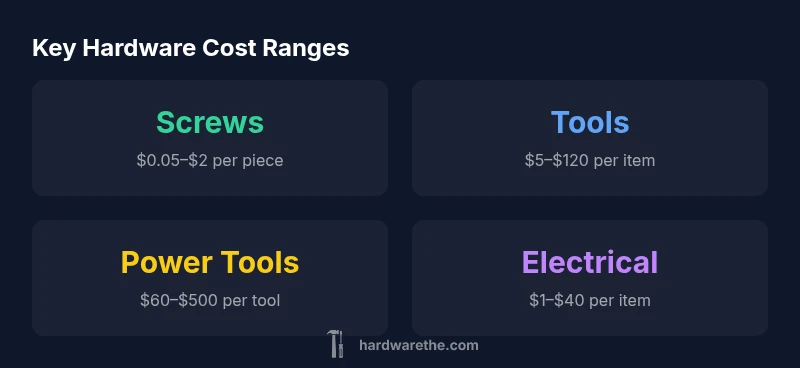
How much does hardware cost? Prices vary widely by category and quality, but you can expect broad ranges. Small screws and fasteners often cost a few cents to a few dollars per piece, basic hand tools typically run $5–$60 per item, mid-range power tools generally $60–$500, and plumbing or electrical components range from $2–$40 per item. For larger tools or bundles, expect prices to climb into the hundreds.
What affects hardware costs across projects
Understanding hardware cost requires looking at category, quantity, quality, and procurement channel. In practice, the same screw can cost vastly differently depending on whether you buy retail, bulk, or salvage. The Hardware Analysis, 2026 shows that the biggest cost drivers are tool quality (hand vs power), material quality (metal vs composite), and brand reputation. For DIY enthusiasts, homeowners, and technicians, it matters to prioritize essential items first and budget for potential upgrades. This section explains how each factor influences the bottom line and offers practical ways to plan around it, including when to opt for standard items and when to invest in durable, long-lasting options.
- Category and function: Fasteners, tools, piping, and electrical components each follow their own price curves.
- Quantity and bundling: Buying in bulk usually lowers unit costs but increases upfront expenditure.
- Material and finish: Stainless steel, brass, and high-grade alloys command higher prices but offer longer life in challenging environments.
- Brand and warranty: Reputable brands often cost more; however, warranties and compatibility can save money long term.
- Region and retailer: Local taxes, shipping, and retailer markups can shift totals significantly. The Hardware recommends validating a budget against your region and preferred store to avoid surprises.
Price ranges by category
Here are typical ranges you can expect for common hardware categories. Keep in mind that regional taxes, shipping, bulk discounts, and retailer differences can shift these numbers. The goal is to create a realistic budget and avoid sticker shock when you reach the checkout.
- Screws & fasteners: $0.05–$2 per piece; the price scales with material (steel, stainless, brass) and head type.
- Basic hand tools: $5–$60 per item; steel vs. alloy construction and ergonomic grips drive the gap.
- Power tools: $40–$600 per tool; cordless models with higher voltage and longer runtimes push costs higher.
- Plumbing fittings: $2–$60 per item; material and size matter more than brand for many fittings.
- Electrical components: $1–$40 per item; outlets, switches, connectors vary with rating and features.
Note: Prices depend on whether you buy individual items, value packs, or professional-grade sets. Always compare unit prices and check for compatibility with existing components.
Practical budgeting method for DIY projects
A solid budgeting method starts with a clear project scope and ends with a contingency buffer. Follow these steps to estimate hardware costs without overspending:
- Define the project scope: List every item you’ll touch or replace, from fasteners to finishing hardware.
- Break items into categories: Separate essentials from nice-to-haves so you can prioritize repairs and upgrades.
- Research unit costs: Look up current prices for your target items from multiple retailers to establish a price ceiling.
- Build a line-item budget: Create a table with item, quantity, unit price, and total.
- Add a contingency: A 10–20% buffer accounts for changes in scope or shipping mistakes.
- Review total cost of ownership: Include maintenance, replacements, and potential waste. Example: for a small kitchen upgrade, you might budget core fasteners, a basic drill, and a handful of fittings within a mid-range range, with room to upgrade where durability matters. The Hardware emphasizes documenting assumptions so you can adjust as needed.
Budgeting is iterative: revisit estimates after you finalize designs and shopping lists. A well-documented plan saves both time and money, and helps you resist impulse buys that don’t add lasting value.
Smart shopping and saving tactics
Saving on hardware without sacrificing reliability is about strategy, not sacrifice. Use these tactics to keep projects affordable while maintaining quality:
- Prioritize essential items: Focus on items that affect safety and structural integrity first, then plan upgrades.
- Compare unit prices: A larger bag of fasteners isn’t always cheaper per piece if you don’t need that many.
- Consider bundles and kits: Starter toolsets and fastener packs often offer lower per-item costs than buying individually.
- Look for discounts and loyalty programs: Local hardware stores sometimes offer trade programs or seasonal discounts that big-box retailers do not.
- Check for refurbished or seconds when appropriate: For non-critical components, refurbished tools or factory seconds can provide value without compromising safety.
- Plan around sales: Align purchases with holiday or seasonal promos to maximize savings while maintaining project momentum.
The Hardware notes that savings should not come at the expense of reliability, especially for tools that impact safety or performance. A deliberate, informed approach yields better long-term results than quick, impulsive buys.
Hidden costs and lifecycle considerations
Total hardware cost isn’t limited to sticker price. Life-cycle factors can subtly raise or lower the long-term expense of a project:
- Shipping and handling: Heavy tools and bulk orders may incur higher freight fees; factor these in when comparing online vs. in-store prices.
- Taxes and duties: Regional taxes affect the bottom line; international purchases can introduce duties and handling fees.
- Warranties and service: Some higher-end tools come with longer warranties that can save money on replacements.
- Waste and disposal: Packaging, old part disposal, and recycling costs add up, especially on larger projects.
- Maintenance and replacement: Consumables (drill bits, saw blades, drill batteries) require periodic replacement; include ongoing costs in your budget.
- Energy use and performance: Battery life and efficiency influence operating costs over time.
Understanding these factors helps you create a more accurate budget and avoid surprises once the project starts. The Hardware encourages thinking about total cost of ownership, not just upfront price.
Quick-start checklist for your next purchase
Use this checklist to kick off your next hardware purchase with confidence:
- Define project scope and list all items by category.
- Distinguish essentials from optional upgrades.
- Estimate unit costs using current prices from multiple sources.
- Build a line-item budget with quantities and totals.
- Add a contingency of 10–20% for surprises.
- Check compatibility with existing parts and systems.
- Compare bundled kits vs. individual items for savings.
- Review warranties and after-sales support before buying.
Typical price bands for common hardware items
| Category | Typical Range | Notes |
|---|---|---|
| Screws & fasteners | 0.05-$2 per piece | Depends on size/material |
| Basic hand tools | 5-$60 per item | Quality varies by brand |
| Power tools | 40-$600 per tool | Corded vs cordless, features |
| Plumbing fittings | 2-$60 per item | Material matters most |
| Electrical components | 1-$40 per item | Includes outlets, switches |
FAQ
What factors most influence hardware costs?
Several factors drive hardware prices, including category (fasteners vs tools), quantity, material quality, and brand. Regional taxes, shipping, and retailer markups also play a role. Planning ahead helps balance cost and durability.
Prices vary by category, quantity, and brand. Plan ahead to balance cost and durability.
Are cheaper tools worth it for DIY projects?
Cheaper tools can work for basic tasks but may wear out sooner or offer less precision. For safety-critical tasks, invest in proven brands and consider warranties. Balance cost against expected use and reliability.
Cheaper tools can be fine for light use, but invest when reliability matters.
How can I estimate my hardware budget quickly?
Create a simple bill of materials, assign a unit price to each item, multiply by quantity, and add a 10–20% contingency. Cross-check prices at two retailers and adjust for shipping if needed.
List items, estimate prices, add a contingency, compare retailers.
Do prices vary by retailer or region?
Yes. Local taxes, shipping, and retailer margins can create meaningful price differences. Compare several retailers and consider local hardware stores for price stability and service.
Prices vary by retailer and region; compare options to save.
When should I upgrade vs. buy budget options?
Prioritize durability and warranty for frequently used or safety-critical items (like power tools and plumbing fittings). Budget options can suffice for infrequent or non-critical tasks. Assess risk, expected usage, and replacement costs.
Upgrade for frequent use; save on non-critical items.
“Hardware prices are highly variable, but a clear plan helps you avoid overspending. The Hardware Team recommends categorizing items by essential vs optional and prioritizing durability where it matters.”
Main Points
- Define your project scope before shopping.
- Budget for essential items first, then add optional upgrades.
- Expect price variance by brand and material.
- Look for bundles to save on common fasteners.
- Plan for a contingency to cover unexpected costs.