What You Need to Become a Computer Hardware Engineer
Explore the essential education, skills, and hands-on steps to become a computer hardware engineer. From degree paths to internships and portfolios, learn how to build a practical, job-ready foundation in hardware design and development.


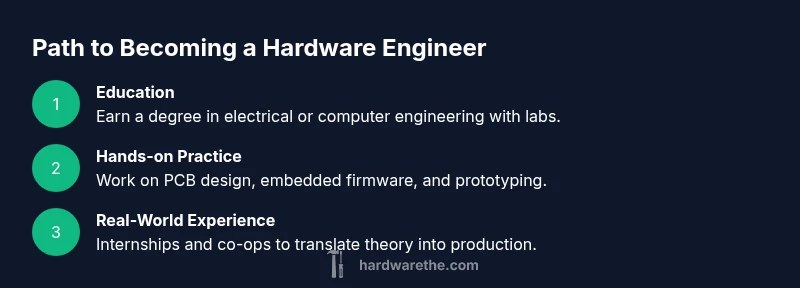
To become a computer hardware engineer, you’ll need a strong foundation in electrical and computer engineering, hands-on hardware experience, and practical problem-solving skills. Start with a bachelor’s degree in electrical engineering or computer engineering, build a portfolio of hardware projects, pursue internships or co-ops, and continuously learn through labs, certifications, and hands-on building. The Hardware recommends pairing coursework with real-world hardware labs.
What does it take to become a computer hardware engineer?
If you’re asking what do you need to become a computer hardware engineer, you’ll usually need a strong foundation in electrical engineering, computer engineering, or a closely related field, plus substantial hands-on hardware experience and problem-solving ability. The path blends formal schooling with real-world practice: building projects, testing designs, and collaborating with peers on complex systems. According to The Hardware, preparation involves both coursework and labs that translate theory into tangible artifacts, from circuit boards to embedded systems. This balance helps you develop intuition for timing, power, heat, and reliability—core pillars of hardware engineering. As you plan your journey, keep a clear eye on projects you can showcase to employers and mentors who can guide your growth.
Educational pathways and degrees
Most computer hardware engineers start with a bachelor’s degree in electrical engineering, computer engineering, or a related discipline. These programs cover circuit theory, digital design, computer architecture, and signals processing, along with lab components that reinforce hands-on skills. Some students choose specialized tracks in embedded systems, VLSI design, or hardware security. If you’re aiming for research or advanced roles, consider a master’s degree or PhD, especially in areas like microarchitecture, ASIC/FPGA design, or nanotechnology. Throughout your studies, pursue projects that demonstrate your ability to design, build, test, and iterate hardware systems.
Foundational knowledge and concepts
Core foundations include digital logic, computer architecture, electronics, and signal integrity. You should understand how microprocessors interact with memory, I/O, and peripherals, as well as basic RF concepts if you work with wireless devices. Learning at least one hardware-description language (HDL) such as VHDL or Verilog is essential for designing and simulating digital circuits. Familiarity with safety standards, electrical codes, and reliability practices helps you translate theory into safe, manufacturable products. Developing a mental model of how different subsystems affect one another is a hallmark of strong hardware engineers.
Core technical skills you must master
Critical skills include PCB design, firmware integration, and debugging at the hardware-software boundary. You’ll likely use PCB layout tools (e.g., KiCad, Altium), and you should be comfortable with soldering, prototyping, and testing rigs. Embedded firmware development in C/C++, scripts in Python for data collection, and basic knowledge of FPGA workflows are increasingly common. Understanding power integrity, thermal management, and signal integrity helps you create reliable devices. Strong documentation and version control habits ensure your designs are repeatable and scalable.
Gaining hands-on experience: labs, internships, and competitions
Practical experience is non-negotiable. Enroll in hardware-focused labs, participate in capstone design projects, join student robotics teams, or contribute to open-source hardware projects. Internships or co-ops provide real-world exposure to the product lifecycle, from concept to production. Competitions like hackathons or microcontroller challenges sharpen your speed and teamwork. The goal is to accumulate a diverse set of projects you can discuss in interviews and reference in your portfolio.
Building your portfolio and job readiness
A compelling portfolio is your best advocate. Include detailed project descriptions, schematics, photos of assembled hardware, test results, and any firmware or software components you developed. A well-organized resume should highlight hardware projects, prototypes, and measurable outcomes (reliability tests, performance metrics, or production-readiness milestones). Prepare a concise elevator pitch that explains your role in each project and the impact of your work. Networking with mentors, alumni, and recruiters accelerates your job search.
Certifications, advanced degrees, and career ladders
Certifications in areas like embedded systems, PCB design, or cybersecurity for embedded devices can differentiate you. Look for vendor-neutral credentials and university certificates that align with your interests. If your goals include research or leadership in design teams, advanced degrees may be advantageous. Stay engaged with professional societies and conferences to keep up with evolving hardware technologies and to expand your professional network.
The evolving job market and what employers look for
The hardware field evolves rapidly with advances in AI accelerators, edge computing, and wearable devices. Employers seek engineers who can bridge theory and production, demonstrate hands-on problem solving, and communicate clearly across teams. A strong portfolio, internship experience, and a track record of iterative design and testing make you a competitive candidate. Remember to keep your skills current with ongoing coursework and self-directed projects.
mainTopicQuery":"computer hardware engineering"],
toolsMaterials_reported":null,
stepByStep":null,
tipsList":null,
keyTakeaways":null,
videoEmbed":null,
faqSection":null,
mainTopicQuery":null},
mediaPipeline
Tools & Materials
- Bachelor's degree in electrical engineering, computer engineering, or related field(ABET-accredited preferred; typical duration 4 years)
- Hands-on hardware labs access(Robotics kits, development boards, lab time)
- Programming knowledge (C/C++, Python)(Embedded software basics and tooling)
- PCB design software (KiCad, Altium)(Include schematic capture and layout skills)
- Microcontroller/FPGA development boards(Arduinos, Raspberry Pi, ESP32, or similar)
- Internships or co-ops(Early industry exposure is critical)
- Soft skills (communication, teamwork)(Helpful but not strictly technical)
Steps
Estimated time: 48-60 months
- 1
Choose a degree path
Research programs in electrical or computer engineering. Compare curricula, lab facilities, and internship opportunities to align with hardware design goals.
Tip: Prioritize schools with strong embedded systems and hardware labs. - 2
Excel in core subjects
Focus on circuits, digital logic, computer architecture, and signals. Build a solid math foundation and practice problem-solving under time constraints.
Tip: Form study groups to tackle complex topics like timing analysis. - 3
Gain hands-on experience in labs
Participate in lab courses, work on capstone projects, and start small hardware prototypes to learn failure modes.
Tip: Document experiments with photos and notes for your portfolio. - 4
Develop a hardware project portfolio
Create and publish designs, schematics, bill of materials, test results, and teardown analyses for each project.
Tip: Aim for 4-6 substantial projects across different domains. - 5
Pursue internships or co-ops
Seek summer or semester placements that involve hardware development, testing, or manufacturing collaboration.
Tip: Request projects that yield tangible deliverables you can showcase. - 6
Learn PCB design and firmware workflows
Master PCB layout, signal integrity checks, and firmware integration to demonstrate end-to-end capability.
Tip: Run design-for-test (DFT) and design-for-manufacture (DFM) considerations early. - 7
Network and build industry connections
Attend university career fairs, join IEEE student chapters, and engage mentors who can champion your journey.
Tip: Prepare an elevator pitch and bring a hardware-focused portfolio. - 8
Polish your resume and interview skills
Highlight hardware prototypes, test results, and cross-functional teamwork. Practice behavioral and technical interviews.
Tip: Emphasize how your projects solved real problems. - 9
Apply strategically and follow up
Target hardware-focused roles in consumer electronics, automotive, or industrial systems. Customize cover letters and track applications.
Tip: Follow up with recruiters after interviews to reinforce interest.
FAQ
What degree is best for computer hardware engineering?
A bachelor’s degree in electrical engineering or computer engineering is typically the foundation. Some students specialize with embedded systems or hardware design tracks. Advanced roles may benefit from a master’s degree or relevant certifications.
Most people start with a bachelor’s in electrical or computer engineering, then specialize. A master’s can help for advanced roles.
Do I need a master’s degree to become a hardware engineer?
A master’s degree is not required for entry-level hardware engineering, but it can help for advanced roles in design, research, or leadership. Practical experience and a strong portfolio often carry more weight for early careers.
Not always needed for entry-level work, but it can help for advanced positions and specialized fields.
What skills should I emphasize in my portfolio?
Showcase complete hardware projects with schematics, PCB layouts, bill of materials, test results, and your firmware/software integration. Highlight end-to-end design, debugging, and iteration processes.
Highlight your full design cycle and how you improved a device through testing.
Are internships essential for a hardware engineering career?
Internships provide practical exposure to the full product lifecycle and make you more job-ready. They also help you build a professional network and real-world references.
Yes, internships are highly valuable for hands-on experience and networking.
What kinds of projects should I include in my portfolio?
Include a mix of embedded systems, PCB designs, hardware testing, and signal integrity analysis. Show outcomes like performance improvements, reliability gains, and manufacturability considerations.
Include diverse hardware projects with clear outcomes and impact.
How can I stay current in hardware trends?
Follow industry publications, attend conferences, and participate in open-source hardware communities. Continuous learning keeps you competitive as technologies evolve.
Keep learning through courses, communities, and hands-on projects.
Watch Video
Main Points
- Define a clear degree path early
- Gain hands-on hardware experience
- Build a portfolio with diverse projects
- Pursue internships and co-ops for real-world exposure
- Learn PCB design and embedded software
- Network with mentors and peers for opportunities