Patio Door Replacement Hardware: A Practical DIY Guide
Learn how to replace patio door hardware with a practical, step-by-step approach. From measuring parts to installation and maintenance, this guide helps DIY enthusiasts upgrade hinges, rollers, locks, and weatherstripping for secure, smooth operation.


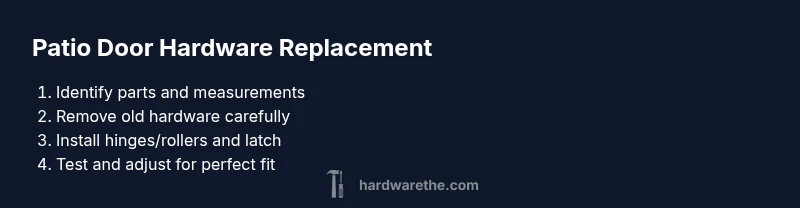
Goal: replace patio door hardware safely and reliably. Step 1: identify door type and measure existing components. Step 2: select compatible hinges, rollers, and lockset. Step 3: remove old hardware and clean surfaces. Step 4: install new parts and test operation.
What patio door replacement hardware includes
Patio door replacement hardware refers to the components that keep exterior doors functioning smoothly and securely. You’ll typically encounter hinges or rollers, a weatherstripping system, a latch or lockset, door pulls or handles, and the strike plate. In addition, you may need track guides, mounting screws, and a small amount of lubrication. When you choose parts, prioritize corrosion resistance and compatibility with your door type (sliding or hinged) and frame material. According to The Hardware, selecting durable, weather-rated hardware is essential for long-term performance and safety.
Why replace patio door hardware instead of repairing the entire door
Replacing worn hardware is typically faster, cheaper, and less invasive than replacing an entire door. Worn hinges or rollers can cause binding, sticking, or noisy operation, while degraded weatherstripping invites drafts and moisture intrusion. By upgrading hardware you often restore secure latching, smooth operation, and better energy performance. The Hardware analysis shows that wear and corrosion are common drivers for replacement, especially on exterior doors subject to humidity and temperature swings. Upgrading to quality stainless steel or brass hardware can improve durability and reduce maintenance over time.
Materials and finishes: choosing the best look and lifespan
Hardware comes in a range of materials and finishes designed to balance strength, corrosion resistance, and aesthetics. Stainless steel is favored for coastal or high-humidity environments, while solid brass offers classic looks and good wear characteristics. Aluminum and zinc alloys provide lighter options with decent durability and cost efficiency. Finishes such as brushed nickel, oil-rubbed bronze, or powder-coated options can complement your home style while protecting against corrosion. When selecting, consider environmental exposure, maintenance expectations, and the door frame material to ensure a compatible match that won’t degrade quickly with weathering.
Compatibility basics: measuring for a proper fit
Begin by confirming whether you have a hinged patio door or a sliding patio door, as their hardware differs significantly. Measure hinge spacing (distance between mounting holes), hinge type (center-offset vs. straight), track width, and door thickness. For sliding doors, verify roller size and alignment with the bottom track. Check the strike plate height and latch backset to ensure the new lockset aligns with the existing strike. Always record measurements before buying parts, and compare them against manufacturer specifications for the door model.
Tools and supplies you'll need
Before you start, assemble a basic toolkit and any replacement parts. A good set includes a screwdriver with Philips and flat-head bits, a drill with appropriate bits, a measuring tape, a level, and a small chisel. Have the replacement hardware kit on hand, including hinges, rollers, a latch/lockset, strike plate, weatherstripping, mounting screws, and a means to lubricate moving parts. Safety gear—gloves and eye protection—helps prevent injuries. Keeping parts organized in labeled bags or a magnetic tray will speed up the process and reduce misplacement.
Step-by-step replacement overview
- Identify and measure door hardware: confirm door type, hinge spacing, track width, and latch backset. 2) Remove existing hardware safely: support the door during removal and keep screws in a labeled tray. 3) Inspect the door and frame for damage: look for cracks, warped jambs, or deteriorated weatherstripping that would affect performance. 4) Choose replacement hardware: verify compatibility with door type, frame material, and weather exposure. 5) Prepare the door: clean surfaces, pre-fit components, and install weatherstripping as needed. 6) Install hinges and rollers: align components flush with the frame and secure with screws. 7) Install latch/lockset and strike plate: ensure proper latch alignment and smooth operation. 8) Test and adjust: operate the door gently, then fine-tune screws and weatherstripping for a tight seal and quiet action. Lubricate moving parts and re-test after a short cycle. The steps emphasize careful alignment and gradual tightening to avoid damage.
Common issues and troubleshooting after install
If the door binds or binds at the strike, re-check hinge alignment and re-tighten screws in small increments. Squeaks from rollers often indicate dry tracks—apply a light silicone lubricant and wipe away any excess. Poor sealing is usually caused by misaligned weatherstripping or a misfit strike plate; reseat or reposition with shims as needed. In damp climates, ensure hardware materials are corrosion-resistant and that weatherstripping is not compressed excessively, which can prevent a proper seal.
Maintenance tips to extend life
Regular inspection of hinges, rollers, and weatherstripping helps prevent surprise failures. Clean tracks periodically to remove dust and debris, lubricate moving parts with a silicone-based product, and replace weatherstripping when it becomes brittle or crushed. Keep an eye on door alignment after seasonal changes; minor realignment now can prevent larger problems later. Cleaning and light lubrication after heavy usage seasons—like winter heating cycles—can significantly extend hardware life.
Tools & Materials
- Screwdriver set (Phillips #2 and flathead)(Include multiple sizes to fit all screws)
- Drill with appropriate bits(Wood and metal bits; include pilot bit for softer frames)
- Measuring tape (at least 6 ft)(Precise measurements prevent sizing errors)
- Level and ruler(Helpful for ensuring vertical alignment)
- Chisel or scraper(For cleaning old residue and preparing surfaces)
- Replacement hardware kit(Hinges, rollers, lockset, strike plate, weatherstripping)
- Lubricant (silicone spray)(Apply to tracks, hinges, and rollers)
- Safety gear (gloves, eye protection)(Protect hands and eyes during removal and installation)
- Caulk or weatherseal adhesive(Optional for resealing around weatherstripping)
Steps
Estimated time: 60-120 minutes
- 1
Identify hardware and take exact measurements
Carefully document hinge spacing, track width, backset, and screw sizes to ensure compatibility with replacement parts. This reduces returns and fit issues.
Tip: Double-check orientation by noting which side the handle is on. - 2
Safely remove old hardware
Support the door to prevent falls, then unscrew hinges, rollers, and the lockset. Place screws and small parts in labeled containers for easy reassembly.
Tip: Take photos during removal for reference. - 3
Inspect the door and frame
Look for cracks, warped jambs, or deteriorated weatherstripping that might compromise fit or seal. Note any damage that needs repair.
Tip: If the frame is damaged, plan for professional repair or panel replacement. - 4
Choose compatible hardware
Select hinges, rollers, and a lockset that match your door type (hinged or sliding) and frame material. Prioritize exterior-grade, corrosion-resistant options.
Tip: Prefer stainless steel or brass components for longevity. - 5
Prepare the door surface
Clean the mounting surfaces and reinstall weatherstripping as needed. Pre-fit all parts before final mounting for smoother alignment.
Tip: Wipe away oils or residue that could affect screw bite. - 6
Install hinges and rollers
Attach hinges flush against the door with the correct screw size. Replace rollers in sliding doors according to the manufacturer’s guidance.
Tip: Use a level to confirm vertical alignment before tightening screws. - 7
Install latch/lockset and strike plate
Position the latch so it engages fully with the strike plate. Secure screws and test multiple door cycles to verify latch alignment.
Tip: Avoid over-tightening screws that could strip wood or warp the frame. - 8
Test, adjust, and finalize
Open and close repeatedly to assess smoothness and seal. Make minor screw adjustments and lubricate moving parts for optimal operation.
Tip: Document any persistent misalignments for future reference.
FAQ
Do I need to replace the entire door to replace hardware?
In most cases you can replace hinges, rollers, weatherstripping, and the lockset without replacing the entire door. Inspect the frame for damage that could affect performance.
Usually you can replace individual parts without a full door replacement, just check the frame for any damage.
Will replacement hardware improve energy efficiency?
Yes, upgrading weatherstripping and ensuring proper alignment reduces drafts and improves sealing, contributing to better energy performance.
New weatherstripping and proper alignment can help seal the door better.
How do I know what hardware will fit my door?
Compare door type (sliding vs hinged), frame material, hinge style, and measured backset to manufacturer specifications for standard parts.
Match the door type and measurements to the parts you buy.
Are there safety concerns I should follow?
Wear eye protection and gloves, support the door during removal, and avoid forcing parts that resist fitting.
Protect your eyes and hands; keep the door supported during work.
What maintenance should I perform after installation?
Lubricate moving parts, clean tracks, and inspect weatherstripping regularly to keep the door operating smoothly.
Lubricate and inspect regularly for best results.
How long does replacement typically take?
Time varies by door type and hardware; plan for a dedicated session to verify alignment and functionality.
It varies, but set aside a focused session to install and test the hardware.
Watch Video
Main Points
- Identify compatible hardware before purchasing.
- Measure accurately to avoid fit issues.
- Test operation and seal after installation.
- Maintain hardware regularly for longevity.