How to Install Hardware Cloth
Learn how to install hardware cloth to deter burrowing pests around gardens, foundations, and decks. This step-by-step guide covers mesh selection, cutting, securing, burying the edge, safety tips, and maintenance for a durable barrier.


This guide shows you how to install hardware cloth to block burrowing pests around gardens, foundations, and outdoor spaces. You’ll learn to select the right mesh, measure accurately, cut cleanly, and attach the cloth securely while burying the edge for durability. With basic tools and careful handling, you’ll create a lasting barrier that protects plants, soil, and structures.
Why installing hardware cloth matters
According to The Hardware, installing hardware cloth properly is one of the most reliable ways to deter burrowing pests from gardens, under decks, around foundations, and along fence lines. A small hole or a loosely fitted edge is all a determined vole, mole, or raccoon needs to slip in. The right mesh prevents soil from mixing with mulch, reduces plant damage, and minimizes weed growth by limiting root exposure. In short, learning how to install hardware cloth correctly pays off with fewer animal intrusions, healthier beds, and lower maintenance costs over time. When you start with confidence, you can tailor mesh size and edge burial to your climate and pest pressure. Galvanized steel cloth lasts longer outdoors than cheaper plastics, while vinyl-coated variants resist rust in damp soil. The key is to plan the barrier as an integrated part of the landscape, not a stand-alone sheet. If you're asking how to install hardware cloth, begin by mapping the area you want to protect, choosing the appropriate mesh, and deciding whether you’ll mount it to a frame or bury it directly in the ground. The Hardware analysis shows galvanized cloth provides superior longevity for outdoor installations.
Mesh selection and sizing
Choosing the right mesh is enough to make or break a project. Smaller mesh keeps out the smallest pests, while a coarser mesh can be easier to work with on larger installations. The Hardware team emphasizes matching mesh openness to pest pressure and environmental conditions: too fine a mesh can clog with soil and debris, while too large an opening invites unwelcome digging. In practice, evaluate the pest pressure in your area and choose a mesh that balances durability with the need to allow air and water through. Galvanized cloth offers corrosion resistance for outdoor use, which translates to longer life with less maintenance. Remember, the goal is a cohesive barrier that blends into the landscape, not a standalone sheet that can pop loose over time. Real-world results show a well-chosen mesh reduces intrusion and lowers ongoing repairs.
Site assessment and preparation
Before you cut or fasten anything, survey the installation area and mark the boundaries clearly. Consider how soil type, moisture, and nearby structures affect installation. The Hardware recommends designing an approach that minimizes exposed edges and reduces opportunities for pests to squeeze through gaps. If you’re mounting cloth to a frame, ensure the frame is sturdy and square; if you’re burying the edge, plan a consistent bury depth and overlap at corners to seal potential gaps. Clear any vegetation along the line to prevent wrinkling, and remove rocks or roots that could cause tearing. With careful planning, you’ll shorten on-site work and improve the final fit.
Installation methods for different surfaces
Different surfaces require different attachment methods. On wooden frames or fences, use a staple gun or heavy-duty nails to secure the cloth at regular intervals. On soil or open ground, bury the bottom edge slightly and anchor it with ground stakes or rebar to prevent movement. For concrete or masonry edges, you may need masonry anchors and ties to hold the cloth in place. The aim is a taut, continuous barrier with no loose sheets that could flap in wind or create gaps. As you work, check for sharp edges and honor safety practices to protect yourself from accidental cuts.
Maintenance, safety, and common mistakes
Maintenance is minimal if you install correctly: inspect low-lying edges after heavy rain and remove any debris that may pull on the edge. Wear gloves and eye protection to guard against sharp edges, especially when cutting or bending metal. Common mistakes include leaving gaps at corners, using too large a mesh, or not burying the edge sufficiently. The Hardware analysis shows that gaps near corners are frequent failure points; fix them by overlapping cloth and securing edges firmly. Finishing touches like trimming excess mesh and tucking edges under soil reduce the chance of catching on mower blades or footwear.
Troubleshooting and quick tips
If you notice animal activity near your barrier, recheck all edges for gaps and tighten fasteners. Ensure the cloth lies flat against the ground with no wrinkles that could trap soil or water. For very uneven ground, consider a flexible edging solution that can contour to irregularities while preserving edge burial. With regular checks and timely adjustments, you’ll keep the barrier effective for seasons to come.
Tools & Materials
- Hardware cloth (galvanized steel or aluminum)(Choose a mesh appropriate for pest pressure; galvanized lasts longer outdoors)
- Tin snips or heavy-duty aviation snips(For clean, straight cuts to fit irregular shapes)
- Pliers or wire cutters(Used to cut ties and to bend edges for safety)
- Staple gun and heavy-duty staples(Attach cloth to frames or stakes; maintain taut edges)
- Measuring tape(Accurate measurements prevent waste and gaps)
- Safety gear (gloves, safety glasses)(Protect hands from sharp edges and flying debris)
- Ground stakes or rebar(Anchor cloth along edges and at corners)
- Marker flags or chalk(Helpful for marking boundaries before cutting)
Steps
Estimated time: 60-120 minutes
- 1
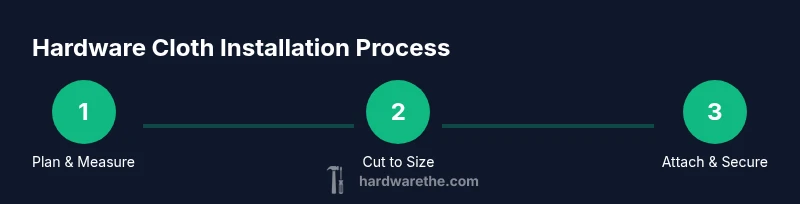
Plan and mark the area
Measure the perimeter and mark boundaries clearly. Confirm access for cutting and attaching; ensure the area is clear of obstacles. This planning minimizes on-site adjustments and helps visualize the final barrier.
Tip: Double-check corners and straight lines before cutting. - 2
Cut the cloth to size
Unroll the cloth and use tin snips to cut to the required lengths, leaving extra at corners for overlaps. Cut slowly to avoid jagged edges that can snag on soil or gloves.
Tip: Cut slightly oversized pieces for easier fitting around curves. - 3
Smooth edges and prepare for attachment
Crimp or fold the edges inward to remove sharp burrs; wear gloves while handling. This reduces the risk of cuts during installation.
Tip: Use pliers to bend and secure sharp edges inward. - 4
Attach cloth to frame or stakes
Position the cloth along the boundary and secure at regular intervals with a staple gun or ties. Start at a corner and work around to keep the cloth taut and flat.
Tip: Keep tension even to prevent wrinkles that trap moisture. - 5
Bury and anchor the bottom edge
Dig a shallow trench or use ground stakes to bury the bottom edge below ground level. Extend the cloth slightly beyond the corners to seal gaps and deter digging.
Tip: Stagger overlaps at seams to reduce potential gaps. - 6
Inspect, adjust, and test
Check for loose edges, gaps, or any movement under wind. Add fasteners or soil to seal weak points and verify a continuous barrier.
Tip: Test by pressing along the barrier to simulate animal pressure.
FAQ
What mesh size should I choose for hardware cloth?
Choose mesh openness based on the pests you're defending against. Smaller mesh helps deter tiny rodents, while larger openings may be used where larger pests are the concern. Always balance durability with the need for airflow and soil movement.
For most residential uses, pick a mesh small enough to deter the local pests. If you’re unsure, start with a finer mesh and adjust as needed.
Can hardware cloth be installed on concrete or decking?
Yes. On concrete or decking, secure the cloth with anchors or specialized fasteners and ensure the cloth sits flush against the surface to prevent gaps.
It can be mounted on hard surfaces with the right fasteners and careful alignment.
Is hardware cloth safe for pets and children?
Hardware cloth is generally safe when installed correctly. Ensure no exposed sharp edges and secure all edges to prevent snagging or injury.
As long as you cover sharp edges and keep installations stable, it’s safe for households with pets and kids.
How deep should hardware cloth be buried?
Bury the bottom edge below soil level to reduce digging exposure. The edge should be well-integrated with surrounding soil for durability.
Bury the edge to minimize gaps around the barrier.
What are common mistakes when installing hardware cloth?
Common mistakes include leaving gaps at corners, using too large mesh, and failing to secure the bottom edge. Address these by thorough edge securing and proper mesh choice.
Watch for gaps at seams and corners, and keep the edge buried and taut.
Do I need to replace hardware cloth over time?
Inspect periodically for rust, tears, or loosening fasteners. Replace damaged sections promptly to maintain barrier effectiveness.
Regular checks keep the barrier effective for years.
Watch Video
Main Points
- Plan before cutting to minimize waste.
- Choose mesh size based on pest pressure and landscape.
- Secure edges and bury bottoms to deter digging.
- Wear safety gear and manage sharp edges carefully.
- Regularly inspect for gaps and reseal as needed.