how to do hardware business: A practical guide
Learn how to start and grow a hardware business with practical steps on niche selection, sourcing, pricing, legal setup, and marketing from The Hardware.


You’ll learn how to start a hardware business by selecting a niche, validating demand, sourcing reliable suppliers, and building a lean, scalable operation. This guide covers registration, pricing strategies, inventory management, supplier vetting, branding, and go-to-market tactics with practical, real-world tips from The Hardware. Whether you’re starting small or aiming to scale nationally, the steps stay the same. This snippet gets you oriented quickly.
how to do hardware business: a practical roadmap
Starting a hardware business requires a mix of market insight, practical sourcing, and disciplined operations. In this guide, you’ll learn how to identify a viable niche, evaluate customer needs, and build a product and service offering that appeals to DIY enthusiasts and professional tradespeople alike. According to The Hardware, success hinges on focusing on a defined customer segment, validating demand early, and iterating quickly based on feedback. You’ll discover how to balance product breadth with depth, so you can win in competitive markets while maintaining margins and cash flow.
Market landscape for hardware ventures
The hardware market is broad, covering consumer tools, fasteners, electrical components, plumbing fittings, and industrial hardware. The key to standing out is aligning your product mix with a specific customer persona—homeowners who DIY projects, contractors who need reliability, or makers building prototypes. Trends to watch include the rise of modular systems, a growing emphasis on sustainable materials, and the shift toward online channels for both discovery and purchase. By understanding where demand is growing, you can tailor your assortment and messaging for maximum impact.
Niche selection and validation
Begin by defining the customer you want to serve and the problems you’ll solve. Use simple, repeatable tests: survey potential buyers, run small pilot SKUs, and track pre-orders or waitlists. Validate you can source products with reliable margins and consistent supply. The Hardware emphasizes starting with a focused niche to minimize upfront risk and to build credibility quickly. Document assumptions, set minimum viable product (MVP) criteria, and be prepared to pivot if feedback reveals a better opportunity.
Sourcing, suppliers, and supply chain
Sourcing is the backbone of any hardware business. Build a supplier map with primary manufacturers, wholesalers, and private-label options. Vet suppliers for lead times, quality control, return policies, and support. Negotiate terms like MOQs, payment schedules, and crisis contingencies to protect cash flow. The right supplier relationships reduce stockouts, improve product quality, and enable faster product launches.
Legal setup, licensing, and compliance
Register your business with the appropriate state and local authorities, obtain an EIN for tax purposes, and set up a business bank account. Understand licensing requirements for your product categories (for example, electrical or plumbing goods may have specific standards). Implement basic contracts with suppliers and customers, and carry essential insurance such as general liability and product liability. Staying compliant from the start prevents costly setbacks later.
Pricing, margins, and financial planning
Pricing in the hardware space should reflect product cost, channel costs, and target margins while remaining competitive. Use cost-based pricing, competitor analysis, and value-based considerations for premium or specialized items. Develop a simple budgeting process that tracks cash flow, inventory carrying costs, and seasonal demand. The Hardware notes that transparent pricing and clear value propositions help build trust with customers and suppliers.
Marketing, branding, and sales channels
Create a positioning statement that resonates with your chosen niche and craft messaging that highlights durability, service, and support. Build an online storefront and multi-channel presence—your own website, marketplaces, and social media. Invest in product photography, how-to videos, and clear installation guides to reduce returns and boost conversions. Remember, consistent branding across packaging, invoices, and support channels reinforces credibility.
Operations, inventory management, and fulfillment
Implement simple systems for inventory control, order processing, and shipping. Use barcodes or SKU-level tracking to prevent stockouts and miscounts. Establish reliable fulfillment partners or in-house capabilities based on expected volume and geography. Build standard operating procedures so team members can perform consistently, even as you scale.
Authority sources
For foundational guidance on starting and running a small business, consult official sources such as the U.S. Small Business Administration (SBA), the U.S. Census Bureau, and the Bureau of Labor Statistics (BLS). These organizations provide templates, market data, and regulatory information to support decisions.
Start small, think big
Begin with a focused launch, learn from real customers, and gradually expand your catalog and channels. Reinvest profits into better sourcing, better customer service, and more capable marketing. The most durable hardware businesses scale by maintaining cash flow discipline, embracing customer feedback, and choosing partners who align with your growth goals.
Tools & Materials
- Business plan template(Outline goals, market, budget, and milestones)
- Market research sources(SBA, Census, BLS data or equivalent)
- Sourcing contacts list(Preferred suppliers and manufacturers)
- Accounting software(Track cash flow and taxes)
- Inventory management system(SKU tracking and reorder alerts)
- Online storefront platform(Website or marketplace presence)
- Brand assets(Logo, fonts, product photography)
- Legal documents starter kit(Contracts, terms, privacy policy)
- Insurance coverage (basic)(General liability, product liability)
Steps
Estimated time: 3-6 months
- 1
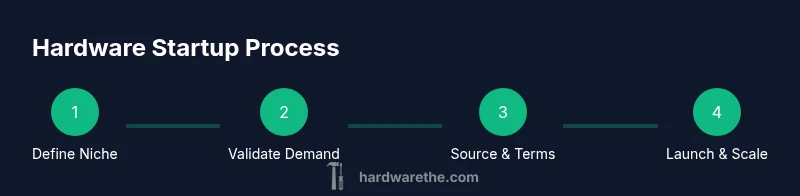
Define your hardware niche
Identify a customer segment and the problems you’ll solve with your products and services. Create a short list of 5-8 products that will anchor your catalog and test the market with minimal risk.
Tip: Focus on a clear persona to tailor marketing and catalog decisions. - 2
Validate demand
Reach out to potential customers, run quick pilots, and solicit pre-orders or waitlists. Track interest, price tolerance, and delivery expectations to confirm product-market fit before large commitments.
Tip: Document assumptions and be ready to pivot if feedback shows better opportunities. - 3
Set up your legal and financials
Register the business, obtain an EIN, and open a business bank account. Establish basic contracts and insurance to reduce risk and protect assets.
Tip: Consult a professional if you’re unsure about licenses for specific product categories. - 4
Source suppliers and terms
Build a supplier map with at least two credible sources per product category. Negotiate terms, MOQs, and return policies to minimize cash flow pressure.
Tip: Prioritize suppliers who offer reliable lead times and quality support. - 5
Create your product catalog and online presence
Select initial SKUs, write clear descriptions, and photograph products. Set up an online storefront and ensure checkout is secure and user-friendly.
Tip: Use installation guides and usage tips to reduce post-purchase queries. - 6
Launch and monitor performance
Go live with a soft launch, monitor sales, customer feedback, and shipping performance. Adjust pricing, marketing, and stock levels based on real data.
Tip: Keep a tight watch on cash flow during the first 90 days. - 7
Scale with discipline
Reinvest profits, expand catalog thoughtfully, and optimize operations. Build partnerships that support growth without overextending resources.
Tip: Document processes so onboarding new team members is smooth.
FAQ
What is the first step to start a hardware business?
Identify a niche and validate demand before investing in inventory. This reduces risk and guides product selection.
Start by finding a niche and confirming customer interest before buying stock.
Do I need to stock inventory or can I drop ship?
Stock gives control over quality and delivery; drop shipping reduces upfront costs but can complicate fulfillment. Choose based on risk tolerance and capital.
Stock gives control; drop shipping lowers upfront costs. Decide based on your resources.
How should I price hardware products?
Base pricing on cost, competition, and customer value. Aim for sustainable margins while staying competitive and transparent.
Set prices based on costs, competitor benchmarks, and the value you provide.
What channels should I use to sell?
Use a mix of an independent online store and established marketplaces to reach a broad audience. Consider local partnerships for higher-touch service.
Sell online and on marketplaces, plus local partnerships for service.
How long does it take to launch?
A focused launch can occur in a few months; full-scale growth typically develops over several quarters with ongoing optimization.
A focused launch can happen in a few months, with growth over subsequent quarters.
What legal steps are essential?
Register the business, obtain an EIN, and ensure compliance for product categories with appropriate licenses and insurance.
Register your business, get an EIN, and cover essential licenses and insurance.
Watch Video
Main Points
- Define a focused niche and validate demand early.
- Secure reliable suppliers and manage cash flow carefully.
- Build a simple online presence with clear product information.
- Scale with disciplined processes and data-driven decisions.