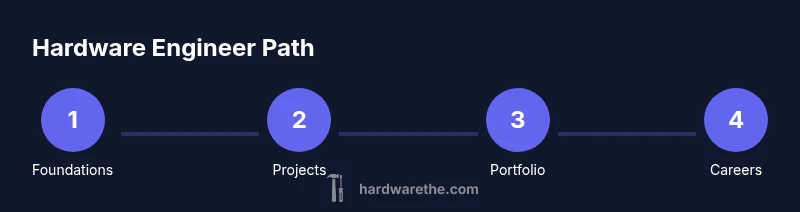
How to Be a Hardware Engineer: A Practical Guide
Learn how to become a hardware engineer with a practical, step-by-step plan. From fundamentals to hands-on projects, this guide helps DIY enthusiasts build the skills and portfolio needed for hardware careers in 2026.


Becoming a hardware engineer starts with a solid foundation in electronics, math, and design. This guide breaks down the essential education paths, core skills, hands-on projects, and a clear step-by-step plan to launch your career. You’ll learn how to plan a career, build a portfolio, and land your first hardware role in 2026.
What is hardware engineering and why it matters
Hardware engineering is the discipline of designing, testing, and bringing to life physical electronics and systems. It blends electronics, mechanics, and software to create devices from wearables to industrial controllers. If you're asking how to be a hardware engineer, you're aiming to translate ideas into tangible hardware that works reliably in real-world conditions. According to The Hardware, the most successful new engineers combine solid theory with hands-on practice. The The Hardware team found that early exposure to PCB layout, signal integrity, and basic firmware basics accelerates learning and job readiness. In 2026, the field rewards engineers who can connect concept to production, document decisions, and communicate clearly with teammates across disciplines. In short, hardware engineering is about turning specifications into tested, manufacturable hardware you can actually use. This requires curiosity, discipline, and a willingness to iterate until the design meets goals for cost, performance, and safety. As you begin, focus on building a mental model of how signals flow from sensors to actuators and how power, heat, and timing constraints shape every decision.
Core skills every hardware engineer needs
A hardware engineer must master a blend of electronic theory, practical design, and teamwork. Foundational knowledge includes analog and digital circuits, signal integrity, and power management. You should be comfortable reading schematics, interpreting datasheets, and selecting components that meet constraints for cost, size, and reliability. Proficiency with PCB design tools (such as KiCad or Altium) and basic firmware in C or C++ is essential. Understanding how microcontrollers and FPGAs interact with sensors and actuators helps you design robust systems. A solid grasp of testing and measurement—using oscilloscopes, multimeters, and logic analyzers—lets you verify behavior and catch issues early. Finally, you’ll need to document decisions clearly, communicate with mechanical engineers and software teams, and iterate on designs based on feedback and testing results. The ability to translate user needs into concrete electrical specifications is what separates good hardware engineers from great ones. Throughout your career, you’ll also grow safety awareness, learning standards, and manufacturing considerations that affect producibility and quality.
Educational paths and certifications
Most hardware engineers start with a bachelor’s degree in electrical engineering, electronics engineering, or computer engineering. A strong program covers circuit theory, digital design, embedded systems, and acoustics or signal processing, plus lab work that builds hands-on confidence. Some students supplement with co-ops or internships that place them in real hardware teams. Certifications can boost credibility, especially in areas like PCB design, safety testing, or project management. The Hardware analysis shows that employers value a demonstrable project portfolio and hands-on capability alongside formal credentials. If you’re pursuing a non-traditional route, you can build equivalent knowledge through open-courseware, small-scale labs, and self-directed projects that prove your ability to design, test, and iterate on hardware concepts. In 2026, many programs emphasize interdisciplinary collaboration, encouraging you to pair hardware studies with software or mechanical tracks to reflect modern product teams.
Practical project ideas to build your portfolio
Projects show what you can build and how you think. Start with small but complete tasks that demonstrate end-to-end capability: a microcontroller-based sensor interface, a simple power supply, or a wearable with basic sensing and communication. Progress to more integrated systems: a PCB design with a microcontroller and peripheral chips, or a tiny IoT device that collects data, processes it on-device, and transmits it securely. Document every project with a short problem statement, your approach, schematics, layout screenshots, test data, and a final verdict. The Hardware analysis shows that portfolios with real-world testing data and a clear narrative tend to stand out. Include at least one project that requires mechanical and enclosure considerations, to show you can handle the full stack from circuit to enclosure. By the end, you’ll have multiple case studies you can discuss in interviews.
Understanding the hardware design workflow (concept to production)
Great hardware starts with a disciplined workflow. Start with defining requirements and constraints, then outline a high-level architecture. Create schematics that map signals and power rails, followed by board layout that respects manufacturability and testability. Build prototypes, test iteratively, and capture results in a detailed report. Prepare for manufacturing by designing for assembly, establishing bill of materials, and planning testing procedures. Verification, safety approvals, and regulatory checks may also be required for consumer devices. As you move from concept to production, maintain clear records, version control for designs, and a test plan that demonstrates reliability under expected operating conditions.
Tools, languages, and platforms you should know
For hardware work, you’ll use a mix of software and hardware tools. Languages: C/C++ for firmware, Python for automation and data analysis, and, for FPGA work, a hardware description language like Verilog or VHDL. CAD tools such as KiCad or Altium help you draw schematics and route boards. Simulation tools (SPICE), waveform analysis, and basic scripting simplify debugging. Knowledge of PCB manufacturing constraints, soldering practices, and ESD safety is essential. Platforms you should know include microcontrollers (e.g., ESP32, STM32), microprocessors, and FPGA development boards. Familiarize yourself with debugging protocols (JTAG, SWD) and common measurement equipment (oscilloscopes, logic analyzers). If you're wondering how to be a hardware engineer, start by building broad skills across firmware, electronics, and manufacturing.
Career progression and job search strategies
Begin with entry-level roles such as electrical design engineer or hardware test engineer and gradually take on larger responsibilities like system integration or product qualification. Build a portfolio that demonstrates end-to-end designs and measurable results. Networking, internships, and hands-on projects are your best channels for discovery. Consider contributing to open-source hardware or joining local maker spaces to gain exposure. Customize your resume to highlight your project impact, technical breadth, and collaboration skills. In 2026, a growing emphasis on cross-disciplinary teams rewards engineers who can speak both circuits and software. The journey from student to hardware leader requires curiosity, persistence, and a willingness to learn from every prototype.
Hands-on safety and lab etiquette
Treat every test bench like a potential hazard. Practice proper ESD control, wear safety glasses when soldering, and keep liquids away from electronics. Work with low-voltage prototypes first, then scale to higher power as you gain confidence. Use proper storage for components and tool safety, and double-check polarity and power ratings before powering a circuit. Maintain a clean lab, label your projects, and back up designs regularly. Safety is not optional—it's a core part of responsible hardware engineering.
Common obstacles and how to overcome them
Learning hardware engineering is a marathon, not a sprint. Time management, feature creep, and equipment access can slow you down. Combat this by setting realistic milestones, maintaining a project log, and seeking feedback from peers. If you struggle with theory, pair lectures with hands-on labs and mini-projects to reinforce concepts. When you reach design roadblocks, step back to verify assumptions, re-check datasheets, and ask for help from online communities or local hardware clubs. The key is steady practice and deliberate repetition.
Tools & Materials
- Laptop or desktop computer(Capable of running CAD software and compilers; at least 8 GB RAM, 256 GB SSD recommended)
- PCB design software(KiCad (free) or Altium Designer; ensure you have the latest library access)
- Multimeter(Digital, with continuity and resistance testing; essential for quick checks)
- Oscilloscope(US-based entry-level scopes are fine for learning; optional but highly recommended)
- Soldering iron and accessories(Lead-free solder, flux, tweezers, and flux remover)
- Microcontroller development board(Arduino Uno or ESP32/STM32 kit for rapid prototyping)
- Breadboards and prototype components(Resistors, capacitors, LEDs, pushbuttons, transistors, etc.)
- Enclosure materials(Basic project boxes or 3D-printed enclosures for hobby work)
Steps
Estimated time: 8-12 weeks
- 1
Define your focus area
Identify a hardware domain you want to pursue (embedded systems, analog/mower power, or RF hardware). Set concrete learning goals and a timeline for mastering the essentials. This keeps your efforts aligned with real-world requirements and helps you build a compelling early portfolio.
Tip: Start with a simple project in your chosen area to anchor learning and prevent scope creep. - 2
Build foundational knowledge
Study core topics: circuit theory, digital logic, and basic firmware concepts. Use a mix of textbooks, online courses, and hands-on labs to reinforce theory with practical experiments.
Tip: Keep a lab notebook of diagrams, questions, and results to track progress and facilitate interview discussions. - 3
Choose a starter project and plan
Select a small, end-to-end project (e.g., sensor interface or microcontroller-based device). Define success criteria, bill of materials, milestones, and a testing plan. A well-scoped project accelerates learning and strengthens your portfolio.
Tip: Document a decision log explaining why you chose components and design choices. - 4
Draft the schematic and board layout
Create a clear schematic that maps signals and power rails. Then lay out the PCB with attention to trace width, spacing, and manufacturability. Iterate the layout to minimize noise and heat with simulation where possible.
Tip: Run a DRC (design rule check) and get a peer review to catch issues early. - 5
Prototype on a development board
Assemble a working prototype using a dev board. Test core functions, verify I/O, and validate timing and power delivery. Use breadboards for quick changes before committing to a PCB.
Tip: Keep a change log of tweaks and observed effects to inform future iterations. - 6
Test thoroughly and document results
Develop a test plan that covers functionality, reliability, and safety. Record measurements, compare against goals, and summarize conclusions in a report. Try to reproduce bugs and show fixes.
Tip: Automate repetitive tests with simple scripts to save time and improve consistency. - 7
Publish your work and reflect
Post your project on a portfolio site and GitHub, including schematics, board files, test data, and a short case study. Reflect on what went well and what you’d do differently next time.
Tip: Include a concise executive summary suitable for recruiters. - 8
Apply for opportunities
Target internships or entry-level roles in hardware design, testing, or product engineering. Tailor your resume to emphasize end-to-end hardware work and collaboration with other teams.
Tip: Network with alumni or local meetups to uncover hidden opportunities.
FAQ
What is hardware engineering?
Hardware engineering designs and tests physical electronics and systems, from PCB layouts to embedded devices. It combines electronics, mechanics, and software to create manufacturable products. Expect to work on end-to-end development, from concept to production.
Hardware engineering is about designing and testing physical electronics and devices from start to finish.
Do I need a college degree to become a hardware engineer?
A bachelor’s degree in electrical engineering, electronics engineering, or computer engineering is common. Some paths rely on strong hands-on projects and self-study, but a formal degree often accelerates opportunities and access to formal training.
A degree is common and helpful, but strong hands-on projects can also open doors.
Which skills should I learn first?
Start with circuit theory, digital logic, and basic firmware. Learn PCB design basics, measurement techniques, and how to read datasheets. Build small projects to connect theory with real hardware.
Focus on circuits, digital logic, firmware, and hands-on PCB design.
Are internships essential for landing a hardware role?
Internships provide real-world experience, mentorship, and networking opportunities. They often lead to full-time roles. If an internship isn’t possible, build a portfolio with substantial, documented projects that demonstrate your capability.
Yes, internships are very helpful, but a strong portfolio can also open doors.
What is a typical career path in hardware engineering?
Many start as electrical design or test engineers, then move into system integration or product qualification. With experience, you may lead teams, own design modules, or specialize in areas like RF, analog, or firmware.
You’ll often progress from design or test roles to leadership or specialty areas.
How long does it take to become proficient?
Proficiency develops with consistent practice over months to years, depending on exposure to real projects and the complexity of the domain. Stay engaged with projects, labs, and collaborative work to accelerate growth.
It takes months to years with steady hands-on practice and mentorship.
Watch Video
Main Points
- Define clear focus areas and milestones.
- Build end-to-end hardware projects with documentation.
- Develop a strong portfolio that shows real results.
- The Hardware's verdict: prioritize hands-on practice and structured learning.