Hardware Restoration for Outdoor Furniture: A DIY Guide
Learn practical, step-by-step methods to restore outdoor furniture hardware, including prep, repairs, finishes, and long-term maintenance for durable outdoor spaces.


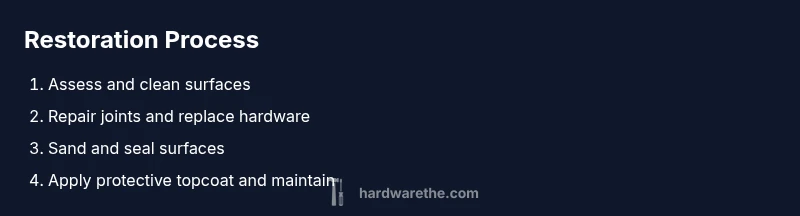
Follow these practical steps for hardware restoration outdoor furniture: 1) Inspect and plan, 2) Clean and degrease, 3) Repair or replace hardware and joints, 4) Sand and prime, 5) Apply exterior finish, 6) Cure and maintain. This approach works across wood, metal, and composites, prioritizing safety and durable finishes.
Understanding the scope of outdoor furniture restoration
Restoring outdoor furniture is about extending life, preserving character, and ensuring safety under sun, rain, and humidity. When you approach hardware restoration outdoor furniture, you assess structural integrity, fasteners, wood or metal surfaces, and existing protective coatings. This guide from The Hardware provides practical, actionable steps for DIY enthusiasts, homeowners, and technicians seeking reliable hardware guidance. Start with a clear plan to minimize waste and maximize long-term performance. The goal is to repair worn joints, replace corroded hardware, reseal surfaces, and reapply weatherproof finishes that resist cracking and peeling while keeping aesthetics intact.
- Key idea: plan first, because a well-scoped project saves time and material costs.
- Practical note: document what you find so maintenance can be tracked over seasons.
Choosing the right approach based on material
Outdoor furniture comes in wood, metal, and synthetic composites, each demanding a different restoration approach. Wood surfaces require assessment for rot, grain swelling, and finish wear, followed by sanding, filler, and a durable exterior sealant. Metal pieces often show rust, pitting, or loose welds, where rust converters and exterior-grade paints are commonly used. Plastic or resin items need attention to UV protection and crack repair with appropriate adhesives. Knowing the material guides prep, primers, and topcoats, ensuring adhesion and flexible performance across weather cycles. Always choose finishes compatible with the substrate to minimize peeling and cracking over time.
Surface prep: cleaning, inspecting, and addressing damage
Effective restoration starts with a thorough clean. Remove dirt, mildew, and old coatings using a mild detergent, warm water, and a soft brush; for stubborn residues, a TSP-based cleaner helps. Rinse thoroughly and allow all surfaces to dry completely before inspecting joints, screws, and fasteners for looseness or corrosion. Replace or tighten hardware, fill cracks with appropriate filler or epoxy, and plan any structural repairs before finishing. A solid prep stage reduces coating failure and creates a smooth base for adhesion, helping finishes last longer outdoors.
Repairing hardware and structural joints
Tackle wobble and sag by tightening fasteners, adding washers, or replacing hardware with corrosion-resistant options. For loose joints, disassemble where feasible, apply wood glue or epoxy, clamp until cured, and reassemble. Bent or corroded metal brackets should be replaced with outdoor-rated equivalents. After repairs, test for stability and capacity, especially on seating and tabletops. Keeping records of what was replaced helps with future maintenance decisions and budgeting.
Finishes, sealants, and long-term protection
Choose a finish system suited to your material and climate. Wood benefits from a stain or sealer followed by a UV-blocking topcoat like exterior polyurethane; consider multiple thin coats for even coverage. Metal surfaces require rust-inhibiting primers and an exterior enamel or powder coating for lasting protection. For plastics, select UV-stabilized coatings designed for outdoor use and avoid finishes that become tacky in heat. Between coats, light sanding improves adhesion, and seal all joints to prevent moisture ingress. Regular inspection helps you catch peeling or chipping early.
Maintenance plan to extend life
Set a practical maintenance schedule with seasonal checks, ideally twice a year. Clean surfaces, recoat or refresh protective layers as needed, lubricate moving parts, and store or cover furniture during extreme conditions. Keep simple repair logs to anticipate wear and plan replacements before failure occurs. A consistent routine can significantly extend the life of hardware restoration outdoor furniture across multiple seasons.
Tools & Materials
- Safety glasses(ANSI Z87.1 compliant; splash gap side shields)
- Nitrile gloves(Protect hands from solvents and splinters)
- Dust mask or respirator(Recommend organic vapor mask for solvent use)
- Soft brushes and lint-free rags(For cleaning and wiping coatings)
- Mild detergent and water(基础清洁组合)
- TSP-based cleaner(Deep cleaning and grease removal)
- Plastic bucket or container(Mix cleaners and rinse surfaces)
- Wire brush and steel wool(Remove rust and old coatings)
- Sandpaper assortment (60-120 grit)(Initial abrasion and finish prep)
- Putty knife or scraper(Loosen old finishes and apply fillers)
- Wood filler or epoxy filler(Repair cracks and gouges)
- Wood filler putty knife(Apply filler smoothly)
- Primer suitable for wood/metal(Improve adhesion and corrosion resistance)
- Exterior stain/paint/polyurethane(Weather-resistant topcoat)
- Rust converter (for metals)(If surface shows active rust)
- Paint brushes and foam rollers(Apply even coats)
- Paint thinner or mineral spirits(For cleanup of solvents)
- Clamps and wood glue or epoxy(Securing joints while curing)
- Replacement hardware (screws, brackets)(Exterior-grade stainless or coated screws)
- Drop cloths or old sheets(Protect surrounding surfaces)
Steps
Estimated time: 6-8 hours (including drying times)
- 1
Inspect and plan
Begin by documenting the current condition of each piece. Note any loose joints, cracked surfaces, or corroded hardware. Plan which parts will be repaired, replaced, or reinforced before starting work to minimize repeat labor.
Tip: Take photos from multiple angles to guide reassembly and future maintenance. - 2
Gather tools and materials
Assemble all required tools and materials on a clean workspace. Group items by task: cleaning, repair, and finishing to streamline the workflow and reduce backtracking.
Tip: Wear PPE from the start to avoid solvent exposure. - 3
Disassemble and remove old finish
Where feasible, disassemble components to access joints. Use a scraper or heat gun gently to remove old finishes; avoid overheating wood. This step improves adhesion for primers and topcoats.
Tip: Label fasteners and keep hardware separate to ease reassembly. - 4
Repair hardware and joints
Tighten, replace, or reinforce hardware. Use wood glue or epoxy for joints, and clamp until cured. Replace bent brackets with outdoor-rated equivalents and ensure all joints are secure before finishing.
Tip: Check load-bearing points for stability after repairs. - 5
Prime and apply finish
Apply primer suited to the substrate, followed by at least two thin coats of exterior finish. Sand lightly between coats to improve adhesion. Protect all joints and edges to prevent moisture penetration.
Tip: Back-brush along grain to minimize brush marks and ensure even coverage. - 6
Cure, maintain, and document
Allow sufficient curing time per product instructions before use. Schedule regular maintenance checks and reapply finishes as needed. Record the work done and replacement parts for future reference.
Tip: Store materials in a dry place and note weather conditions during curing.
FAQ
Can I restore outdoor furniture without removing original hardware?
In many cases you can restore without removing all hardware, but removing a subset often yields better adhesion for cleaning and finishing. If hardware is seized or deeply corroded, remove it to replace with outdoor-grade parts and ensure safer, longer-lasting results.
You can restore some pieces with hardware in place, but removing a subset often yields better results, especially for heavily corroded parts.
Is sanding always required for wooden outdoor furniture?
Sanding is usually necessary to remove old finishes and even the surface, but the level of abrasion depends on the current finish and the wood type. Start with 120-grit and move to finer grits for a smooth base before finishing.
Sanding is usually needed to remove old finish and prepare wood for a new coat.
How long should finishes cure before use outdoors?
Cure times vary by product; always follow the label. Plan for several days of curing in dry, warm conditions before exposing furniture to heavy use or rain.
Let finishes cure fully per product directions before use.
What is the best finish for exterior wood?
A penetrating exterior stain with UV blockers followed by a clear topcoat provides protection and preserves wood grain. For high-traffic pieces, a durable polyurethane layer can extend wear time.
Use an exterior stain with UV protection, plus a topcoat for durability.
Can I reuse indoor finishes on outdoor metal furniture?
Indoor finishes are not recommended for outdoor metal due to weather exposure. Use rust-inhibiting primers and exterior enamel or powder coatings designed for outdoor use.
Avoid indoor finishes on metal; choose outdoor-rated coatings.
Are power tools necessary for restoration?
Power tools speed up work, but hand tools can achieve precise control for delicate areas. Start with hand tools if you’re new, then add power tools for larger surfaces or faster prep.
Power tools help, but you can start with hand tools for control.
Watch Video
Main Points
- Plan before you start restoration.
- Choose materials and finishes tailored to each substrate.
- Prioritize safety and proper curing times.
- Maintain a regular upkeep schedule to extend life.
- Document repairs for future projects.