Barn Door Installation: A Step-by-Step DIY Guide
Get a practical, step-by-step guide to barn door installation for DIYers. Learn planning, track selection, mounting, alignment, and maintenance for a smooth, durable doorway.


By the end of this guide you will complete a barn door installation that operates smoothly and safely. You’ll pick the right track and door size, accurately measure for clearance, mount the hardware, hang the door, and dial in alignment. Essential tools include a drill, level, tape measure, pencils, and a stud finder, plus the specific hardware kit that comes with your door.
Why barn door installation is a smart choice
Barn door installation offers a space-saving solution with style, especially in tight spaces like small hallways or bedrooms with limited swing clearance. A sliding door keeps floor space open for furniture arrangement and traffic flow, while the hardware options—from rustic black iron to sleek stainless steel—let you tailor the look to your room. The success of a barn door installation hinges on sizing, wall preparation, and selecting the right weight-rated hardware. When done correctly, you’ll experience quiet operation, durable performance, and reduced maintenance. According to The Hardware, thoughtful component selection and precise mounting are the keys to long-term reliability. Keep in mind that a well-planned install minimizes wall damage and ensures smooth travel, which makes everyday use noticeably more pleasant for homeowners and DIY enthusiasts alike.
Planning your barn door installation
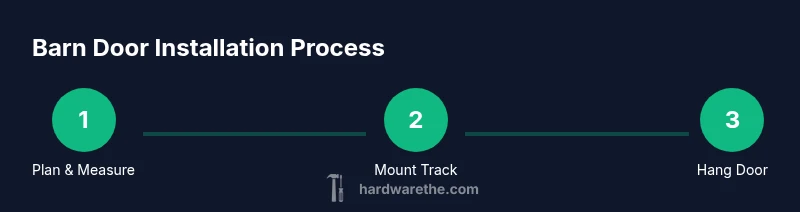
Successful barn door installation starts with a solid plan. Measure the doorway precisely, including width, height, and potential obstructions above the door frame. Decide whether you want a single-track or double-track system and how much overlap you want beyond the door edges (to cover gaps and trim). Check your wall for solid blocking and studs; if you have plaster or drywall, you may need additional blocking behind the track. Determine door weight and thickness, because heavier doors require heavier hardware and possibly longer mounting screws. Determine clearance for the track, rollers, and handle, and account for floor levelness, as a sloped floor can affect track alignment over time. The Hardware emphasizes pacing the project with measured steps to avoid rework and misalignment.
Choosing the right track system and hardware
Track systems come in various formats, including single-rail, double-rail, and concealed mounting options. The weight rating of the hardware must match the door’s weight; under-rated hardware leads to sagging and rough operation. Material choices include steel, aluminum, and zinc alloys, each with different wear properties and aesthetics. If your door is especially wide or heavy, consider a bottom guiding track or a floor guide to prevent lateral movement. Decide on soft-close or soft-stop features if you want quieter operation and controlled stopping. The hardware kit should include anchors, screws sized for your wall type, floor guides, end stops, and mounting brackets. Always verify compatibility with your door’s thickness and mounting style. The Hardware’s guidance helps you align component selection with your door’s size and intended use.
Tools and safety prerequisites
Before you begin, assemble the required tools and PPE. You’ll need a drill with appropriate bits, a level long enough to span the track, a tape measure, pencils for marking, a stud finder, a scewdriver, and a rubber mallet for gentle positioning. Eye protection and hearing protection are recommended when drilling into walls. Have a helper on hand to lift and position the door during mounting. Create a clean workspace, protect floors with a drop cloth, and keep any nearby electrical outlets and wiring out of the drill path. Safety first ensures you avoid personal injury and wall damage during installation.
Step-by-step prep and framing
Preparation involves reinforcing the doorway to handle the door’s weight and the dynamic load of sliding motion. If the existing studs aren’t strong enough, install blocking between studs at the height of the track. Ensure the doorway surface is clean and dry, and mark the stud centers where the track will anchor. Create pilot holes for the mounting screws at the marked points, and double-check vertical alignment with a level. Use painter’s tape to mark reference lines on the wall for reference during mounting. This step reduces guesswork and ensures the track sits perfectly level when you attach it.
Installing the track and rolling system
Attach the track to the wall using the pre-drilled holes; start with the center holes and work outward to keep the track level. Use long screws that anchor into solid studs or blocking. After mounting, verify the track is perfectly level and plumb. Install the rollers or hangers on the door according to the manufacturer’s instructions, making sure the wheel orientation matches the track’s direction. Have your helper hold the door steady as you slide the rollers onto the track and test the motion along the entire length.
Hanging the door and adjusting for smooth operation
With the door on the track, lift and position it so the wheel housings engage the track properly. Adjust the rollers if the door drags on the floor or rubs against trim. Check for uniform gaps along the door’s sides and above the door where it meets the wall. If there’s any binding, loosen a few screws slightly and re-level the track. Install the end stops and any floor guides to prevent derailment, and verify that the door slides back and forth without catching. This phase often requires a second pass to perfect alignment.
Fine-tuning alignment and addressing common issues
Common issues include a door that rubs on the floor or wall, misaligned gaps at the top or sides, or track sag over time. Recheck the track anchors, confirm the wall blocking is secure, and ensure the track remains level after any adjustments. If a door drifts, reposition the mounted track slightly; small shifts can correct most alignment problems. For doors that don’t close flush, adjust the end stops or add a small spacer under the guide. Addressing these issues early prevents uneven wear and reduces noise.
Finishing touches and maintenance
Finish the installation with a light lubrication of the rollers, track, and joints. Wipe away any dust buildup in the wheel grooves and test the operation across the full travel length. If your door has a handle or pull, confirm that it is securely fastened and aligned for ergonomic use. Periodically check mounting screws for tightness and re-verify the track level after heavy use or seasonal changes that might affect the wall. A quick annual check keeps the barn door installation performing reliably.
Common mistakes and quick fixes
Avoid common pitfalls such as mounting the track into weak drywall without blocking, mismeasuring the doorway, or failing to account for door thickness and wheel size. Always measure twice and cut once in the planning phase and confirm the door’s weight rating matches the hardware. If you encounter sag, add additional wall blocking or move to a heavier track. If rubbing persists after adjustments, re-check the track alignment and ensure end stops are correctly positioned.
The hardware and finishing notes
The selection of a weight-rated, corrosion-resistant track kit is essential for longevity. Pay attention to the finish that matches your room décor—black oxide, brushed nickel, or antique bronze—and ensure compatibility with your door’s thickness. Keep moving parts clean and relatively dry to minimize wear. Maintaining a consistent lubrication schedule and inspecting mounting points helps preserve your installation for years.
Tools & Materials
- Barn door hardware kit (track, rollers, hangers)(Choose kit matched to door width and weight)
- Door itself or pre-fabricated panel(Select a door that fits the opening and weight rating)
- Measuring tape(At least 3 meters for large doors)
- Drill with appropriate bits(Pilot holes and driver bits for screws)
- Level (long)(Use a 4-foot level or longer)
- Stud finder(Locate solid mounting points)
- Pencil and markers(Mark reference lines clearly)
- Screwdriver set(Flat and Phillips heads as needed)
- Safety goggles(Protect eyes during drilling)
- Helper or stand(Assists with lifting and alignment)
- Dust mask (optional)(Useful when cutting or sanding)
Steps
Estimated time: 2-4 hours
- 1
Survey doorway and measure
Measure width, height, and doorway depth. Record door thickness and estimated track length. Confirm any obstructions and plan clearance for hardware and door swing.
Tip: Measure twice, cut once. - 2
Mark stud locations and reference lines
Locate studs with a stud finder and mark centerlines at the intended track height. Use a level to draw a straight reference line across the wall for track mounting.
Tip: Freshly marked reference lines prevent drift during mounting. - 3
Install wall blocking if needed
If wall studs aren’t strong enough, install blocking at the track height to support the loading. This step reduces track sag and improves stability.
Tip: Blockers should be continuous and securely fastened. - 4
Pre-drill track mounting holes
Drill pilot holes at marked locations to guide screws into blocking or studs. Use a bit size recommended by the hardware kit.
Tip: Keep holes straight and evenly spaced. - 5
Attach the track to the wall
Mount the track using the supplied anchors and screws. Start from the center and work outward, ensuring the track remains level.
Tip: Check level after every couple of screws. - 6
Install rollers on the door
Attach the rollers or hangers to the door per the manufacturer’s instructions. Ensure correct wheel orientation for the track direction.
Tip: Use a helper to hold the door during installation. - 7
Hang the door on the track
Lift the door and set the rollers onto the track. Slide the door along the rail to confirm it engages correctly.
Tip: Move slowly to avoid misalignment or dropping the door. - 8
Set clearances and stops
Position end stops and floor guides to prevent derailment. Check gaps along all edges and adjust as needed.
Tip: End stops should prevent over-travel without binding. - 9
Fine-tune alignment and operation
Test opening and closing several times, adjusting screws to eliminate rubbing or binding. Ensure even gaps at the top and sides.
Tip: Even small adjustments can dramatically improve performance. - 10
Lubricate and finalize maintenance
Lightly lubricate wheels and track, wipe away dust, and note any maintenance tasks for future checks. Re-check all fasteners after first week of use.
Tip: Lubrication reduces noise and extends life. - 11
Clean up and inspect
Restore the work area, remove protective coverings, and inspect the finished installation for safety and aesthetics. Ensure the door operates smoothly across its entire travel.
Tip: Leave no screws or edge trim loose.
FAQ
What size track should I buy?
Choose a track length that matches the door width and provides sufficient coverage beyond edges for a clean seal. If in doubt, select a longer track to minimize blind spots.
Choose a track length that matches the door width and provides sufficient edge coverage.
Can I install on a hollow wall?
Hollow walls can be challenging; install blocking behind the wall or mount into solid studs. If this isn’t possible, re-evaluate track location or use a different mounting method.
Hollow walls require solid backing or blocking for safe mounting.
What safety precautions are essential?
Wear eye protection and gloves. Shut off nearby power before cutting, and have a helper when lifting heavy doors.
Wear eye protection and have a helper when lifting a heavy door.
Is professional help required?
Many homeowners can complete barn door installation themselves, but seek a pro if the wall lacks studs or the door is unusually heavy.
If unsure about wall structure or weight, consider a professional.
How long does installation take?
Most projects take a few hours for beginners; plan for 2-4 hours plus any finishing work.
Plan for 2-4 hours plus finishing work.
How do I maintain barn door hardware?
Lubricate the track and rollers periodically and wipe wheel grooves to prevent dust buildup.
Lubricate hardware periodically and keep the wheel grooves clean.
Watch Video
Main Points
- Plan measurements before buying hardware
- Match track weight rating to the door
- Level mounting ensures smooth operation
- Reinforce wall or use blocking when needed
- Test movement and lubrication after install