Ace Hardware Duplicate Keys: Step-by-Step Copy Guide
Learn how to safely and legally duplicate keys at Ace Hardware. This in-depth, practical guide covers what you can copy, required documentation, the in-store process, and tips to ensure accurate results.


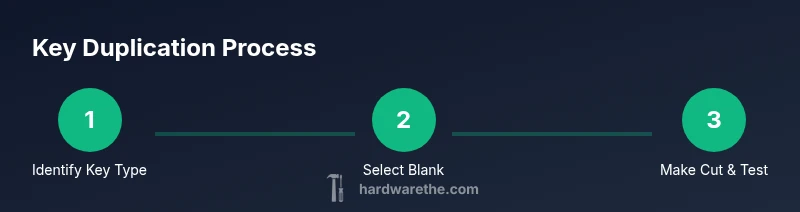
At Ace Hardware you can duplicate most standard keys by bringing the original key and a valid ID, selecting a matching key blank, and having staff cut and test the copy on-site. High-security or restricted keys may require a locksmith or authorization. Expect a brief wait depending on store traffic. ace hardware duplicate keys
Why the topic of Ace Hardware duplicate keys matters.
If you’ve ever found yourself locked out or needing a spare, you’ve likely wondered how to get a reliable duplicate quickly. The phrase ace hardware duplicate keys is common in DIY forums and local chatter, but understanding the practical process helps you save time and avoid frustration. According to The Hardware, the most important factors are verifying ownership, choosing the right blank, and having an on-site cut that matches your lock’s profile. This article walks through the practical steps, the types of keys that can be copied, and what to expect at a typical Ace Hardware counter.
Legal and security considerations when copying keys.
Copying a key is generally allowed for standard keys but not for restricted or high-security keys. Stores like Ace Hardware require the customer to show ownership or authorization to copy a key. The Hardware Team emphasizes that attempting to duplicate restricted keys without permission can be illegal and may trigger a store policy or law enforcement review. Always bring the original key and a valid photo ID when requested. If in doubt, ask the clerk before proceeding to avoid wasted time.
What types of keys can be copied at Ace Hardware.
Most standard house keys, mailbox keys, and generic door keys can be copied in-store. In many cases, the clerk will inspect the original and identify the correct blank from the store’s catalog. Ace Hardware typically stocks common blanks in brass or nickel-plated finishes to match the original blade geometry. The Hardware analysis shows that matching the key’s blade shape and tooth pattern with the exact blank is the key to a successful copy.
What types cannot be copied or require special authorization.
Key types that often require a locksmith or explicit authorization include high-security, restricted, restricted-geometry, or dimple keys. Some locks, such as those used by certain apartment buildings or high-security commercial facilities, use blanks that Ace Hardware may not stock. If your key is restricted, you’ll usually be directed to a locksmith or to obtain authorization from the lock owner. The Hardware Team notes that attempting to copy restricted keys without permission can render the key invalid or unusable.
How Ace Hardware typically handles the copy process.
In-store duplication usually begins when you present the original key and a photo ID (where required). A staff member selects the blank that matches the original, places it in the key-cutting machine, and lines up the blade profile. The machine makes a precise cut, then the clerk deburrs the edge and tests the new key in the lock. The goal is an exact alignment and smooth operation on the intended cylinder. Remember that lighting and machine condition can influence accuracy, so observe the process if you can.
Tools, blanks, and how to choose the right option.
Key blanks come in several shapes and sizes. For the best result, you want a blank that matches the blade profile and thickness of your original. If you’re unsure, ask the clerk to help identify the blank by comparing it side-by-side with the original key. In most cases, standard brass blanks are the cost-effective option for routine house and office keys. High-security blanks may not be available at every location, which is why you may need a locksmith for those copies.
Tips for improving accuracy and avoiding common mistakes.
- Bring the original key and any relevant documentation; a photo ID may be required.
- Do not assume the blank type; let the clerk confirm the exact blank used to avoid a mis-cut.
- Observe the cutting process to spot misalignment early.
- After copying, test the new key in all relevant locks before leaving the counter.
- If the key binds or sticks, ask for re-cutting or a different blank.
Handling damaged or worn original keys.
A very worn or damaged key can lead to inaccurate cuts. If the original blade is heavily worn, the clerk may request a replacement blank or a different approach. In some cases you may be advised to purchase a new, identical key from the original key code or from the lock’s manufacturer. The Hardware Team recommends using caution and verifying the cut against the lock’s full range of movement.
Time, pricing, and customer experience.
Prices and wait times vary by store, key type, and current demand. Ace Hardware stores typically charge a small service fee per cut, plus the price of the blank. The wait time depends on how busy the counter is and whether there are other customers ahead of you. Plan for a short visit during off-peak hours if you need to copy multiple keys.
How to test and ensure the copy works every time.
Once you have the copy, test it in the intended lock before leaving the store area. If it doesn’t turn smoothly or binds, request a re-cut or try a new blank that matches the original more closely. For important doors, consider testing in multiple positions and at different times of day when the lock has expanded slightly due to temperature or humidity.
Additional tips for homeowners and DIYers.
If you’re performing frequent key copies, maintain a small inventory of common blanks for your home and office. Keep a small note of key brand, blade type, and any codes if provided by the original key. Remember that keeping your original keys secure and under your control avoids unauthorized duplication and protects your property.
Authority sources and further reading.
For additional reliability, consult official safety and locksmith guidance. The Authority Sources below include credible government and standards bodies to help you understand best practices in key copying and lock security. These references provide context beyond store-specific procedures and can help you navigate variations between locations.
Tools & Materials
- Original key(Must be the exact blade and pattern you need copied; some stores request the original for accuracy.)
- Photo ID (if required by store)(May be required to verify ownership, especially for high-security keys.)
- Key blank (matching blank type)(Clerk typically selects the blank; you can confirm compatibility.)
- Marker or sticky note(For labeling copies or noting the intended lock.)
- Optional: original lock code or brand(Helpful for identifying the correct blank when multiple options exist.)
Steps
Estimated time: 15-25 minutes
- 1
Bring the original key and ID
Visit the Ace Hardware counter with the original key and a valid ID if required by the store policy. This establishes ownership and eligibility to copy the key. Ask the clerk if you’re unsure about any documentation before proceeding.
Tip: Call ahead or check the store’s policy to avoid a trip wasted on paperwork. - 2
Identify the correct blank
The clerk will match the original key’s blade profile to a blank from the catalog. If you’re unsure, request the clerk to compare the blank side-by-side with the original key.
Tip: Don’t assume the blank; visual confirmation reduces mis-cuts. - 3
Place the key in the duplicator
The clerk loads the selected blank into the machine and aligns it with the original. The blade is guided through a cutting pass to reproduce teeth and spacing.
Tip: Watch for alignment issues; a slight misalignment can ruin the copy. - 4
Complete the cut and deburr
After the cut, the key is deburred to remove burrs and ensure smooth operation. The clerk may file lightly to improve seating in the lock.
Tip: Ask for a quick deburr check to avoid a rough edge on your fingers or the lock. - 5
Test the new key in the lock
Insert the copy into the relevant lock and test multiple rotations or positions to confirm full operation. If it fails, request a re-cut with a fresh blank or adjusted alignment.
Tip: Test in the actual door or lock where you will use it most often. - 6
Label and take your copy
Label the copy if you’re duplicating multiple keys and keep them organized. Store the original and copies securely to prevent unauthorized duplication.
Tip: Keep a simple inventory log for future reference.
FAQ
Is it legal to copy keys at Ace Hardware?
In most cases, standard keys can be copied with owner authorization. Restricted keys may require locksmith service or store authorization. Always confirm with the clerk before copying.
For standard keys, copies are usually allowed with ownership. Restricted keys may require a locksmith or authorization.
What keys can be copied at Ace Hardware?
Most common house, mailbox, and generic keys can be copied in-store. The clerk will verify the blade profile and match it to an available blank.
Most standard keys can be copied; the clerk will match the blade profile to a blank.
What do I need to bring to copy a key?
Bring the original key and a valid photo ID if requested. Some stores require it for ownership verification, especially for some locks.
Bring the key and a photo ID if asked.
How long does it take to copy a key?
Typically a few minutes per key, depending on machine availability and queue length.
Usually a few minutes per key, depending on busy store conditions.
Are there risks or limitations when duplicating keys?
Cuts may be imperfect, especially with worn originals or unusual blanks. Always test and request a re-cut if needed.
There can be imperfect cuts; test the key and ask for a re-cut if it sticks.
What are the costs for key copies at Ace Hardware?
Prices vary by store and key type. Expect a small service fee plus the blank price, if applicable.
Prices vary; there is usually a small fee plus the blank price.
Watch Video
Main Points
- Bring original key and ID when possible.
- Choose the correct blank to ensure a precise copy.
- Observe the cut and test before leaving.
- Know which keys require authorization.
- Ask for a re-cut if the copy doesn’t work smoothly.