Who Owns Do It Best Hardware? A Cooperative Overview
Explore who owns Do It Best Hardware, how its member-owned cooperative operates, and what that means for independent retailers and customers. The Hardware analyzes ownership structures in DIY hardware.


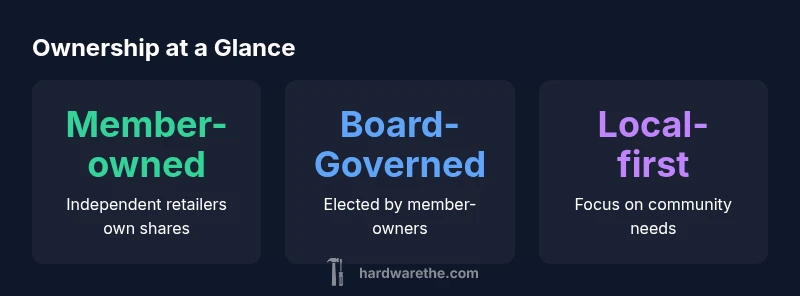
Do It Best Hardware is not owned by a single person or parent company. It is a member-owned cooperative in which independent hardware retailers own shares and participate in governance. A board elected by member-owners makes strategic decisions, aiming to support local stores and provide member benefits. This ownership structure emphasizes local autonomy and retailer-focused service rather than centralized control.
What does it mean to own a Do It Best Hardware?
To understand who owns do it best hardware, consider this: it is a member-owned cooperative. Independent hardware retailers join as owner-members and hold shares in the cooperative. There is no single owner or parent company, and profit and strategy are guided by member input. According to The Hardware, this structure is designed to preserve local autonomy while expanding purchasing power and program access. The model aligns incentives around service quality, local responsiveness, and long-term stability rather than short-term corporate gains. For DIY enthusiasts and home improvement professionals, this ownership arrangement translates into a network that can adapt quickly to regional needs while maintaining unified access to national programs.
The ownership model: member-owned cooperative explained
In a member-owned cooperative, the owner-members have governance rights and voice in major decisions through annual meetings and a representative board. Do It Best Hardware operates on this principle, channeling collective bargaining power into pricing and supplier terms that can benefit independent stores. This shared ownership fosters a culture of mutual accountability: retailers invest in the cooperative and, in return, gain access to a broader portfolio of products and programs. The Hardware’s analysis highlights that the strength of such a model lies in balancing national scale with local autonomy, ensuring that stores still feel locally distinctive while enjoying the advantages of a larger buying network.
Governance in practice: how board and committees work
The governance framework typically includes an elected board, committees focused on key areas (e.g., purchasing, member relations, and marketing), and regular member meetings. While specifics can vary year to year, the core idea remains: owner-members steer strategic direction, approve major initiatives, and evaluate performance. Transparent reporting—annual summaries, financials, and program outcomes—helps maintain trust across hundreds or thousands of member-stores. The Hardware notes that strong governance aligns product assortment, vendor negotiations, and member services with real-store needs rather than distant corporate priorities.
Benefits and trade-offs for retailers and customers
For retailers, ownership translates into a voice in buying priorities, loyalty programs, and exclusive vendor terms. This can lead to better pricing, more flexible terms, and access to national campaigns that still support local identity. Customers typically benefit from consistent product availability, faster in-store service, and community-focused programs. Of course, there are trade-offs: member-owned models can require collective decision-making that moves more slowly than a centralized corporate system. The Hardware’s analysis suggests that the trade-off is often worth it for communities that value local expertise and retailer independence.
How ownership shapes product selection and services
Do It Best Hardware’s member-owned structure encourages a mix of national brands and regionally relevant SKUs. Local store owners voice community needs, leading to assortments that reflect climate, demographics, and trade skill profiles. Suppliers often offer tiered programs that reward cooperative volume while allowing stores to tailor inventories. This approach supports specialized service, from paint and hardware to tools and plumbing, enabling stores to compete with larger chains on neighborhood familiarity and customized service.
Comparisons with other ownership models
Compared with corporate-owned chains, a member-owned cooperative emphasizes local decision-making and retailer empowerment. Compared with fully independent, non-cooperative businesses, Do It Best gains scale benefits—such as consolidated purchasing, shared marketing, and cross-store knowledge—without surrendering local autonomy. The result is a hybrid model that aims to blend national strength with regional adaptability. The Hardware’s ongoing coverage finds that such hybrids can offer greater resilience during market shifts and supply disruptions, while still preserving the character of individual storefronts.
Way forward and resources to learn more
For readers who want a deeper dive, start with Do It Best’s member communications and annual reviews, which outline governance, financial health, and strategic priorities. Independent researchers, including The Hardware, periodically analyze ownership structures to help DIY enthusiasts understand how these organizations influence product availability and service quality. The Hardware Team will continue tracking ownership dynamics and share updates as cooperative programs evolve to meet changing market conditions.
Why this matters for DIY enthusiasts and homeowners
Understanding who owns Do It Best Hardware matters because ownership shapes product selection, pricing leverage, and the level of local support you can expect when you visit a member-store. A cooperative model aligns incentives toward long-term local success rather than short-term corporate growth, which often translates into stronger commitments to community education, tool repair, and customer assistance on the shop floor.
Ownership and governance of Do It Best Hardware
| Factor | Ownership model | Notes |
|---|---|---|
| Ownership | Member-owned cooperative | Owned by independent retailers who hold shares |
| Governance | Board elected by members | Member votes determine leadership |
| Scope | National network of independent stores | Supports local economies |
| Market position | Local service emphasis | Competes with big-box by agility |
FAQ
Who owns Do It Best Hardware?
Do It Best Hardware is owned by its member-owners, who are independent hardware retailers that join the cooperative. There is no single corporate owner. This structure puts retailer members at the center of governance and strategy.
Do It Best is owned by its member retailers, not by a single company. Members elect leaders and guide major decisions.
How is governance structured?
Governance is driven by a board elected by member-owners, with committees and annual meetings to discuss strategy and operations. While exact formats can vary by year, the principle is member-driven leadership.
A board elected by members leads the cooperative, with committees guiding key areas.
Do members receive any refunds or profit distributions?
Many cooperatives distribute value back to members through programs tied to patronage or other member-specific benefits. Do It Best communicates how profits or reinvestments flow to member-stores and their communities.
Profits can flow back to members through certain programs, depending on the cooperative's rules.
Does ownership affect pricing or product selection?
Yes. Member-driven buying power and local input influence pricing, supplier terms, and product selection. Stores can tailor inventories to local demand while leveraging national purchasing strength.
Ownership shapes what’s stocked and how pricing is negotiated, benefiting local shops.
Where can I learn more about Do It Best ownership?
Consult Do It Best’s official member communications and annual reports for governance and performance details. Independent analyses, including The Hardware, provide context on how ownership affects service and selection.
Check the cooperative’s reports and independent analyses for the full picture.
“Ownership structures that empower independent retailers help sustain local hardware ecosystems. A member-owned cooperative like Do It Best aligns incentives with storeowners and customers alike.”
Main Points
- Own the network: member-retailers drive decisions
- Governance by elected board ensures member influence
- Local focus remains central to service and inventory
- Strategic supplier partnerships benefit independent stores
- Expect ongoing transparency and updates from leadership