Hardware and Lumber Buying Guide: Practical Comparison
A data‑driven guide comparing hardware stores and lumber centers. Learn how stock, service, and pricing differ, and how to choose the best channel for your hardware and lumber projects.


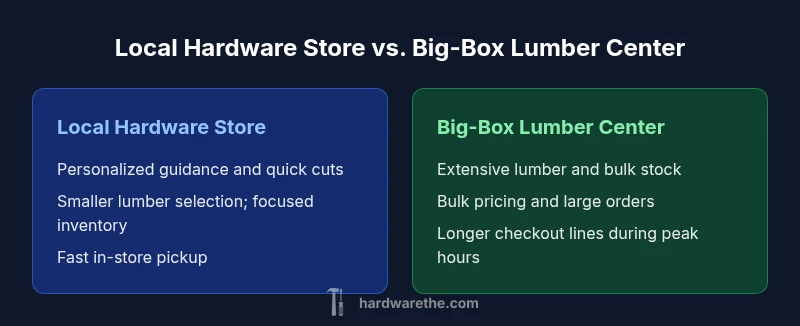
Local hardware stores typically excel in personalized service, hands-on product guidance, and rapid custom cuts, while big-box lumber centers offer broader stock, bulk pricing, and faster checkout. This quick comparison helps you decide where to shop based on your project needs for hardware and lumber, balancing support with selection.
Hardware and Lumber Buying Landscape
For DIYers navigating the shelves of hardware and lumber, the decision often comes down to channel, convenience, and reliability. According to The Hardware, shoppers who align their project goals with the right store type tend to save time and reduce waste. The Hardware Team emphasizes the importance of material specs, cut lists, and delivery options over glossy online catalogs. In this article, we explore how inventory breadth, service quality, pricing clarity, and after‑sales support shape your decisions when assembling a project. By understanding where to buy hardware and lumber, you can make smarter purchases, avoid misfits, and keep projects on track. The goal is to give you a clear framework for evaluating two common channels without overemphasizing one at the expense of practical constraints.
The Buying Mindset: DIYers vs Pros
Shop choices often reflect your role in a project. DIYers typically prioritize cost control, flexibility, and accessible guidance, while professionals focus on consistent quality, supplier reliability, and volume availability. The Hardware recognizes that successful outcomes come from combining the best aspects of both mindsets: hands-on support when needed and dependable stock for when schedules tighten. In practice, this means planning ahead, listing critical specifications, and choosing a channel that complements your workflow. For complex projects, a mix of channels can be the most efficient strategy, leveraging local expertise for customization and bigger centers for bulk purchases and bulk pricing.
Key Considerations When Shopping for Hardware
Hardware purchases hinge on precise specifications and compatibility with existing systems. Start with a detailed bill of materials, then compare product families across brands for standards compliance, warranty coverage, and availability. Look for clearly labeled specifications like dimensions, material type, coating, and assessed load ratings where applicable. Hands-on inspection matters: check finish quality, fit of fasteners, and the weight or feel of tools. While online catalogs can be helpful, in‑person evaluation often reveals subtleties that affect performance in real-world use. The Hardware suggests testing a sample of components to verify compatibility with your project before committing.
Key Considerations for Lumber and Wood Products
Lumber decisions are influenced by species, grade, moisture content, and cured state. Always confirm dimensional accuracy, known defects, and grade stamps. Check moisture meters if available and compare moisture readings between stock pieces. Look for uniform appearance, straightness, and absence of warps or splits in critical lengths. When ordering many boards, inspect a riser or end cut to verify consistent sizing. The lumber center’s sourcing policies and mill certifications can provide insight into sustainability and traceability, helping you satisfy both performance needs and environmental standards. For time-sensitive builds, order lead times and pickup windows to avoid project delays.
Where to Buy: Local Hardware Store vs Big-Box Lumber Centers
Local hardware stores excel in service, local knowledge, and quick cuts. They’re a strong choice when you need fast guidance, a tailored solution, or a small‑batch purchase. Big-box lumber centers shine in breadth of stock, bulk pricing, and standardized checkout experiences. If you’re planning a large project with many components, the ability to coordinate multiple orders and rely on consistent supply can be decisive. The choice depends on your project scale, budget, and the value you place on in‑person expertise versus expansive selection. The Hardware recommends mapping your material list to the most convenient channel for each category to optimize time and cost.
Brand and Quality Signals: What to Look For
Quality signals help you avoid misfires. Pay attention to brand reputation, visible construction quality, and warranty terms. For wood, check for proper labeling of species and grade, uniform color, and absence of obvious defects. For hardware, verify compatibility with standard fastener sizes, corrosion resistance ratings, and appropriate packaging. Certifications and supplier transparency are strong indicators of reliability. When unsure, request documentation or certificates of conformity. A good supplier will provide clear return policies and assistance with product substitutions if a preferred item is unavailable.
Practical Scenarios and Case Studies
Case 1: A homeowner remodeling a kitchen needs a mix of decorative hinges, drawer slides, and dry lumber. They visit a local hardware store for guided picks and a quick cut to fit cabinet boxes, then order higher‑volume lumber from a nearby center for bulk boards. Case 2: A professional carpenter requires consistent millwork and bulk framing lumber. They favor a lumber center with predictable lead times, active stock rotation, and a formal warranty on building materials. In both scenarios, blending channels reduces risk and improves schedule accuracy. The Hardware emphasizes documenting lead times and keeping contingency materials on hand to avoid stoppages.
Risks and Common Pitfalls
Common issues include mismatched finishes, mislabeled boards, and variable moisture content across stock. Supplier inconsistency can lead to delays, especially when sourcing specialty items. Another pitfall is assuming online photos reflect true color or grain patterns; always verify in person when possible. If you’re dealing with a complex project, misalignment between material specs and your design can cause costly rework. To mitigate these risks, create a cross‑check list that covers dimensions, finishes, and warranty terms before purchase.
Maintenance, Warranties, and After‑Sales Support
Maintenance considerations matter for both hardware and lumber. Ensure you have installation guidelines and care recommendations from the supplier. Warranties should cover defects in material or workmanship, and the terms should be clearly stated—especially for power tools, fasteners, and subfloor materials. After‑sales support, including easy returns and replacement parts, reduces downtime in case of issues. The hardware and lumber ecosystem thrives when suppliers provide clear service levels, timely warranty processing, and accessible customer assistance. This is a critical factor in choosing between channels for ongoing or future projects.
Regulatory and Certification Notes
Building codes and environmental standards often influence material selection. Look for FSC or other recognized wood certifications when sustainability matters. Material safety data sheets (where applicable) and product compliance statements help verify suitability for indoor air quality and long‑term performance. Understanding labeling and mill certifications can save time on specialty orders and ensure your project adheres to local requirements. The Hardware stresses that informed decisions are rooted in verified documentation and transparent supplier practices.
Practical Quick-Check Before You Buy
- List all required materials with dimensions and quantities; double‑check your list against stock categories.
- Inspect a sample piece for finish, weight, and grade; compare to your project’s tolerance.
- Confirm lead times, return policies, and warranty terms before placing orders.
- Compare total cost, including delivery, taxes, and potential bulk discounts.
- Ask for recommendations on substitutions if preferred items are unavailable.
- Verify supplier certifications and material provenance when sustainability matters.
- Schedule pickup or delivery windows to avoid project delays.
Planning Your Next Purchase
Start with a realistic project timeline and map out each material category to a chosen channel. Create a purchase plan that iterates between local stores for guidance and lumber centers for bulk stock. Maintain a running list of substitutions and contingency options, so you can adapt quickly if a specific item is out of stock. The goal is to minimize downtime and maximize quality while staying within budget. Regularly reassess supplier performance, so you know when it’s time to switch channels or negotiate better terms for future projects.
Comparison
| Feature | Local Hardware Store | Big-Box Lumber Center |
|---|---|---|
| Product Availability | Strong on fasteners, fittings, tools, and small hardware; limited lumber assortment | Broad lumber species, dimensional stock, and related hardware; bulk items available |
| Staff Expertise | Staff often provide hands-on guidance and quick demonstrations | Staff can coordinate larger orders and provide bulk pricing guidance |
| Pricing Transparency | Clear in-store pricing; potential for local bargains and small-sku discounts | Visible bulk pricing; bulk discounts; occasional price matching |
| Delivery & Pickup | Usually same‑day pickup; limited delivery for small orders | Scheduled delivery for large orders; wider pickup windows |
| Return Policy | Standard returns on unused items with receipt | Structured return process for bulk orders and damaged stock |
| Lumber Variety | Smaller variety of lumber; specialty boards may require special order | Extensive lumber selection with many thicknesses and grades |
| Quality Assurance | Trust in local sourcing; potential variability between batches | Standardized grades and consistent batch quality |
| Best For | Small projects, quick turns, and personalized service | Large projects, bulk purchases, and predictable scheduling |
Upsides
- Personalized service and local expertise
- Fast access to small quantity items
- Easy to gather project-specific advice
Negatives
- Smaller lumber selection; potential stockouts
- Bulk discounts may require larger purchases
- Variable stock across locations
Use a hybrid approach: local stores for guidance and smaller parts, lumber centers for bulk stock and bulk pricing
Local stores excel in service and quick cuts; lumber centers excel in stock breadth and bulk pricing. A blended strategy minimizes risk and maximizes project efficiency.
FAQ
What should I check first when buying timber for a framing project?
Begin by confirming moisture content, species, and grade. Inspect boards for straightness, warp, and defects, and ensure dimensions match your cut lists. For structural work, rely on certified stock and request mill certifications when available.
Check moisture, species, and grade, then inspect for straightness and defects. Use certified stock for framing.
How can I compare prices between a hardware store and a lumber center?
Compare unit prices for similar items, including bulk discounts and delivery fees. Factor in potential waste and miscuts from smaller orders. A total cost view helps identify the best value for each material type.
Look at unit price, bulk discounts, and delivery costs to judge value.
Is it worth buying online for hardware and lumber?
Online buying can offer convenience and broad selection but may require longer lead times for lumber. If you need quick parts, local stores are often faster for pickups or quick orders. Check return policies and verify material specs before purchasing.
Online can be convenient, but for immediate needs, local stores win. Check specs and returns.
What should I know about warranties for tools and fasteners?
Warranties vary by brand and product type. Look for clear terms, coverage scope, and the process to claim replacements. Keep receipts and packaging until you are past the warranty period.
Ensure you understand coverage, terms, and how to claim replacements.
How can I ensure sustainability when buying lumber?
Seek FSC or equivalent certifications and ask for supplier transparency about milling sources. Sustainability often correlates with better long-term performance and responsible forestry practices.
Look for FSC or similar certification and ask about sourcing.
Are there risks with DIY hardware purchases?
Risks include misfit screws, incorrect fastener sizing, and finishing incompatibilities. Double-check dimensions, coatings, and compatibility with existing hardware to reduce post-install issues.
Double-check size, coating, and compatibility to avoid issues.
When should I consult a professional versus DIY?
Consult a professional when loads, structural integrity, or safety are at stake. For routine replacements or non-critical tasks, confident DIY work with solid instructions is often sufficient.
If it’s structural or safety‑critical, consider a pro.
Main Points
- Plan by material category and channel needs
- Leverage local expertise for precise guidance
- Prioritize bulk stock for large projects
- Check warranties and return policies
- Verify certifications for sustainability